We will be discussing Black Cowboys in the ranching lecture of the farming course I am coordinating for GRIP called Not Just Farmers: Records, Relationships, and the Reality of Their Lives.
Historians estimate that one in four cowboys was Black. During their enslavement, many learned the skills needed to handle cattle herds (riding, roping, blacksmithing, leather-working, etc.) After emancipation, these skills were needed, especially in Texas where the longhorn herds were largely out of control after the Civil War. Cowboys were needed to drive the cattle north to markets where the prices were higher.
Of course, Black cowboys faced discrimination such as being banned from restaurants and hotels. Reportedly, most found respect among their white counterparts working the cattle drives together, respect that most Blacks found elusive. They sought the “largely unhindered outdoor life, fair treatment, and decent pay” that the life of the cattle drover offered; they sought a life where skill and hard work would matter more than skin color.1
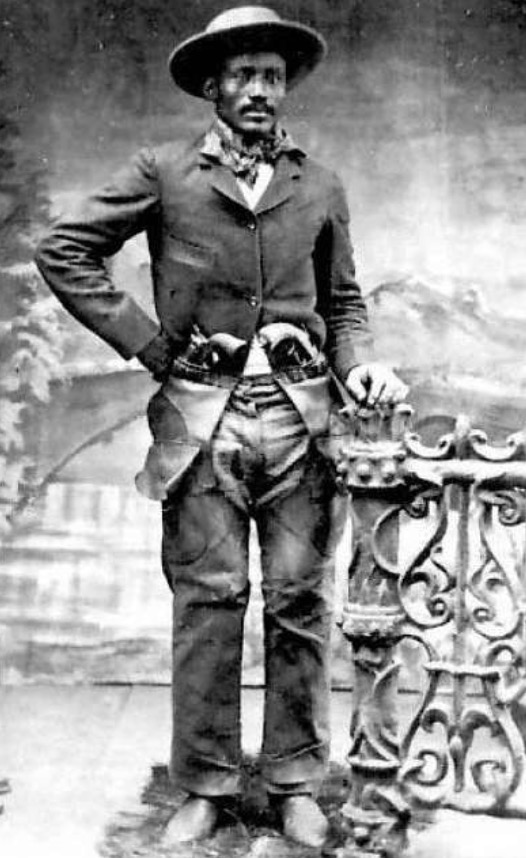
As most cattle drives ended by the early 1900s with the growth of railroads for moving cattle, the invention and use of barbed wire to parcel up the previously open range, the need for cowboys dwindled, and so did the opportunities for Black cowboys. However, the lore of the Black cowboy lived on in popular culture. From rodeos to western movies and books such as Lonesome Dove which featured Black cowboy Bose Ikard, the cowboy lifestyle lived on, as did the Black cowboy. Black cowboys had a heavy influence on cowboy ballads and music; the song Home on the Range was first recorded by a Black saloon keeper and cowboy.2
Here’s a list of movies featuring Black cowboys if you’re interested:
- Buck and the Preacher (1972) starring Sidney Poitier
- The Harder They Fall (2021) starring Idris Elba and Regina King and a mostly Black cast
- Django Unchained (2012) starring Jamie Foxx and directed by Quentin Tarantino
- Joshua (1976) starring Fred Williamson
- Surrounded (2023) starring Letitia Wright
Watch these movies at your own risk. For example, Django Unchained is a Quentin Tarantino movie… if you’re familiar with his work, I need not say more. Enjoy!
1. William Loren Katz, The Black West, (Golden, Colorado, Fulcrum Publishing: 2019), p. 149.↩
2. Dom Flemons, “Black Cowboy Songs,” American Folklife Center, Library of Congress, 16 September 2020, video available online at https://www.facebook.com/watch/?v=1819161024888703. ]↩

 Genealogy Pants