GRIP Genealogy Institute is coming up fast! I am coordinating our “Not Just Farmer’s” course along with Cyndi Ingle and Paula Stuart-Warren. The virtual courses, which this course is, are taking place from 22-26 June 2026.
The motivation behind the course was years of listening to people at genealogical events, whether it was local meetings or national conferences, say “oh, my ancestors were just farmers.” As if! Most of our ancestors were farmers. Before grocery stores, families had to grow their own food for survival. Some ancestors had what we call today “side hustles” to supplement their income. Farming crops has some down time while the crops grow, or if it is too rainy to harvest, or during the winter. So, many farmers took on other occupations as well.
Some specialized in a particular breed of livestock. Mine raised Duroc Jersey Swine. Others may have focused on chickens, sheep, beef cattle, dairy cows, or other animals. Some farms also had fruit orchards, bushes, or grape vines. Whatever your ancestor engaged in, it was a vital part of the family’s survival. And not just the family, but the community as well. While one farmer may have raised dairy cows and made butter, another may have raised hens for eggs. They likely engaged in bartering or selling at a local marketplace.
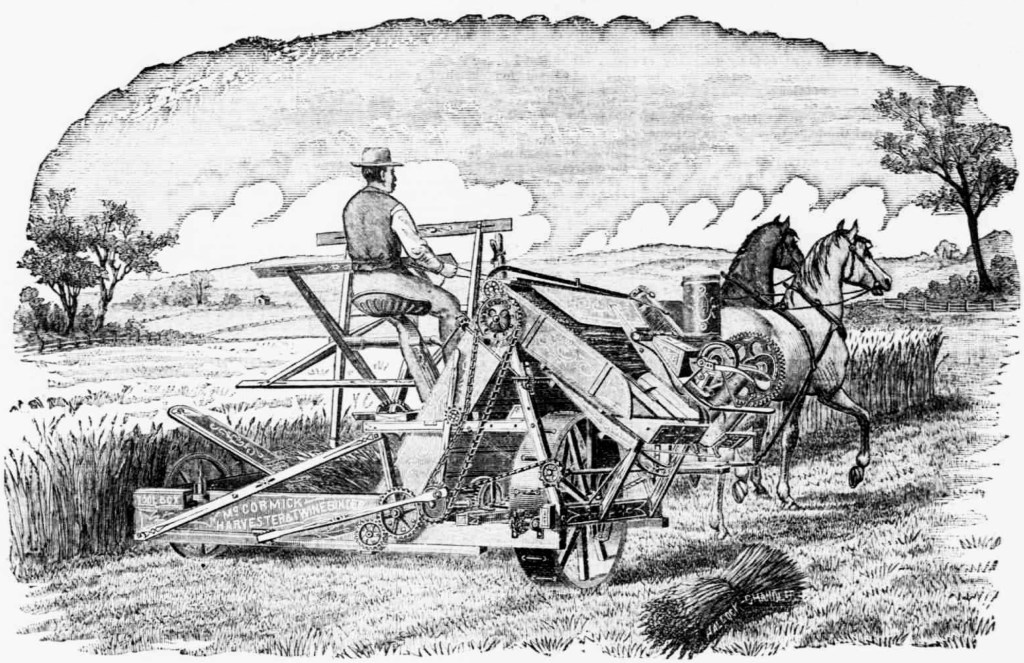
Farming was (and still is) a hard occupation. Lots of long days full of physical labor. Maybe not as exciting as other occupations, but that depends on your definition of exciting. And if you think your farming ancestors were not captured in records, you would be wrong.
In the farmer’s course, we cover many topics but always bring it back to the records that can be found for those topics:
- Inventions and Ingenuity – advancements in technology and farming techniques
- Ranching – cattle and sheep, livestock drives
- Land – a farmer or rancher needs land to grow the crops or raise the livestock
- Farm buildings, such as barns, can tell the story of your ancestor’s heritage
- Specific farm products and going to market
- Using finding aids and collections to find diaries, journals, account books, etc.
- Farming newspapers and newsletters
- Side-Hustles, other jobs that farmers engaged in
- Farming outside the law – bootleggers, squatters, tax evaders
- Farming education, from the local fairs to higher education
- Farming organizations, clubs, and unions
- Women’s roles in agricultural families
- Social programs to help the farmers during hard times
- Cultural divides and barriers in farming
Throughout the week we will be building a “profile” for your farmer. We will have a spreadsheet template students can use (or you can build your own) to fill out information about a farming ancestor of their choosing. This template acts as a research log that you can then use to write a narrative about your farming ancestor.
Farmers are a crucial part of our society. They provide the food. But they do more than that, engaging in communities and contributing to the survival of those communities.
I hope you will consider doing a deep dive with us regarding your farming ancestors. You can read more details about the course here, and register here.


