Category Archives: Genealogical Education

A Great Lakes Interlude

Before I continue on with the George Long discussion, I wanted to take a moment to share some details about something that is coming up. Registration is open for GRIP Genealogy Institute.

I have the great pleasure to coordinate a course on the Great Lakes, and I wanted to share some information about the course’s contents and why it is an important region for genealogical research. I grew up near Lake Erie and enjoyed learning about the history of the area when I was a kid (well, to be honest, I didn’t retain a lot, what child really does?) but I appreciate it more now as an adult learning about my ancestors and how the region affected them and their livelihoods.
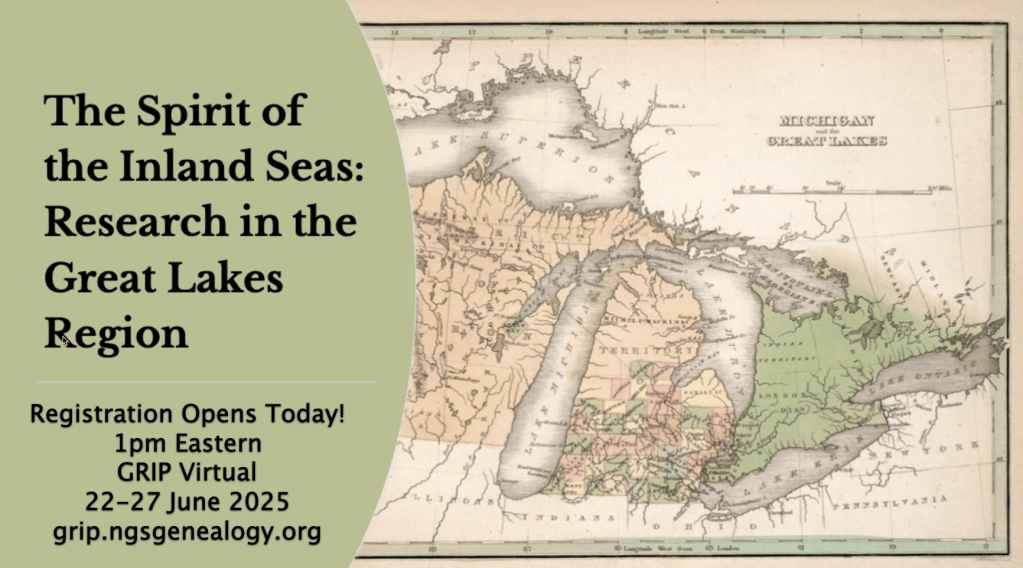
The lakes served as a vital transportation route that contributed to the westward expansion of the U.S. and Canada. If you had ancestors that lived around the lakes, they were likely impacted by the lakes’ usefulness in some way. Shipping routes and advancements in shipping technology, both for resources and people, contributed to the growth of the region. The fluidity of the border between the U.S. and Canada allowed border-dwellers to cross often for commerce, trade, occupations, shopping, attending church, and so on. Border crossing requirements were not put into place until the mid-1890s. The course will walk attendees through not only the history of the area but also has a deep focus on records in terms of what is available and how to access them.

I have a fantastic team of women teaching in the course with me: Cyndi Ingle, Paula Stuart-Warren, and Judy Russell. We will join forces to bring this important area to life through the following topics:

The sessions, and a bit about each:

  • Early to 1850s Geography, History, and Migration – Cyndi Ingle, in which she starts the day off with the early Mesozoic Period and brings us into the 1850s.
  • 1850s to Modern Geography, History & Migration – Cari Taplin, in which I get the better deal and only have to cover about a century of history.
  • Cash, Bounty, Homestead, and Timber: Land in the Great Lakes Region – Cari Taplin. I will discuss the ways in which settlers obtained land, the resources they discovered, and records for both the U.S. and Ontario.
  • Census Records in the Great Lakes Region – Cari Taplin. We all probably know all about census records, but this presentation will dig deeper into the censuses and census issues particular to this region, examining both countries’ records, and we will discuss some helpful methodologies for using censuses in this region.
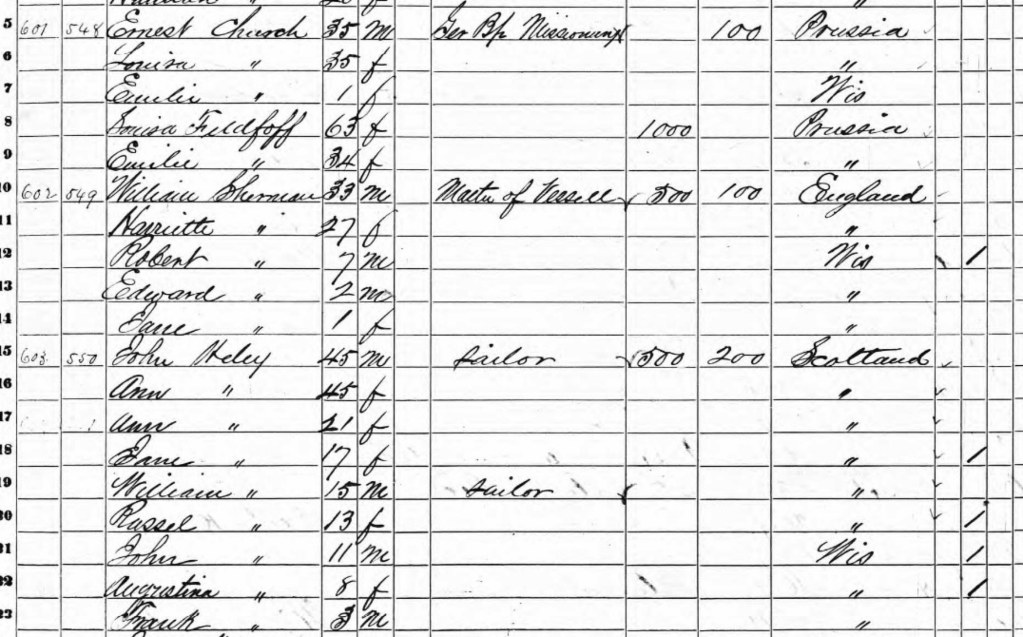
1860 Racine, Wisconsin, Ward 1
  • Finding Birth, Marriage and Death Records in the Great Lakes Region – Cyndi will take a deep dive into vital records and alternative records for the times before vital registration was required. She will help students find challenging records for births, marriages, and deaths in both the U.S. and Ontario.
  • Crossing the Border Between the United States and Canada – Cyndi walks the class through the many records that are available regarding border crossings, including the St. Albans List.
  • Steamers, Tugs, and Schooners: Shipping and Commerce on the Great Lakes – Cari Taplin. This is quite possibly my favorite topic in the Great Lakes course. The Great Lakes waterways were instrumental in the growth of the region, for both Canada and the United States. In this class, we will examine the major shipping routes and ports, discuss passenger lists, shipwrecks, military defense, and transportation, and how that led to population growth. We will also talk about the major businesses that boomed with the expansion of shipping on the lakes.
  • Military Records on Both Sides of the Conflict – Cari Taplin. From the Revolutionary War to the War of 1812, and on to present day, we will discuss the Great Lakes region in terms of defensive strategies for military conflicts, but also about the records that exists for soldiers who moved to the area and left records.
  • Paupers, Pews & Planks: The Law of the Great Lakes – Judy Russell is as entertaining and educational as ever as she walks us through the laws in the Great Lakes region. She will discuss law issues from its origins in the Northwest Territory through individual territorial legislatures and on through statehood. The law of the Great Lakes Region has reflected the particular needs and concerns of its people and its economies. Most importantly, Judy will guide students to resources where they will be able to find the law applicable to genealogical questions at various times in the region’s history, with examples of how knowing the law can help explain records and solve genealogical problems.
  • On a Mission: Religion in the Great Lakes Region – Cari Taplin. Some of the earliest settlers and explorers in the Great Lakes were missionaries of various faiths, looking to convert the native tribes and indigenous peoples living in the area. This class will focus on major religions in the Great Lakes region, a history and timeline of their arrival and expansion in specific areas, and will include a discussion on the main denominational repositories for research.
  • Tracing French Canadian Ancestors – Paula Stuart-Warren will cover the important topic of the French Canadians in the Great Lakes region. If you have an ancestor from a Great Lakes state or province, it’s likely you have found a French Canadian connection. Your German or British Isles ancestor or their sibling may have married into a French Canadian family. Whichever is the case, the records are amazing; the names of parents are generally found. Learn about the general history of the people, the fantastic records created, the books and online resources, the repositories, and meet some new cousins. 
  • Researching in Ontario – Paula Stuart-Warren. Ontario is the only Canadian province to border the Great Lakes. Paula will walk students through researching in this important province. She will talk about the major resources that are available to researchers with connections to Ontario.
  • Great Lakes Newspapers: Defy the Borders – Cari Taplin. We will discuss the importance of newspapers in the Great Lakes region and how the news did not pay attention to the borders. We will discuss the importance of newspapers in the daily lives of our Great Lakes ancestors, and what riches can be unearthed between the sheets of newsprint. The availability of U.S and Canadian newspapers in the Great Lakes Region repositories will be shared.
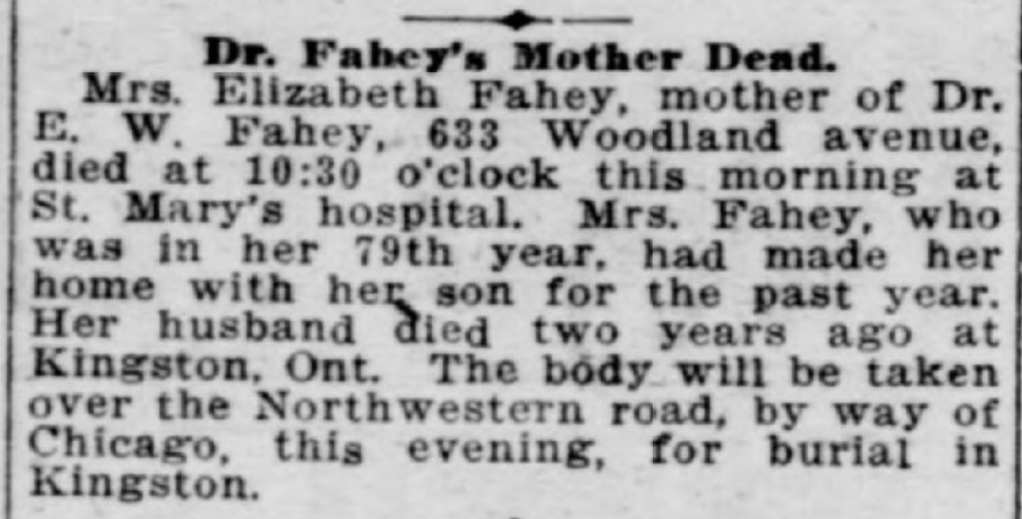
Duluth Herald, 29 July 1918, p 2.
  • Naturalization and Citizenship in the U.S. & Canada – Paula will share information about migration between Canada and the United States, and as it progressed, new residents may have become citizens. This process was important to immigrants in order to assimilate into their new home, obtain land, vote, and take part in other government programs. This class will discuss important aspects of the naturalization process focusing on the Great Lakes region. First papers, declarations, final papers, passports, and other records useful for tracking down immigrant ancestors will be examined and methods for locating those records will be discussed.
  • Beyond Shipping: Making a Living in the Great Lakes Region – Cyndi will discuss the unique occupations in the Great Lakes region. Occupations went far beyond shipping and fishing. Farming, trapping, mining, timber, and railroads drew our ancestors to live and work in this area too. She will discuss the history of various industries that helped grow the area.
  • Major Archives and Libraries in the Great Lakes Region and their Fantastic Records – Cyndi will focus solely on repositories in this session. The research repositories in the area offer extensive in-house and online material for family historians. We’ll cover some at local, provincial, state, and country level. Overlooked treasures offer information that just might fill in those missing family details.
  • Mapping the Great Lakes using Google Earth – Cyndi will dazzle and amaze us with the capabilities of Google Earth and demonstrate how to create migration maps, plot out land owned by our ancestors, and make historical map overlays to show the changes in the Great Lakes region over time.
  • Bringing it all together: Two Case Studies – Captain Stephen Meeker, Sailor on the Great Lakes, and Those Loyalist Taplins – Cari A. Taplin. I finish out the week by sharing two Great Lakes families I continue to research. First, we will examine sailor, Captain Stephen Meeker, descendant of sailors and shipbuilders, who successfully brought the Percival Roberts through a storm. Second, follow the migration of the Taplin family around the Great Lakes as they arrived in the U.S., moved to Canada to avoid the Revolutionary War and ended up in Minnesota and Wisconsin around the time of the Civil War.

We do hope you will join us for a week full of fun and genealogy!

Visit this website for more information and to register: https://grip.ngsgenealogy.org
Known Information about William Long

Since we work from the known to the unknown, I had already researched the Long family line from myself back to William Long. In William’s records, he overwhelmingly reports that he was born in Ireland in about 1819. (If George Long arrived in Ohio in 1817, then William was born in Ohio, or George did not arrive in 1817 but later, or, William arrived later as a young child and was born in Ireland, but then George would have been married in Ireland, not Ohio… You see how this goes?)

Anyhoo, William married Sarah Metzger on 15 April 1841 in Stark County, Ohio. In 1850, William and his family lived in Allen Township, Hancock County, where he worked as a wagon maker. By 1860, William was farming in Findlay Township to the south of Allen Township. William was killed at Stout’s gristmill at Gilboa, Putnam County, on 13 August 1861, when his clothing got caught up in the belts, and he was dragged into the machinery; his body was horribly mangled.

Knowing the information about William pins him in a time and place. I then looked for George Long in Hancock County, as mentioned in J. W.’s biographical sketch, the family relocated to Hancock County. Two George Longs lived in Hancock County at the right time and were of similar ages.

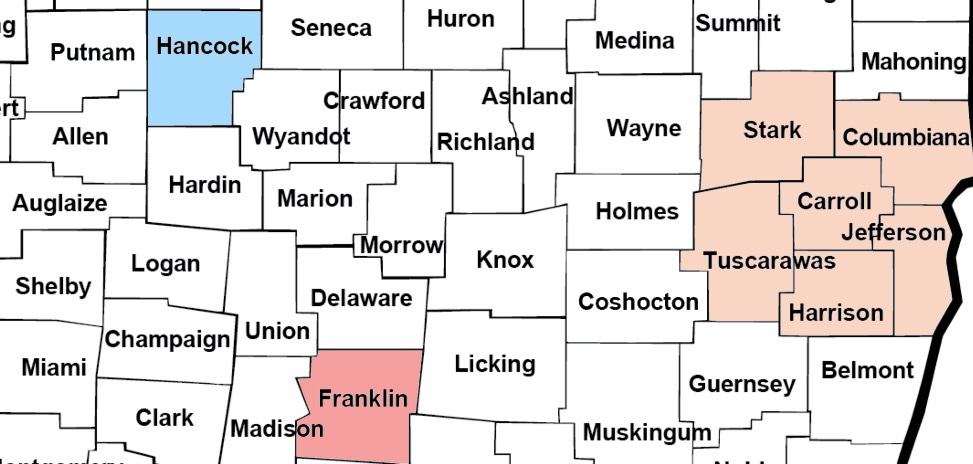
  1. George W. Long lived in Amanda Township in Hancock County in 1840. A land patent refers to him as George Long “of Franklin County.” Franklin County is not one of the five counties that made up Carroll, and it is located in central Ohio, several counties to the south and west of the counties in question. George of Amanda Township was reportedly born in Maryland. He died on 18 August 1880 and was buried in Salem Cemetery in Houcktown, Jackson Township, Hancock County.
  2. George Long lived in Portage Township in Hancock County in 1850. He purchased 40 acres from William R. Alexander in Portage Township, Hancock County, in 1848. He died in Hancock County on 8 October 1855 and is buried next to his wife, “Isabel,” at Thomas Cemetery.
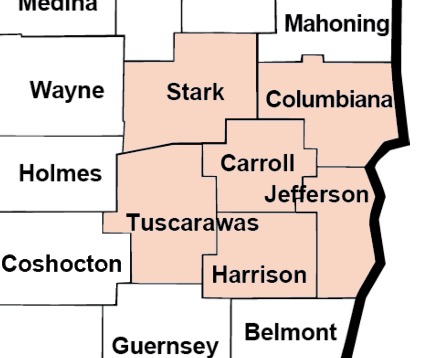
Map expanded to show the Carroll County cluster, Franklin County, and Hancock County.

So, two candidates in Hancock County exist. I need to determine which one is the father of William before I can then identify which George of the twelve is the correct George. The answer next time…

NEW! Study Group Based on Evidence Explained 4th Ed.

We (Cyndi Ingle and I) have developed a five-week study group based on Elizabeth Shown Mills’s book Evidence Explained 4th Edition. This will be a nice companion to our study group based on Tom Jones’s book Mastering Genealogical Documentation. While it is not a requirement to have taken the MGD study group first, we will discuss some of the similarities and differences in their approach to documenting your genealogical research.

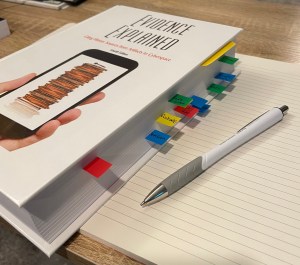
Image of the book Evidence Explained 4th Edition by Elizabeth Shown Mills.

Basically, outside of some standard conventions, there are also a lot of options when it comes to creating your citations. Mills’s book offers some differing options, provides ample explanation of the “why” behind her suggestions, and provides us with this fantastic tome to help everyone through their citation anxiety.

The five-week group will cover the first three chapters of the book. We will have a reading assignment along with guided homework questions to be completed before the discussion sessions. We will have a private Facebook group for discussion between sessions. Each session will be about an hour. You must own a copy of the book which can be purchased at Genealogical Publishing Company or on Amazon.

The cost for the 5-week course is $75. Click the links below to register. Please pay attention to the days, dates, and times when making your selection since they vary.

There will be three sessions (limited to 25 students):

If you can’t make it this time around, sign up on our Waitlist to be notified of the next session when it is scheduled.

We hope you will joint us as we continue to try to demystify the practice of creating citations for your genealogical research.

Identifying 12 Candidates

In my recertification project, I examined census, tax, land, and probate records and identified twelve candidates in the right time and place to be George Long, father of William Long. But how did I decide on those twelve?

  1. Census – The biographical sketch of J. W. Long mentioned in the last post stated that William’s father was George Long and he arrived in Ohio in 1817 from “North of Ireland” to Carroll County, Ohio, where he married and had several children. I used that information to look for George Longs in the 1820 and 1830 censuses in the counties that would later make up Carroll County. They also had to have been born in Ireland, and of an approximate age to fit the other criteria such as the approximate age of William. His age was the one I left most wide open in terms of filtering results.
  2. Land – Knowing that many immigrants came to the United States for land opportunities, I identified George Longs in the Bureau of Land Management’s General Land Office (BLM GLO) database as well as in deed books in the five counties.
  3. Tax – Many counties in Ohio have tax records digitized and online for the years in which I was expecting to find George Long. Tax records can act like a yearly census.
  4. Marriage – Also, many counties in Ohio have marriage records available online for the counties in question in the right time frame to match the information from the biographical sketch. If the correct George Long married in one of the counties that made up Carroll County, then I should find a marriage record, ideally. (I never did.) But the marriage records let me sort out the other Georges into separate individuals.

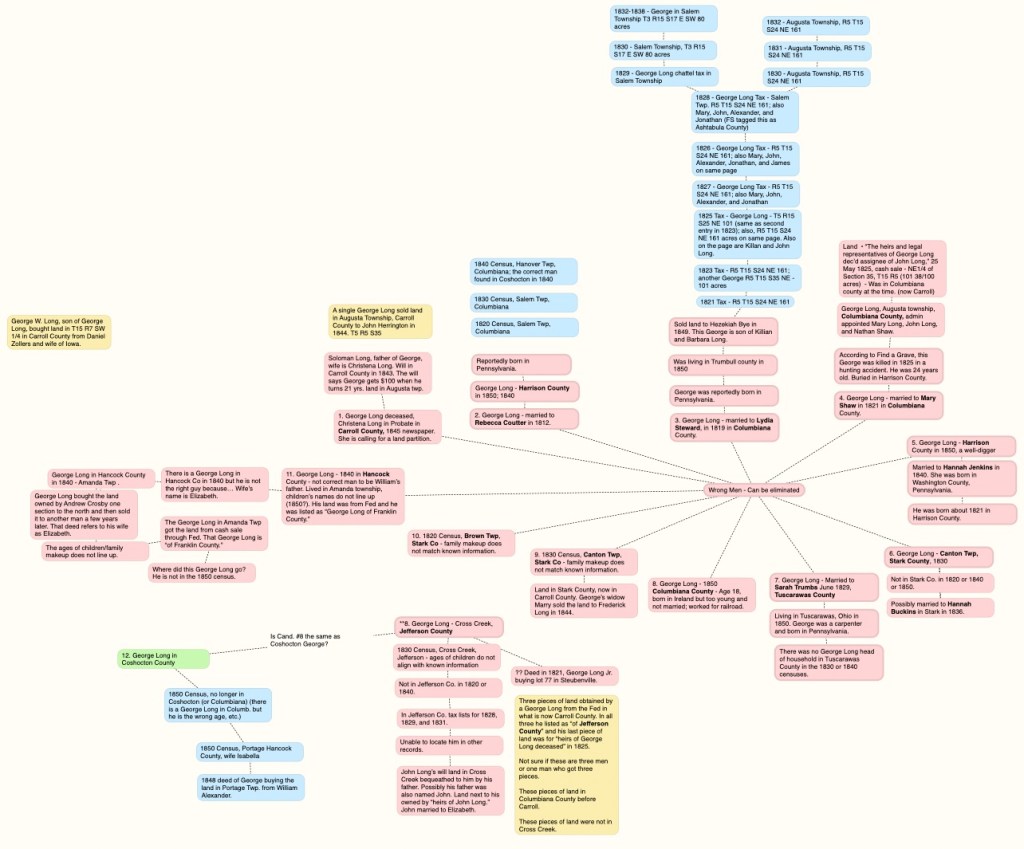
Basically, I collected every George Long I could find in these records, matched them up as the same man, if I could with other context clues (land descriptions mostly), and boiled it down to twelve candidates. How did I keep track of everyone? Besides just textual notes in Scrivener where they were linked to their records, I also used a mind map which I created in Scapple. I am not traditionally a mind-mapper, it’s just not how I think, but it worked beautifully for this project.

A very zoomed out view of my mind map. You’re not necessarily supposed to understand my thoughts, but this is how I organized those candidates and narrowed it down to twelve separate men.

Mind mapping can be used to organize your thoughts. I’ve been to lectures and webinars on the topic. Many times they are used to help with writing in which you can just dump your thoughts into a mind map in no particular order and then later drag the pieces around to become more organized. I personally generally do better with outlines. However, as you can see, I had a lot of little bits of information I was trying to match up to individuals of the same name.

As I am looking at this mind map now, months after its use was finished, I don’t recall the point of the different colors. I believe the red/pink was definitely the wrong man but the blue and yellow I can’t remember why I used them. I’m sure I had a great reason at the time. They all ended up being the wrong man except for the green one and his connected records. And once I got to a certain point of understanding who was who, I stopped using the mind map and started writing. So, it is unfinished as a work product on its own.

Some of the boxes have questions, thoughts, reasoning, and information items. This was very useful when having to set the project aside to say, make dinner, and work, and then come back to it several days later. This allowed me to recall my thinking about a particular man and why I thought he was the wrong one.

Different tools fit different situations and different brains. You might absolutely love mind mapping and use it a lot more than I do. Someone else may prefer to have done all of this in a spreadsheet. Honestly, it doesn’t matter. What matters is that it works for you.

Recertification: What is it? And What Did I Do?

Once you pass your first portfolio with the Board for Certification of Genealogists, you have to submit a project every five years that shows you are not only keeping up with your skills but also improving on any shortfalls they noted in your last portfolio. This time only one project is required at minimum, but it must meet the Genealogical Proof Standard.

My recertification project this time was to identify the father of William Long, my third great grandfather. I had one starting piece of information about William’s father. His William’s son, J. W. Long’s biographical sketch in the Wood County, Ohio, county history. The sketch claims that his grandfather, George Long, came from “North of Ireland” to Carroll County, Ohio, in 1817, married there, and then had several children named in the sketch: George, William, John, Catherine, Ellen, Susan, and Alexander. It does not name his grandmother, George’s wife.

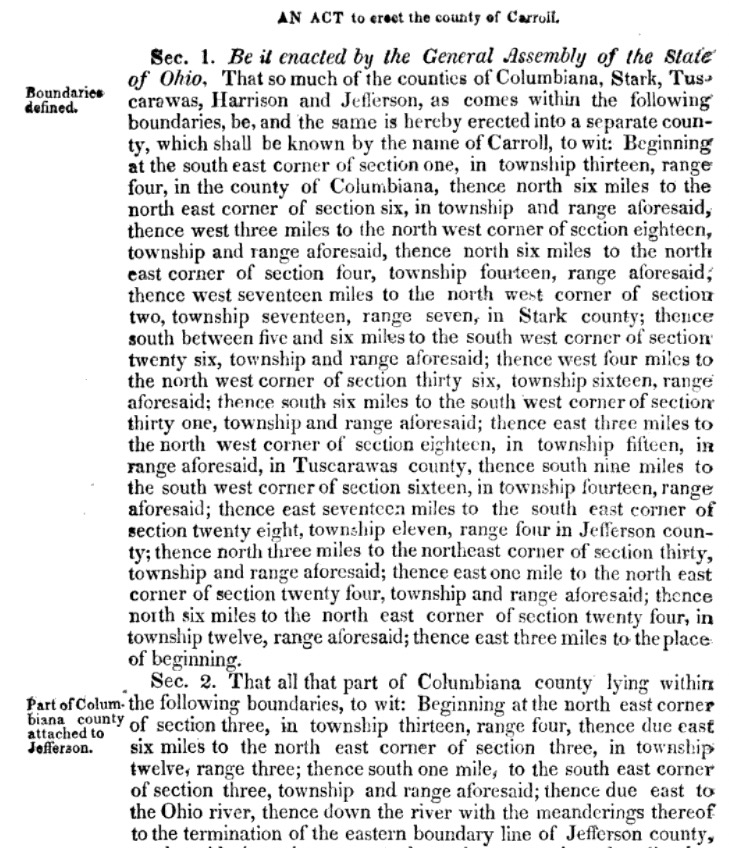
There are some problems with this statement, which I will breakdown over the course of this series. As I was researching this family, several things became clear to me. The first thing was that Carroll County did not exist in 1817. It was not formed until 1833 when it originated from land taken from five counties: Columbiana, Harrison, Jefferson, Stark, and Tuscarawas.1 When George Long arrived in “Carroll County” in 1817, it must have still been one of these other original counties.

This meant that I had to widen my search from one county to five or six, depending on the time frame.

If George arrived in Ohio in 1817, then surely he was enumerated in the 1820 census. Of the nine George Longs in Ohio in 1820, only two lived in one of the target counties: George Long in Salem Township, Columbiana County, and George Long in Brown Township, Stark County. A similar search in the 1830 census shows there were 22 households in Ohio headed by a man named George Long (or similar), four of whom were in a target county. Depending on what record sets I looked at, I found MANY George Longs in and about the correct area in 1820 to 1840.

I identified twelve (12!) candidates that could have fathered William Long. The main purpose of my project was to examine these twelve candidates and eliminate them until only one man made sense. Some were easy to eliminate, others were trickier. I will share some of my information organization tricks in the next post.


1. Acts of A General Nature Passed at the First Session of the Thirty First General Assembly of the State of Ohio (Columbus: State of Ohio, 1832), p. 8; image, Google Books (https://books.google.com/).

I’m Recertified!

I’ve written in the past a little bit about a project I was working on involving George Long, my 4x great grandfather. It was for my recertification project for the Board for Certification of Genealogists. Once you pass your first portfolio, you have to submit a project every five years that shows you are not only keeping up with your skills but also improving on any shortfalls they noted in your last portfolio.

I finished the project in mid-December and shipped it off before the holidays because I did not want to worry about it while trying to relax and enjoy family time. I was told the wait could be up to six months, so imagine my surprise when I got the email informing my my project passed and I am certified for another five years!

Well, when the news came I was sick in be with the worst “stomach flu” I may have ever experienced. We assume it was Norovirus based on the symptoms. My son, who works in hospitals and medical clinics, got it first, and likely brought it home. We immediately started wiping everything down and doing laundry and trying to help him feel better. But I did not escape. I was sick next, and it put me in bed for four solid days, and I honestly didn’t feel like 100% until Sunday, so a full seven days to recover. I got the recertification news on Tuesday (day 3) of being sick. I checked my emails and gave out a very puny “yay.” My husband got a very minor version of whatever our son and I had. Thank goodness, because we needed someone to go get Gatorade and ginger ale and applesauce and otherwise hold down the fort.

I then spent the next week trying to catch up on work. So I’m only now taking a moment to share the news. Over the next few blog posts, I’m going to share some of the problems I solved within that larger project, some of the techniques I used to stay organized, and anything else that jumps out at me about it.

I do want to share this. The anticipation, the worry, the anxiety, and the imposter syndrome I think we all experience (in any field), is real. I definitely worried that some major flaw in my reasoning would be found, that they’d realize they never should have passed me in the first place. Yet, at the same time, I felt more confident on this one than I did on the last recertification. The confidence did nothing to alleviate the anxiety, but, looking back, I think that is a sign of increased skill, knowledge, familiarity with material, and having a good support system, not just with my family but my colleagues as well. It took me one portfolio and two renewals to think, “maybe I DO know what I’m doing.” Ha! If you know me or have been a participant in any of my study groups or courses, I’m sure you’re thinking I’m ridiculous. If you are a certified or accredited colleague of mine, you likely know what I’m talking about. Overall, my point is, don’t let the anxiety hold you back. Do your best and learn from it.

Why You Should Consisder an MGP study group

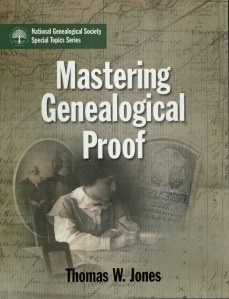
If you are a burgeoning genealogist, you might consider taking our study group based on the book Mastering Genealogical Proof (MGP) by Tom Jones. And if you are an established genealogist, you might consider a refresher on the topic. MGP covers the five elements of the Genealogical Proof Standard (GPS):

  1. Reasonably exhaustive research
  2. Full and complete citations
  3. Analysis and correlation of evidence
  4. Resolution of conflicts
  5. A written conclusion

The MGP book by Tom Jones was designed as a study guide with questions at the end of each chapter. This has been a fantastic way to study the topics of the GPS. He has them broken down into tangible parts, with examples from his own work. The GPS allows genealogists to be confident in their findings, especially as it pertains to tough problems. This book breaks all of that down into easy-to-understand concepts.

Our study groups work through his book, studying his examples, but we also add our own examples to those in the book. We have time for discussion of the book’s questions and of anything from it that is confusing or unclear, and we share our own experiences with those topics.

This year, we are only doing one session of MGP (to make way in our class schedule for a new exciting opportunity; stay tuned). This session will be led by Cyndi Ingle (of Cyndi’s List) and starts on 15 February 2025 and runs on Saturdays at 5pm Eastern for seven weeks.

Please visit this link for the full details.

To register, click here.

We hope you will join us! This opportunity won’t be available again until 2026!

Upcoming Institute Course: Research in the Great Lakes

This summer, I have the pleasure of coordinating the course “The Spirit of the Inland Seas: Research in the Great Lakes Region.” Three other outstanding instructors—Cyndi Ingle, Paula Stuart-Warren, and Judy Russell—will share their expertise with us. They are all amazingly talented and knowledgeable women.

We will discuss topics such as the area’s historical significance, especially in the growth and development of the U.S. and Canada. The resources in the Great Lakes area were major attractors for mining, timber, farming, etc. The lakes acted like highways, moving people and goods from one place to another with more speed and ease than previous modes of transportation.

Not only will you hear from some spectacular instructors, but we all put a lot of time and energy into creating an extensive syllabus that contains not only what we discuss during the presentations but also extra information we don’t have time to cover. Also, it never fails that as we are preparing for the institutes, we find more information that we couldn’t fit into the syllabus before the deadline, so we make addendums that we share during the week. We are committed to providing a high-quality experience and an in-depth dive into the subjects.

The course will be held VIRTUALLY, so you can attend from home, 22-27 June 2025, through GRIP Genealogy Institute. Details about the institute can be found here: https://grip.ngsgenealogy.org/#1#schedule

Registration opens on 4 February 2025 at the link above. Be sure to put that on your calendar! We have a lot of fun in our courses and hope to see you there!

Upcoming Study Groups

We have added our 2025 schedule for the NGSQ, Mastering Genealogical Proof, and Mastering Genealogical Documentation study groups.

We still have some seats remaining in some of the NGSQ sessions. The registration will open soon for the MGP session starting in February.

We also have a new study group coming soon… more details as the group is finalized, so stay tuned for that!

A few thoughts on the NGSQ study groups

I will be heading into my sixth year running these groups. I have learned so much just by being the discussion moderator, but also, I am a student along with everyone else. We all read an article that none of us have (likely) read before. A few things I’ve learned by being a student:

  • I learn about how other people think. Others’ approaches to similar problems of my own give me new insights on how to tackle those problems. What sources are they consulting? How much research are they doing to solve their problem?
  • I learn how other people present evidence. Studying the charts and tables alone gives me ideas on how to visually present the evidence I have found in a way to enhance my narrative.
  • I learn how other people cite their sources. Of course, each journal has an in-house citation style, but beyond that, I learn about which sources authors use and how they cite them, specifically, what is important to include in that citation.
  • I learn how other people resolve conflicting evidence. When you come across sources that are not in agreement, how do you write about that? How to you explain the conflict or present evidence that shows why one side of the conflict is the most likely or “right” side? Reading how others do that helps me learn how to do that for myself.
  • I learn how other people write about certain topics or methodologies. When I read articles that are about disambiguating men of the same name, for example, or how authors write about DNA evidence, I learn about how I can write about similar situations in my own work.

Basically, you learn how to “do” the Genealogical Proof Standard by studying NGSQ articles.

  1. Reasonably Exhaustive Research
  2. Analysis and Correlation of Evidence
  3. Full Source Citations
  4. Resolution of Conflicts
  5. Written Conclusion

We hope you will join us for the learning that doesn’t end, is varied, and new each month!

Full details about our NGSQ study groups can be found here.

Finding Laws

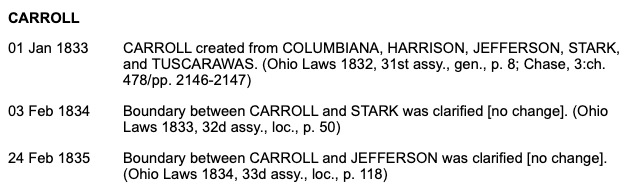
George Long supposedly came from “North of Ireland” to Carroll County, Ohio, in about 1817.1 The problem is, Carroll County did not exist in 1817; it was formed in 1833 from five counties: Columbiana, Harrison, Jefferson, Stark, and Tuscarawas. My hypothesis is then that he had to have been in one of these counties before coming to Hancock County.

In writing my proof argument, I wanted to cite the exact law that created Carroll County. I have numerous books on Ohio, the county boundary changes, I also utilize the Newberry Library’s Atlas of Historical County Boundaries. The Atlas has a timeline of each county’s boundary changes, as well as a bibliography to help point you to the laws.

Atlas of Historical County Boundaries entry for Carroll County.

As you can see, the entry lists sources for the information. I like to read the laws myself. (I guess I have trust issues. But that all stems from being “burned” in the past.)

I turned to Debbie Mieszala’s website The Advancing Genealogist. She has been collecting and posting links to historic law books. I found the one referenced in the image above quite easily. She links directly to the book on Google Books.2 Very handy! Thank you to Debbie for this fantastic resource!

The first part of the law that changed the boundaries and added Carroll County.

If you need to find a historic law, try Debbie’s website. It is a great resource that has saved me a bunch of time on this and other projects as well. Check it out!


1. J. H. Beers, Commemorative, Historical and Biographical Record of Wood County, Ohio. (Chicago:  J.H. Beers and Co, 1897), pp. 714-715. Available on Google Books.

2. Acts of A General Nature Passed at the First Session of the Thirty First General Assembly of the State of Ohio (Columbus: State of Ohio, 1832), p. 8; digital image, Google Books (https://books.google.com/ : Viewed 17 July 2024.