 After our tour through some of my favorite census hurdles, let me sum up with some of my corresponding tricks for dealing with them.
Language Barriers
Think in terms of thick accents and how the names may have sounded.
SOLUTION: Create a list of all possible spellings of your name to use when searching.
Literacy
While you may know exactly how your ancestor’s name was spelled, the census takers and indexers did not. They did the best they could.
SOLUTION: Keep an open mind about how names were spelled in both the census and the census index.
Indexing Errors
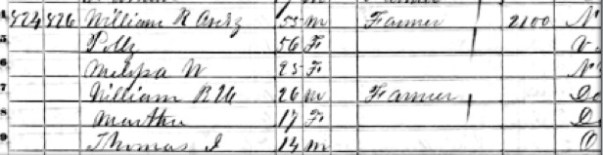
Hard-to-read handwriting & typos
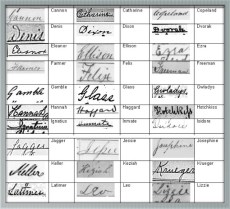
SOLUTION: Learn about old handwriting. Read a lot of old handwriting. Look at tutorials, articles and examples on old handwriting. Be sure to make “corrections” at Ancestry.com using the “add alternate information” link.
Quality of Information Given
How do we know who gave the information and how accurate it is? We don’t.
SOLUTION: Take every bit of information from the census as a clue, not the truth. Always, always, always corroborate census data with other research. Back up your findings with birth, marriage, death, land records and other research.
Microfilming Errors
Did all of the pages get microfilmed?
SOLUTION: Pay attention to the page numbers in the upper corners of the census records. If there are missing pages, you can write to the National Archives for missing pages.
Are the images readable?
SOLUTION: Not much can be done here. You may have some luck with putting the image into a photo editing software and adjusting the brightness and contrast. Also looking at the images in the negative can be helpful.
Some other things you can do to make your census research more successful:
- Use indexes but do not rely solely on them, as we’ve seen, there are errors.
- Make a list of spelling variations. Write down every way you can think of that the surname could be written. Write down every way you find it indexed.
- Read the census line by line for a given district if you are sure they should be there and you can’t find them in the index.
- Learn about old-style handwriting. You can learn a lot about this by volunteering your time as an indexer through FamilySearch Indexing.
- Corroborate census info with other research.
- Don’t give up. Just because you don’t find them in an index doesn’t mean they aren’t there. Get creative with your searches.
I hope this series has given some ideas of what our ancestors, census takers, indexers, microfilmers, and researchers have to deal with during each step of the process. Between when the census taker stepped foot on our ancestors’ doors to these census indexes and images displaying on our computer screens many potential mistakes could have been made. Keep in mind the reasons, try to imagine the situation, and be creative in searching and you will have more success using census records.


 My dog has a little nest and I have a heater to take the chill off of the basement environment. We have two big windows that do let in a lot of light for a basement, so it is not a dark and gloomy as some basements.


 In my last post I expressed by gratitude for the Internet, however, I am also thankful for technology in a more broad sense. In ten seconds, I can scan an aging photograph, have a copy on my computer and in another 10 seconds, I can send it to a distant cousin who may have never seen the photo. I am grateful for technologies like my scanner, computer, large monitor, smartphone with camera, iPad (with Kindle app), as well as software such as Reunion, Evernote, Google, WordPress, Photoshop, iChat, Skype, and so on.
 I don’t know how we ever got along before the Internet. (Well, I do, but it was a slow process!) I am so grateful at the speed with which I can communicate with my family, friends, colleagues and clients. I am grateful that I can attend a Webinar and brush up on a topic without having to drive a long distance or paying a large fee. I am grateful that I can research late into the night in my bunny slippers and jim-jams. I am especially grateful for the wonderful “cousins” and friends I’ve made almost exclusively because of the Internet. I mean I know that Josh Taylor’s dog is a dachshund named Twix and that Dear Myrtle has adorable grand kids, that Footnote Maven writes incredibly entertaining stories about her cat (Monkey Kitty) and dog (Bullet). I have since been able to connect with many of my Internet friends and various conferences and institutes. I am also grateful that the Internet allows me to close the distance between me and my ancestors, not only through research but with sharing and collaborating with other researchers.
 November being the month of Thanksgiving, I thought I would share some of my genealogy-related gratitude, things I’m thankful for in terms of my genealogical life. We all have things we are grateful for in all facets of our lives and it’s a good idea to recount those once in a while. I know I tend to get bogged down by the what’s-going-wrong that I forget what-went-right. Every once in a while it is a good idea to take an inventory.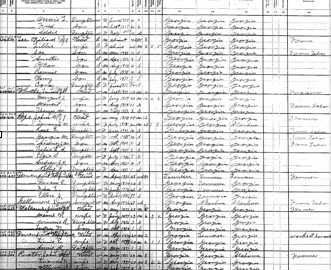
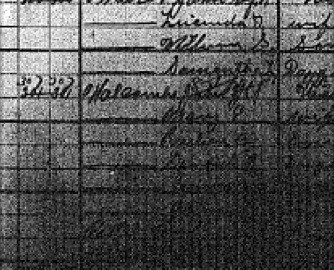
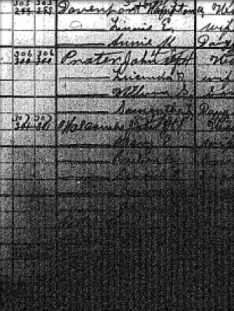

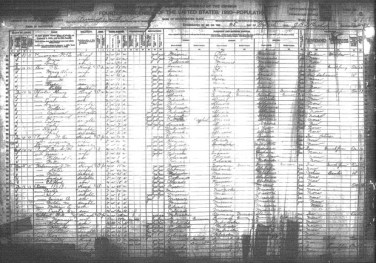
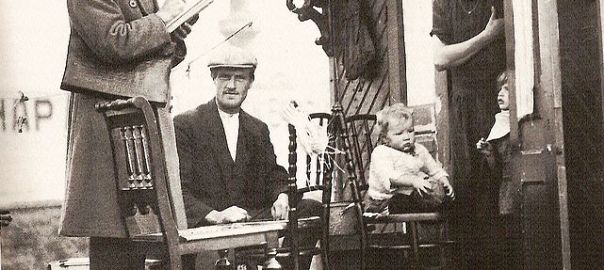
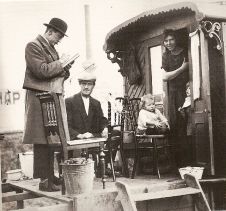 You might think that your ancestors were always home when the census taker knocked on the door. Or that they all sat down, had a cup of coffee or tea while they cooperated completely with the census taker’s questions. Honestly, we have no idea what happened. With the exception of the 1940 census, we have no idea who gave the information to the census taker. We don’t know if it was the head of household, his wife, one of the children, a neighbor, or if the census taker made it all up. We just don’t know.

 Genealogy Pants