Tag Archives: Board for Certification of Genealogists

Recertification: What is it? And What Did I Do?

Once you pass your first portfolio with the Board for Certification of Genealogists, you have to submit a project every five years that shows you are not only keeping up with your skills but also improving on any shortfalls they noted in your last portfolio. This time only one project is required at minimum, but it must meet the Genealogical Proof Standard.

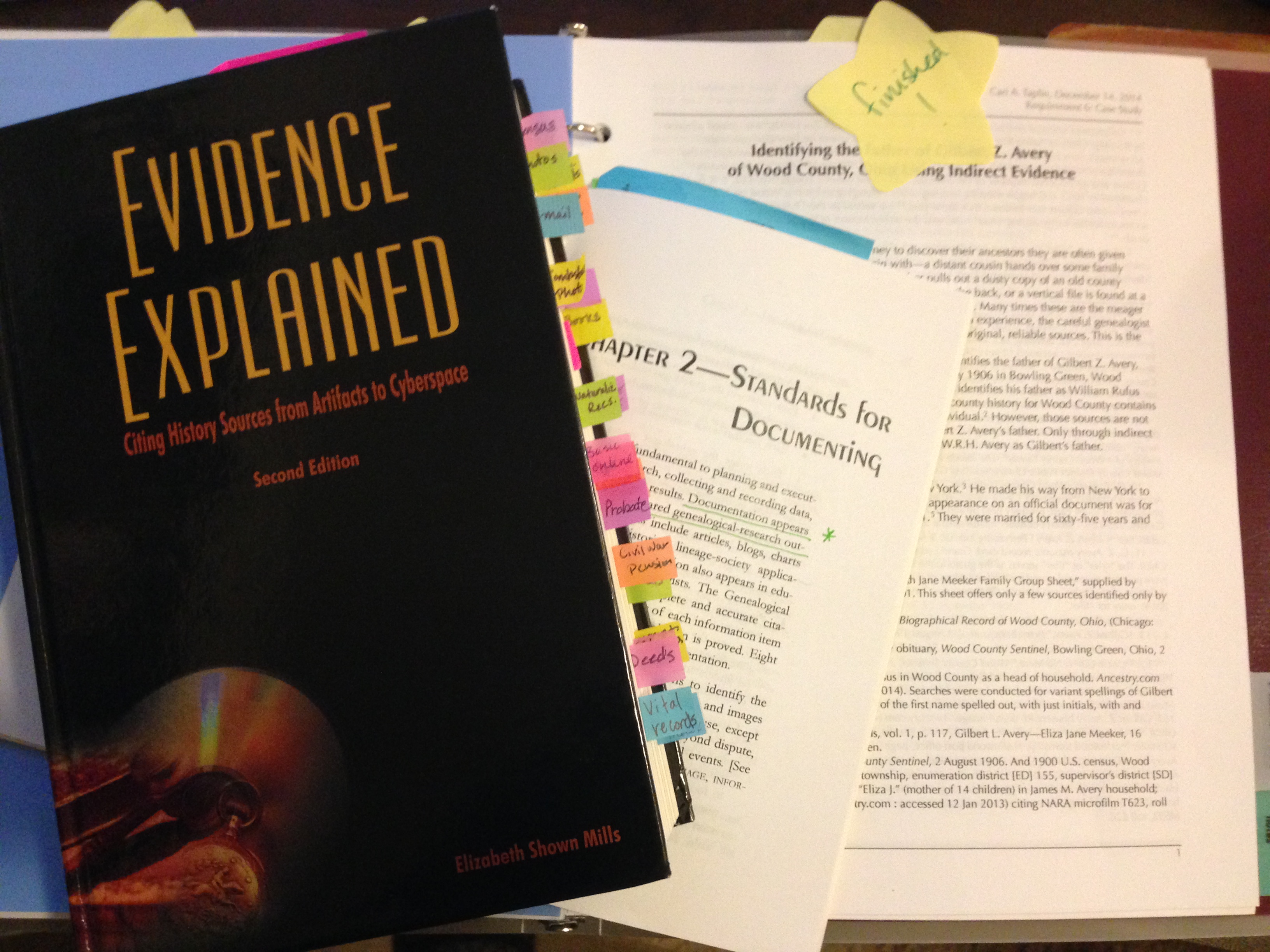
My recertification project this time was to identify the father of William Long, my third great grandfather. I had one starting piece of information about William’s father. His William’s son, J. W. Long’s biographical sketch in the Wood County, Ohio, county history. The sketch claims that his grandfather, George Long, came from “North of Ireland” to Carroll County, Ohio, in 1817, married there, and then had several children named in the sketch: George, William, John, Catherine, Ellen, Susan, and Alexander. It does not name his grandmother, George’s wife.

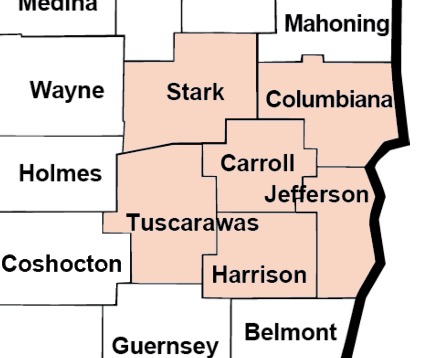
There are some problems with this statement, which I will breakdown over the course of this series. As I was researching this family, several things became clear to me. The first thing was that Carroll County did not exist in 1817. It was not formed until 1833 when it originated from land taken from five counties: Columbiana, Harrison, Jefferson, Stark, and Tuscarawas.1 When George Long arrived in “Carroll County” in 1817, it must have still been one of these other original counties.

This meant that I had to widen my search from one county to five or six, depending on the time frame.

If George arrived in Ohio in 1817, then surely he was enumerated in the 1820 census. Of the nine George Longs in Ohio in 1820, only two lived in one of the target counties: George Long in Salem Township, Columbiana County, and George Long in Brown Township, Stark County. A similar search in the 1830 census shows there were 22 households in Ohio headed by a man named George Long (or similar), four of whom were in a target county. Depending on what record sets I looked at, I found MANY George Longs in and about the correct area in 1820 to 1840.

I identified twelve (12!) candidates that could have fathered William Long. The main purpose of my project was to examine these twelve candidates and eliminate them until only one man made sense. Some were easy to eliminate, others were trickier. I will share some of my information organization tricks in the next post.


1. Acts of A General Nature Passed at the First Session of the Thirty First General Assembly of the State of Ohio (Columbus: State of Ohio, 1832), p. 8; image, Google Books (https://books.google.com/).

I’m Recertified!

I’ve written in the past a little bit about a project I was working on involving George Long, my 4x great grandfather. It was for my recertification project for the Board for Certification of Genealogists. Once you pass your first portfolio, you have to submit a project every five years that shows you are not only keeping up with your skills but also improving on any shortfalls they noted in your last portfolio.

I finished the project in mid-December and shipped it off before the holidays because I did not want to worry about it while trying to relax and enjoy family time. I was told the wait could be up to six months, so imagine my surprise when I got the email informing my my project passed and I am certified for another five years!

Well, when the news came I was sick in be with the worst “stomach flu” I may have ever experienced. We assume it was Norovirus based on the symptoms. My son, who works in hospitals and medical clinics, got it first, and likely brought it home. We immediately started wiping everything down and doing laundry and trying to help him feel better. But I did not escape. I was sick next, and it put me in bed for four solid days, and I honestly didn’t feel like 100% until Sunday, so a full seven days to recover. I got the recertification news on Tuesday (day 3) of being sick. I checked my emails and gave out a very puny “yay.” My husband got a very minor version of whatever our son and I had. Thank goodness, because we needed someone to go get Gatorade and ginger ale and applesauce and otherwise hold down the fort.

I then spent the next week trying to catch up on work. So I’m only now taking a moment to share the news. Over the next few blog posts, I’m going to share some of the problems I solved within that larger project, some of the techniques I used to stay organized, and anything else that jumps out at me about it.

I do want to share this. The anticipation, the worry, the anxiety, and the imposter syndrome I think we all experience (in any field), is real. I definitely worried that some major flaw in my reasoning would be found, that they’d realize they never should have passed me in the first place. Yet, at the same time, I felt more confident on this one than I did on the last recertification. The confidence did nothing to alleviate the anxiety, but, looking back, I think that is a sign of increased skill, knowledge, familiarity with material, and having a good support system, not just with my family but my colleagues as well. It took me one portfolio and two renewals to think, “maybe I DO know what I’m doing.” Ha! If you know me or have been a participant in any of my study groups or courses, I’m sure you’re thinking I’m ridiculous. If you are a certified or accredited colleague of mine, you likely know what I’m talking about. Overall, my point is, don’t let the anxiety hold you back. Do your best and learn from it.

A bit of a rest…

Leading up to GRIP (GRIP Genealogy Institute) was a whirlwind. Cyndi Ingle, Paula Stuart-Warren, and I put together a brand new course about researching your farming ancestors. We had so much fun doing the research to put the course together. We ran into so many interesting topics, resources, historical events, inventions, records, repositories, and so on, that the course probably could have been two weeks, easy. But that’s a story for another time. All of that work and then the teaching for the week, while fun, was also exhausting; I took a little rest from the blog.

But I’m back, at least somewhat. I’m now working on a big project that has a due date… my recertification project is in full swing! I cannot believe how fast five years goes. Well, these last five years have been weird anyway, so that didn’t help matters.

I am one of those crazy morning people. Since January and getting ready for GRIP, I have been getting up at 5:30 am and shortly thereafter heading to my office to get a couple of hours of work in before my workday at Ancestry ProGenealogists. It has been going very well. Now that GRIP is over, I’ve been working on this project in the same time slot and have made some great progress.

I’ve written about this project before. The target ancestor is George Long, who died in Hancock County, Ohio, in 1855. Where did he come from before Hancock County? I identified 11 candidate George Longs in the right time and place. So, my project has been first identifying and then eliminating those candidates, and then researching the one left standing to prove he is the right man.

Stay tuned for more fun times.

Writing: Genealogy Standards

Let’s get the boring (but important) stuff out of the way first. Standards. Many genealogists I talk to either don’t know that they exist or think they don’t apply to them. I hope that you’ll at least consider them when working on your genealogy projects.

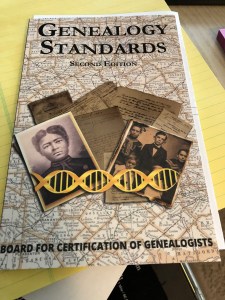
Genealogy Standards is a book published by the Board for Certification of Genealogists (BCG). It puts into writing what many genealogists have been doing for decades, especially those who try to work at a high level of accuracy. I don’t intend that to soundBCG Standards judgy or elitist, but if you want your work to stand the test of time, to be accurate, unable to be overturned when new evidence surfaces, the standards are there to help guide you. There are standards for many aspects relating to genealogy. Those regarding writing can be found in chapter 4.

“A soundly reasoned, coherently written conclusion eliminates the possibility that the conclusion is based on bias, preconception, or inadequate appreciation of the evidence. It also shows or explains how the evidence leads to the conclusion.”1 

Some of those standards specifically (but not entirely) are:

  • Standard 59 – Proved Conclusions
  • Standard 60 – Selection of Appropriate Options
  • Standard 61 – Logical Organization
  • Standard 69 – Clear Writing
  • Standard 70 – Technically Correct Writing

When you begin writing your conclusion regarding a particularly difficult aspect of your research, you need to know what you are writing about. Sounds silly, doesn’t it? I’d like to suggest that if you aren’t clear about your research question then you will not know when you reach a sound conclusion. Be clear what you are writing about:

Who was Angeline Mitchell?

vs.

Who were the parents of Angeline, married to Thomas C. Mitchell and living in Barren County, Kentucky in 1850?

Which is the better research question? Which one will you know you’ve answered (proved conclusion) by the time you’re done writing?

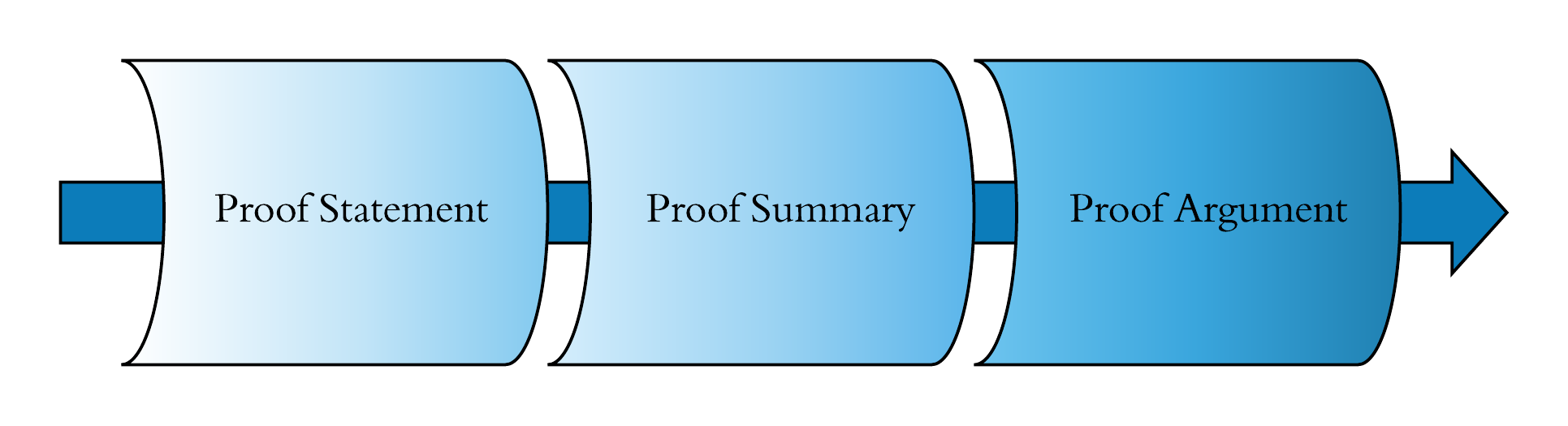
Standard 60 talks about choosing the appropriate option for writing up your findings. Does your evidence warrant the use of a proof statement, proof summary, or proof argument? Do you know the difference? Think of them as being on a continuum from simple to complex.

Proofs Continuum
Proof Continuum, created by author ©2020

A proof statement can be stated in a sentence or two with appropriate citations. A proof summary might consist of a series of bullet points and/or paragraphs, with citations. A proof argument is the most complex, building a case usually through the use of indirect or conflicting evidence, much like you see in scholarly journals such as the National Genealogical Society Quarterly.

Standards 69 and 70 discuss technically correct and clear writing. Typos, colloquialisms, spelling, grammar, jargon, and so on can make your writing difficult to read and your case unclear. Likewise, standard 61 addresses the logical sequencing of your evidence. There is some “wiggle room” with how you present your evidence, but you have to present it in a way that is clear and makes sense to the reader.

I could write a lot about the standards for genealogy. I will leave it with an encouragement for you to pick up the book if you don’t already own it and give it some study. I find the standards help guide me, especially when I am feeling stuck.


1. While this book is published by BCG, it is not just for BCG certified associates. It applies to all genealogical work. See The Board for Certification of Genealogists, Genealogy Standards, (Ancestry: Nashville, 2019), 3.

My CG has been renewed!!!

I received word today––after what felt like an eternity––that my CG has been renewed for another five years! YAY!

What does that mean? All CGs (Certified Genealogist®) have to submit a renewal portfolio to the Board for Certification of Genealogists to prove that they are keeping up if not improving their skills after having passed the first time. The renewal requirements FiveMoreYearsare less intense than the initial portfolio, but I am here to tell you that the worry and stress and fear while waiting the second time is much more intense! Why? I was chatting with colleague and pal Judy Russell, The Legal Genealogist, [thank you, Judy, for your constant encouragement!] and discussing the stress I was feeling while waiting to hear if I’d passed. She put it into words: The first time you have nothing to lose. The second (and subsequent times) they can take away your credentials! And then what would I do? I suspect I’d hide under a rock for a while.

To be fair, if one is participating in continuing education and focusing on strengthening weak areas in their skills, there really should be no worry. And I did that. I read the first set of judges’ comments many times, determining where my weak spots were, and worked to improve those areas. Apparently, it worked! (Though it did not stop the little voice in my head that likes to present me with worst-case scenarios all of the time!)

Now that the stress of waiting is over, I can breathe again. Next up: to plan my next renewal project!

CG Renewal Time!

I recently received a helpful packet in the mail from the Board of Certification of Genealogists that my renewal application would be coming due soon. Where did five years go? (Well, four and a half, but still.) It seems like just yesterday I was putting the final spit and polish on my first portfolio!

Luckily, the renewal application process is not as rigorous as the initial application. You only have to submit one to three items as long as one meets the Genealogical Proof Standard (GPS). The main goal is to make sure you are continuing to grow in your journey as a Certified Genealogist, that you are keeping up your education, and that you are applying the standards to your work.

I have been working steadily to improve everything from my first portfolio and am not too worried, except for the lack of time I have to work on it! So I’ve been working hard to finish up and clear out some responsibilities I’ve had and to block time out in my schedule to work on it. Time management is such a trick sometimes!

I will keep you posted. In the meantime wish me luck and few interruptions!

Board for Certification of Genealogists Adopts Standards for DNA Evidence

The use of DNA in our genealogical research is becoming more and more prevalent. As the use of DNA has grown, the Board for Certification of Genealogists (BCG) has been assessing how it has affected the field. As a result, BCG has adopted new standards for the use of DNA in genealogical work.

The following news release was received from BCG making the announcement:

For immediate release 27 October 2018
News Release, Board for Certification of Genealogists

Board for Certification of Genealogists Adopts Standards for DNA Evidence

On 21 October 2018, the Board for the Certification of Genealogists (BCG) approved five modified and seven new standards relating to the use of DNA evidence in genealogical work. BCG also updated the Genealogist’s Code to address the protection of people who provide DNA samples.

The new measures are intended to assist the millions of family historians who now turn to genetic sources to establish kinships. The action followed a public comment period on proposed standards released by BCG earlier this year.

“BCG firmly believes the standards must evolve to incorporate this new type of evidence,” according to BCG President Richard G. Sayre. “Associates, applicants, and the public should know BCG respects DNA evidence. It respects the complexity of the evidence and the corresponding need for professional standards. BCG does not expect use of DNA to be demonstrated in every application for certification. However, all genealogists, including applicants, need to make sound decisions about when DNA can or should be used, and any work products that incorporate it should meet the new standards and ethical provisions.”

“Standards for Using DNA Evidence,” a new chapter to be incorporated in Genealogy Standards, introduces the issues this way:

“Meeting the Genealogical Proof Standard requires using all available and relevant types of evidence. DNA evidence both differs from and shares commonalities with documentary evidence. Like other types of evidence, DNA evidence is not always available, relevant, or usable for a specific problem, is not used alone, and involves planning, analyzing, drawing conclusions, and reporting. Unlike other types of evidence, DNA evidence usually comes from people now living.”

In brief1, the new standards address seven areas:

  • Planning DNA tests. The first genetic standard describes the qualities of an effective plan for DNA testing including types of tests, testing companies, and analytical tools. It also calls for selecting the individuals based on their DNA’s potential to answer a research question.
  • Analyzing DNA test results. The second genetic standard covers factors that might impact a genetic relationship conclusion, including analysis of pedigrees, documentary research, chromosomal segments, and mutations, markers or regions; also, composition of selected comparative test takers and genetic groups.
  • Extent of DNA evidence. The third genetic standard describes the qualities needed for sufficiently extensive DNA data.
  • Sufficient verifiable data. The fourth genetic standard addresses the verifiability of data used to support conclusions.
  • Integrating DNA and documentary evidence. The fifth genetic standard calls for a combination of DNA and documentary evidence to support a conclusion about a genetic relationship. It also calls for analysis of all types of evidence.
  • Conclusions about genetic relationships. The sixth genetic standard defines the parameters of a genetic relationship and the need for accurate representation of genealogical conclusions.
  • Respect for privacy rights. The seventh genetic standard describes the parameters of informed consent.
  • The modifications made to several existing standards call for:
  • Documentation of sources for each parent-child link.
  • Where appropriate, distinction among adoptive, foster, genetic, step, and other kinds of familial relationships.
  • Use of graphics as aids, for example: genealogical charts and diagrams to depict proved or hypothesized relationships; or lists and tables to facilitate correlation of data and demonstrate patterns or conflicts in evidence.
  • Explanations of deficiencies when research is insufficient to reach a conclusion.

A new edition of Genealogy Standards is expected to be ready by next March. A new application guide and judging rubrics incorporating the new standards will be released at about the same time. In the interim, portfolios submitted for consideration for certification will be evaluated using the existing Genealogy Standards.

1. The Board for Certification of Genealogists® (BCG) contractually granted the publisher of Genealogy Standards the exclusive right to copy, publish and distribute the standards including amendments. However, BCG-certified associates have the contractual right to include reasonable portions of the standards in presentations, articles, blog posts, social media, and the like. In no case may BCG or its associates allow the standards to be published in their entirety because the publisher deems that competitive to its publication rights.

The words Certified Genealogist and the designation CG are registered certification marks and the designations Certified Genealogical Lecturer and CGL are service marks of the Board for Certification of Genealogists, used under license by board-certified associates after periodic competency evaluations, and the board name is registered in the U.S. Patent & Trademark Office.
Genetic Genealogy Standards Deadline Looming

If you haven’t yet had a chance to read and comment on the proposed genetic genealogy set forth by a committee of the Board for Certification of Genealogists, you only have a few days left.

The proposed standards can be viewed at https://bcgcertification.org/DNA/Proposed_Standards.pdf.

The public comment period ends on 23 July 2018. Fill out the survey at this link (https://goo.gl/forms/57ahXLqkAYOBWDop2) by 23 July 2018.

BCG Seeks Public Comment on Genetic Genealogy Standards

Exciting news!

This was just sent out by the Board for Certification of Genealogists:

[At the annual meeting at NGS] … “the trustees debated a proposal to update genealogy standards to incorporate standards related to genetic genealogy. As a result of this discussion BCG intends to move forward with the integration of genetic genealogy into Genealogy Standards. The board directed that the committee’s proposal be published for public comment. The proposed standards can be viewed at https://bcgcertification.org/DNA/Proposed_Standards.pdf.

The public comment period ends on 23 July 2018. Fill out the survey at this link (https://goo.gl/forms/57ahXLqkAYOBWDop2) by 23 July 2018. Due to the expected volume of comments, we will not be able to acknowledge or respond to individual comments.”

Often, when I am discussing the certification process with interested genealogists, I am asked about using DNA in portfolios. They want to know about the specific requirements for including genetic genealogy in their portfolios, and as of yet, there are not really any specifics. There are now many NGSQ articles I can point people to, webinars that can be watched for DNA methodology, and guides and articles on citing DNA in your reports. However, there are not currently any DNA-specific standards, rubrics, or instructions for portfolio preparation. I hope this is a step in that direction, so that those working on certification can have specific and solid guidelines for DNA requirements.

If you are interested in reviewing the proposed standards for genetic genealogy, I encourage you to view and comment using the links above.

BCG Portfolio Madness

PortfolioFinishedI turned it in. It is over. This MAJOR accomplishment is done. I TURNED IN MY BCG PORTFOLIO!

Honestly, I don’t know if it’s any good (I am my own worst critic). I have been looking at this project for a couple of years and almost non-stop for the last 3 months. I am not sure who or what it’s about anymore, if I made any valid arguments, or if it even contained complete, coherent sentences. If you’ve ever undertaken a major project you know what I’m talking about. You get so close to it you can’t see it anymore. The words blur together. And even though it makes sense to you, who knows about the rest of the world.

Let me say this: whether or not I pass doesn’t matter at this point. I did it. It is done, over, finished, kaput and off to the judges. I turned it in and it is out of my hands now. I also know I did my best given all that has happened to me and my family over the last four months. In case you didn’t know: we moved from Colorado to Texas, bought a house, sold a house, packed, unpacked, got kids into school, and are still adjusting to life in a new and almost foreign state. And I finished my portfolio. I think I will say it again because I’m not sure I believe it yet: I finished my portfolio.

Also, whether or not I pass, I know this:

  • I am a better genealogist for having done it.
  • I have researched, analyzed, correlated, researched, written, proofread, researched, proofread, and researched more than I ever have in my life. (Did I mention that I also proofread until my eyes couldn’t focus anymore?)
  • I have learned more about citations that I ever knew before.
  • I know more about my methods of being organized (or disorganized) and worked on ways to improve all of it.
  • I know way more about the process and what it actually takes to get the portfolio done. (It’s A LOT!)
  • If I don’t pass this time, I will be doing it all over again because when you have a goal you can’t give up or you’ll never make it.
  • And I know that my mentor Birdie Holsclaw told me I could and should do this, so I will keep working at it until it happens.

There were a couple of good things I learned that I will share just in case you don’t already do these things.

  1. Keep a log of the documents you’ve requested, sent off for, asked a friend or colleague to copy, etc. I found that I got so many balls in the air toward the end and while I was moving that I had a few documents “on order” that I lost track of. I needed to follow-up on them because they weren’t in my hands weeks before deadline and then I scrambled to get them, failing to do so on one important document. (This is the one thing I can’t get out of my mind.) Keep some kind of log and keep track of those document requests.
  2. I know you’ve heard this, but I’m going to say it too. Write those citations, fully, as you gather the information. I don’t know how many hours I spent trying to “re-find” things, fill in volume, page, column, enumeration district, and microfilm numbers so I could create an appropriate citation. And I’ve been doing this for years. I know better! I spent too many hours, that’s for sure. And I can now say with certainty that I will ALWAYS write my source citations the minute I find something. Seriously. I am not exaggerating.
  3. Start writing right away. I tried researching first, filling in boxes in my software and creating check-off charts to be sure I covered everything. I still ended up doing a lot of research during the writing phase of the process and then felt like I was crunched for time at the end. I say forget it and just write. I ended up doing things like color coding sentences that needed more research, writing “find a source for this” in the footnotes, and coming back to it later. Get it all out there, on the computer screen, as much as possible, and then go back and work on it, and then go back and work on it, and then go back and work on it some more. Eventually it will all come together.

I’m sure there are some more “tips” I could give, but these are the first things to come to mind. I’m glad it’s over. I was getting really tired of those surnames and after a while I started getting confused about who was who. I’m happy to have it completed before the holidays and I hope all of you have a great holiday season and happy new year!

(And if any of the above makes sense, I’ll be surprised. I’m pretty sure my mind has gone to jelly for the time being. Just forgive any typos, use of passive voice, improper use of “it’s” or “its” and chalk it up to “post-portfolio brain.”)