I’ve been in Grand Rapids, Michigan since Tuesday when I attended the Board for Certification of Genealogists (BCG) Education Fund’s “Putting Skills to Work” class. What an excellent day! The time was split between two classes.
Connie Lenzen’s class “Planning and Executing Reasonably Exhaustive Research: Or How to Ensure a Successful Hunt” discussed research questions and plans. I have to say that I was quickly reminded of what I should be doing everyday. I get so excited for the research that I forget to focus, slow down, and set forth a path for my search.
Tom Jones made us think about “Citing All Kinds of Online Sources.” This class focused only on sources you find online and really made us look at all of the layers that an online source might have. The original source, the microfilmed version, the scan of the microfilm, an original digitization in color, previously published or not, and so on. We worked through many example citations as a class and discussed each of the parts.
The level of interactive instruction that one gets at a BCG “Putting Skills to Work” class is incredible. If you are interested in certification, are already on the clock, or are already certified, it doesn’t matter. These classes are wonderful examples of hands-on, lecture with discussion with exercises, types of classes many of us enjoy and will benefit for our own continuing education.
The BCG Education Fund’s “Putting Skills to Work” occurs on the Tuesday before the National Genealogical Society Conference every year, so you will want to adjust your schedule accordingly. Next year’s schedule was announced at this years’ class, and will take place in St. Charles, Missouri on Tuesday May 7, 2019:
- “Meeting Standards with Twenty-First Century Research Reports” with Melissa Johnson, CG
- “Evidence Analysis: Theory, Practice, and the Real World” with Nancy A. Peters, CG, CGL
For more information on the BCG Education Fund, visit bcgedfund.org.
 I recently completed my first time as discussion group leader (ring leader?) with Jill Morelli’s “Certification Discussion Groups” (CDG for short). These groups were created to demystify the process of preparing and submitting your portfolio for the
 If you couldn’t make it to NGS (or even if you did) this is a great way to hear some fantastic lectures.
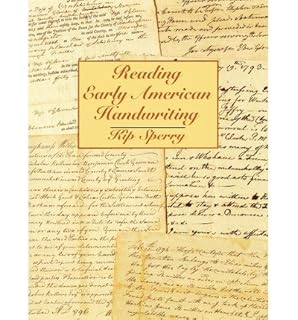 My last tip is to transcribe, transcribe, and transcribe. Any and all of your own research documents. Don’t have any? Go to FamilySearch and pick any record such as a deed or a will, and get started. If you choose to transcribe documents from a location where there is a local genealogical society that publishes a quarterly journal or other research publication, consider submitting your transcriptions to be published. Society journals are always looking for content. For more information about best practices for transcriptions, see chapter 16 of the book Professional Genealogy (edited by Elizabeth Shown Mills) titled “Transcripts and Abstracts.”

