I don’t know about you, but when I read someone else’s writing, I nearly always find something to correct or suggest, from small typos to major sentence-rewrites. But when it comes to my own writing, I can put the dumbest things into writing and be completely blind to it! Again, from the smallest typos (I still mess up it’s and its when I’m not actively thinking about it) to the largest errors. (I once had to write a paper about artists’ manifestos and literally wrote “The communists wrote a manifesto, Karl Marx wrote a manifesto…” Yeah, I did.)
So, my question to you is, can you self-edit? I think it is the absolute hardest thing to do when it comes to writing. If you’re a long-time reader, you’ve probably found typos and errors in my writing, simply because I can’t self-edit. So, here are some things I’ve come to do when a project gets down to the nitty-gritty and really needs to be polished.
Find a writing buddy or willing proofreader –– This is usually my husband and he
usually doesn’t have a lot of choice in the matter. (Love you, hun.) He proofreads all of my syllabi and articles before they go out. And the things he finds! Woah. I sound a lot  more intelligent after he’s given these things a read. So find someone who is willing to do that for you. You can find another writer and trade. With the internet, email, video calls, screen-sharing, and so on, you don’t need to be in the same region to do this. If you’ve connected with a like-minded person you get along with at a conference, build up a relationship and become writing buddies.
Read your writing out loud –– Nothing will bring your poor sentence structure to light than reading it out loud to your cat (or dog). For some reason, when you hear what you’ve written, it becomes a lot more obvious when you’ve written something a bit wonky. If you don’t have a buddy or your buddy isn’t available, give this technique a try. It works very well for me.
Do some reading –– This might sound strange, but they say the best writers are also avid readers. Reading someone else’s work gives your mind ideas on how to write sentences, how to string the words together in an elegant way, and gives your brain a break from “output” and instead engages in “input” while also engaging in the craft of wordsmithing.
Use some resources –– I have three books I couldn’t say enough about when it comes to
self-editing. When I’m not sure how to handle a writing situation these books come to my rescue:
- Chicago Manual of Style (we’re on version 17 right now). I have the hardback but I also purchased the online subscription because you can do a quick search by topic online. However, I do like to browse the book as well. (I’m nerdy that way.)
- Strunk and White’s The Elements of Style, a nice quick read on usage and grammar which can really tighten up your writing.
- Edit Yourself by Bruce Ross-Larson, which is similar to Strunk and White but gives some comparison examples along the lines of “if you wrote this, try this instead” all throughout the book. It also focuses on using more direct or clearer writing.
If you struggle with self-editing like I do, I hope you’ll give these things a try. Writing up what we’ve researched is such an important step. Don’t let the editing get in the way!
 judgy or elitist, but if you want your work to stand the test of time, to be accurate, unable to be overturned when new evidence surfaces, the standards are there to help guide you. There are standards for many aspects relating to genealogy. Those regarding writing can be found in chapter 4.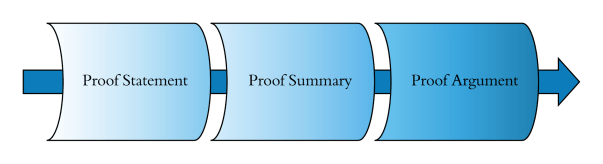
 are less intense than the initial portfolio, but I am here to tell you that the worry and stress and fear while waiting the second time is much more intense! Why? I was chatting with colleague and pal Judy Russell,
 I can hear many of you saying “I’m not a good writer.” And to that, I say “pish posh!” That is what editors are for. Editors (whether they are a trusted friend, someone you hire, or that from a journal) make your writing better! Don’t let that “I’m not a good writer” thought stop you from doing it. I sit in my office every day and look at my binders and worry that someday I’m going to come to a point in my life when I don’t get that work published somewhere, anywhere, where it can be used by future researchers. (I used to say “what if I’m hit by a bus” until a friend was literally hit by a bus, don’t worry, she’s ok. Another friend told me to think “what if I win the lottery and move to a private island” instead. She’s right. That’s a lot more fun to imagine. But even then, I’d probably figure out how to get the internet and do genealogical research even on my island.)
 particular day of the week. Now, I was not able to be super consistent with it, but it was so nice when I was able to just put work aside and do some research for myself. It was refreshing, revitalizing, and fun. Those times have convinced me to make this a more consistent part of my routine. My schedule is just hectic enough that I’ll have to make this plan on a week by week basis, but I use the
  fill in those blanks. I will also seek out books, articles, blog posts, past webinars, and YouTube videos that might help start my education in that area.
 getting your genealogy organized can be a big time-saver in the long run. I encourage you to look at any system for organization and just take the leap and get it done. This is not something you sit down and do one day, usually. There’s a process: pick a system (this involves a little trial and error) then DO the system (get everything “synced” to the new system).
 Genealogy Pants