Tag Archives: Education

Census Hurdles – Literacy

Like the problem of language barriers, literacy (or the lack thereof) likely complicated the census taker’s job. Most of my ancestors, as far as I can tell, had a limited education. Only in the 1900s do I begin to find out that my ancestors went to school. Those that I was able to talk to only went through some elementary or middle school. Their focus was on earning a living, and especially through the Depression era, helping their parents make ends meet. School and education were not a focus in my family until recent times. I have one grandfather who attended Bowling Green State University, but it is unclear if he graduated (WWII happened and he enlisted). Other than that, it’s been my parents’ generation that really began to focus on education.

2013-10-07 12.00.43 pm
Andrew Slye is enumerated as “Schlei”

Keep this in mind when trying to locate your ancestors in the census. While YOU may know how your ancestors spelled their names, sometimes they did not. Take Andrew Slye (father of Leonard Slye, aka Roy Rogers). He is enumerated in the 1920 census as ‘Schlei.’ We can only imagine why. I don’t believe the Slyes had accents since they had been in the country for many generations. Maybe a neighbor gave the information because they weren’t home. Maybe the census taker was foreign-born. Maybe the census taker hadn’t done that well with spelling in school or never went to school. Who knows. The point is, literacy could and did affect the way millions of ancestors were enumerated.

Literacy can be complicated by the previous post, language barriers. Imagine if the census taker had a limited education AND had to try to understand a thick accent! Double trouble.

Genealogy Institutes – Part Six

If you’ve never been to a genealogy institute, you may not know what to expect. The first time for anything is always a little mysterious. I hope some items in this post will help dispel some of the mystery and give you a good idea of what to expect throughout your week. These tips are from my personal experiences at GRIP and IGHR. Some of the other institutes might work a little bit differently and have some aspects that I am not aware of yet. If you have been to one of the other institutes and would like to share something that I have missed, please feel free to do so in the comments.

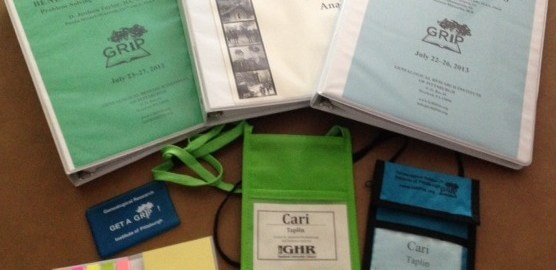
photo-13Generally registration and check-in occurs on Sunday afternoon. This is where you will be given your name badge, meal tickets, keys to your dorm room, your class binder and any other items necessary for your week. If you are not staying on campus, this is a good time to find your hotel, get acquainted with the area for any amenities you might require such as a grocery store, a coffee shop, restaurants and the like. Some institutes have a Sunday evening dinner with an orientation session. This is where you will learn about specifics for the week, what optional evening sessions might be available, any changes to the schedule, and other details about the campus or the institute. This is a great time to get to know your fellow classmates and institute attendees. In your binder will also be a schedule for the week, a class roster with contact information so you can connect with your classmates, and other informational pages in addition to your lecture notes for the week.

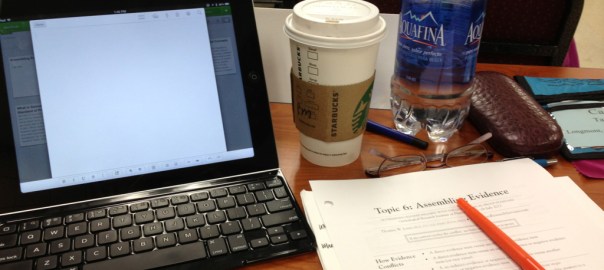
Plan on being in classes all week. There will be slight variations in starting and ending times depending on your course instructor. Throughout the day there are planned break and lunch times. Sometimes in the afternoon there are coordinated breaks with free snacks and drinks. Depending on the course, you might be expected to do homework. Of course this is optional, but you will get so much more out of what you are learning in class if you do the homework. Later in the week there might be a banquet with a dinner, a speaker and any awards or honors the group gives out. You may also experience the joy of class pictures day. GRIP especially loves the class picture and sells their own polo-style shirts for students to wear on picture day.

One of my favorite features of attending an institute is that the pace is slower than you might find at a state or national conference. There is time to speak with your instructors and fellow students. No one is rushing to get to the next lecture. The size of the classes is small enough to allow for very insightful discussions and meaningful relationship building. These are amazing networking opportunities and a great way to meet people at a similar experience level or who share specific interests as you. And of course, at the end of the week you earn a certificate for all of the hard work you put in all week.

I enjoy getting to learn from these distinguished instructors in a more intimate setting and I love seeing all of my genealogy friends and meeting new ones. I love attending institutes for all of the reasons I described in this series and probably some that I didn’t. The most important thing to remember is to have fun! I hope that you will try an institute in the future!

Genealogy Institutes – Part Five

It is an unfortunate fact that genealogy institutes only have so many seats for each class. If I have gotten you excited to attend an institute, great! Now, I want to share with you some tips for getting registered and sitting in one of those precious few seats. Have you ever bought concert tickets online? If so, the process is similar. If you have not, here are some tips.

Classroom
Classroom (Photo credit: James F Clay)

Each institute’s registration process is a little bit different so first you will want to become familiar with their website, locate exactly which page you need to be on to register. You may also want to set up an account ahead of time, if possible, so when it’s time to register, you don’t have to go through the entire process of entering your name, address, phone, and so forth. Once they make public the date of registration, mark that date on your calendar. I enter it into my Google calendar which also syncs with my iPhone calendar, so that on the day of registration I get a reminder before it’s too late. When the day arrives, be sure you are at your computer at least five minutes ahead of the registration time, find the correct page, and log in if possible. Then sit there and wait.

At about one minute till, I start clicking the “refresh” button on my browser. The webpage will not automatically refresh when the site opens for registration, so you’ll need to force your browser to do it for you. [UPDATE: The GRIP registration page has been changed to include a countdown timer to registration. When that expires, the page will automatically refresh for you. On their new system, it is actually to your disadvantage to click the “refresh” button.) Once that magical registration screen appears, get busy filling in the blanks. You’ll want to get through the process as quickly as possible as some of the courses have been known to fill up in a matter of minutes. Some institutes might require you to pay right then and there with a credit card. I know that both IGHR and GRIP allow you to pay by check as long as they receive the payment within 30 days of registration.

After that’s done, take a deep breath. You made it!

Up next, what to expect during the institute week and a few concluding thoughts.

Genealogy Institutes – Part Two

There are what I would consider five major genealogy institutes: British, IGHR, GRIP, NIGR, and SLIG. Readers, if there are others that I’m missing, please don’t hesitate to let me know. I may want to attend! By institute, I mean the week-long, in-depth course you take on one topic with one or two instructors for the entire week. You can read the previous post to read my description of an institute. This post will begin the tour of those five and give some insights into what I know about each of them. They are being presented here in random order, and just to remind you, I have only been to GRIP and IGHR personally although I will be attending SLIG in January. So while some of this is firsthand knowledge, other bits are what I have read, heard or found on their websites, which I will also be linking to for easy access.

I find institutes to be invaluable learning opportunities for genealogists wanting to know more and go deeper into a topic. There are many choices within these five institutes. They all seem to have a core of classes that are taught annually and some that rotate. Check their websites for each year’s lineup.

2013-08-08 12.49.06 pmThe first institute that I will be covering is the International Society for British Genealogy and Family History Institute (or “British Institute” for short). As the title would suggest, this institute focuses mainly on British Isles research, including Irish research. It is held annually in October at the Radisson in downtown Salt Lake City which is located within walking distance of the Family History Library. Classes are designed so that you have class/lecture time in the morning with time at the library in the afternoon and individual instruction time with your instructor. For current pricing, visit their website.

This year the institute is offering four tracks:

  • “Sources For Tracing Pre-mid-nineteenth Century English Ancestors” with Maggie Loughran and Paul Blake
  • “From Simple to Complex: Applying Genealogy’s Standard of Acceptability to British Research” with Tom Jones
  • “Irish Land Records and Fragmentary Evidence Correlation” with David Rencher
  • “Using the Cloud for British Family History Research” with Graham Walter

The website currently only lists David Rencher’s course as being sold out, so there may still be time to register and go if you are interested. I have not attended this institute yet, but it is in my future plan to do so. If any of you have input on your experiences with British Institute and would like to share them, please do so in the comments.

Next up, IGHR and GRIP.


Genealogy Institutes – Part One

IMG_3920_1024This summer I attended two outstanding genealogy institutes, IGHR and GRIP. I attended my first last summer and I am hooked. If I had unlimited resources, I’d attend them as much as possible! Genealogical institutes are great because you get to delve into one topic, in-depth for a full week. Also, being in the same class with the same people all week allows for networking and relationship building that one might not get at other educational events. Plus, there tends to be more time to ask questions from the instructors that might not be available at national conferences when they (or you) might need to rush off to another lecture.

Over the next several posts, I am going to share some of the information I have collected to help those of you who have never been to one know what to expect, what to pack, things to consider ahead of time and other tips to enjoy these great opportunities for genealogical education.

Before you go there are few things you’ll want to consider. First of all, you will want to consider your travel arrangements. Depending on where the institute you will be attending is located, you may want to fly. However, taking a car, train or bus are also viable alternatives. You will want to decide if you will stay in the dorms, a hotel or on a friend’s couch (or guest room). Will you want to take advantage of the cafeteria meal plan, eat out or pack your lunch. Also, when you are there, depending on where you stay you will want to determine if you will need daily transportation to and from the venue. I usually have to locate the nearest coffee shop when I travel. And don’t forget to plan some extra time for sight-seeing. Why go all that way if you can’t see some of the local attractions while you are there?

Here is my packing list (besides toothbrush and underwear):

  • banquet clothes (often there is a banquet and you might want to dress up a bit)
  • comfy clothes (for sitting in class all day, all week)
  • walking shoes
  • computer or iPad or other electronic devices
  • power cords (you don’t want to forget these, been there)
  • business cards (if you have them as there are plenty of networking opportunities)
  • highlighters, pens, pencils, notebook, sticky notes, etc.
  • backpack/bag to carry your stuff in all week
  • cash (my trip to Pittsburgh this year included a day of sightseeing that encountered many “cash only” establishments)
  • camera (if you don’t use your phone)
  • extra reading materials (plane rides are excellent times to catch up on NGSQ reading)
  • an umbrella (if you think you’ll melt, I personally don’t own one as I have never needed it here in Colorado, some might want one though)

While I’m sure there are other things to bring. If you have been to an institute and would recommend something else, please feel free to add it to the comments below. Over the next several posts I will be looking at the 5 major institutes and give some of the unique details about each.

RootsTech 2013

2013-04-15 12.10.40 pmIt has been about a month since I attended RootsTech. I wanted to let the dust settle a bit before I wrote about it. It was an enjoyable trip. As a mom of two kids, ages 10 and 12, it was a nice break from reality. Grandpa came and took care of the kids so my husband and I could attend. The best part was not having to worry if everyone had eaten or had their homework done.

The second best part was when we checked in at the conference hotel, we were told that the organizers of RootsTech had arranged for free self-parking and a free breakfast buffet every morning! That alone saved my husband and I around $200. What a deal! We also frequented a  restaurant that was new to us, the Blue Lemon. It had healthy food with gluten-free options that were reasonably priced and not at all far away from the conference center and library.

The conference itself was full of energy. If you’ve read anything about RootsTech (everyone else has already blogged about it by now) I’m sure you know that it was the biggest one yet with over 6,700 attendees! There were people I knew there that I never saw! It was very exciting and full of great ideas, forward thinkers and new products. I am going to highlight a few of my favorite programs or products beyond the big sponsors and obvious happenings of the conference, which have already been written about:

  • D. Joshua Taylor gave a very interesting program on “Gaming and Virtual Realities: Attracting the Next Generation of Genealogists” which highlighted some very intriguing comparisons between gamers and genealogists, probably most profound is that each group can sit at a screen and “waste” hours of time every day, yet neither feels like it is a waste of time. Also, each group, when they get really into it, keep amazing records. I know gamers who will keep detailed notes about how to solve the games or strategies that have worked, etc. Doesn’t that sound like a genealogist’s research log?
  • Evidentia was there showcasing their exciting new software that guides your research through the genealogical proof standard. You can download a free 30-day trial (for MAC or PC) at: http://ed4becky.com/products/evidentia/
  • Kin2 is still in Beta but it has some great potential to be a fun website. It uses Facebook connections and a large celebrity database to find out who you are related to and how. Currently there’s no gedcom upload possibilities yet, but when I spoke with the representative at the booth, he said that was one of the first things they would be implementing. Also, this site has some very cool pedigree charts, very modern looking and not at all like your basic pedigree chart.
  • Another new product that is “coming summer 2013” is HalfTale.com. It is sort of a collaborative blogging, family history, oral history tool. It is hard to describe, however the tour I was given had me very excited. Often I will email a relative and ask them a simple question “Do you know what happened to grandpa’s military uniform and medals?” to which I will get a several paragraph reply with all kinds of memories about that question and others. This site will be a way to collaboratively answer those questions and create “walls” or “pages” on various ancestors that many family members can contribute to. It’s not available yet, but you can sign up for a beta test account.

The worst part: the internet was either incredibly slow or at capacity and you couldn’t get on at all. For being a “tech” conference, you’d think they would plan on a lot of internet-ready gadgets. I like to look at the websites the speakers are showing, while they are talking, and was completely unable to. In addition, the hotel internet was very, very slow. So connectivity was limited for the week. Another aspect that was something of a let down for us, most of the sessions we attended seemed to be a bit basic for the level we are at. My husband, who is a developer, felt like many of the sessions he attended did not go into the depth he expected or would have liked to have attended. Personally, I attended several that were marked with “I” for intermediate in the program and felt that they were more like beginner level sessions. I struggled to find sessions that challenged me and brought me completely new ideas.

Overall, it was a very enjoyable experience. I enjoyed the exhibit hall the most, learning about new products, services, and learning opportunities as well as talking to other genealogists, developers, speakers and other collaborators. Next year, Rootstech will take place on February 6-8, 2014 again in the Salt Palace. I am looking forward to hopefully attending again with my hubby! We had a great time.

On the Clock

clockI turned in my BCG preliminary application for certification at the end of December, so I’m officially “on the clock” as they say here in genealogy land. It is a little stressful to think of all of the work that lies before me, not only for certification but also while pursuing a Master’s Degree. I have this unrealistic personal belief or maybe it’s my personality type, but I think I can get amazing amounts of work done and love to “climb big mountains” of tasks. I inevitably end up stressed out at various times, but usually I get the things done I say I’m going to do.

There are several things in play that I believe will help me be less stressed and get my portfolio finished. First of all, I am in a group of other genealogists from my general area who are also “on the clock” or plan to be soon and we are working together reading the BCG Standards Manual and understanding the requirements. Also, I am a member of a smaller group, what I call my genealogy “support group.” This is a group of 5 women who have been meeting for many years to discuss what’s new in their genealogy journeys, basically a discussion outlet so our families don’t get bored with our ramblings. Third, while I am pursuing a Master’s Degree, the workload has been quite manageable, only overwhelming toward the end of the semester. Fourth, while I do still have kids at home, they are in school all day and I am not working right now, so, while I am poor, I do have uninterrupted time during the week days to work on BCG and homework.

The BCG website gives a proposed timeline for how long certain projects will take. I began working on my portfolio, in a rather unorganized fashion, a few years ago. So I have at least some rough drafts finished on several of the items. So I feel I have a slight head start on some of the tasks. However, if by December of this year, I am not ready yet, they generously allow you to apply for an extension for 1 year for a nominal fee, which has taken some of the pressure off! Wish me luck!