Tag Archives: Genealogy

Genealogical Gratitude – My New Home Office

My home office
My home office

It was only 10 years in the making. We moved into our house in 2003. It had an unfinished basement and we had a young family. My husband and his father got to work finishing the basement. On one side it has a creative studio space, TV/Family room, several closets and a bathroom. On the other … the new home office! It has two U-shaped desks that sit next to each other so my husband and I can work together. We also, finally, got 3 bookshelves for our books that have been in boxes since we moved in, 10 years ago. All of my Stephen King, Neil Gaiman, poetry, Shakespeare and other literature books and his sci-fi/fantasy collections finally see the light again.

All of my genealogy books and files have a home! Genealogy ShelvesMy dog has a little nest and I have a heater to take the chill off of the basement environment. We have two big windows that do let in a lot of light for a basement, so it is not a dark and gloomy as some basements.

I have plenty of room to spread my projects out (I usually have several going at the same time) and my husband has his own section that can be as messy as he likes and it’s not in our living room any longer!

So thank you hubby and father-in-law for all of the work over the years!


Genealogical Gratitude – Educational Opportunities

Pamela teaching her children (1743–45)I am continually grateful for the education opportunities that are available to me on the state level, national level and online. I am also thankful for the teachers, educators, lecturers and mentors who give their time to bring those opportunities to me (and everyone else who benefits, too). I know I wouldn’t be where I am today in the field if it hadn’t been for some really excellent examples who have stood at a podium and unleashed their wisdom upon a group of eager students or those who take time to talk to me (and others) personally about genealogy-related topics.

Those who have “gone before” taking the time to teach those of us coming next is one of the best parts of the genealogical community. A big thank you to all of those who have gone before and are “up there” at the podium (or writing books and articles, or teaching webinars, or leading small study groups). You’ve been a great influence on me!

Genealogical Gratitude – Coffee!

English: A photo of a cup of coffee. Esperanto...
(Photo credit: Wikipedia, Share Share Alike)

I don’t know about you, but I am in love with coffee. I am so grateful for coffee and how it impacts my genealogical research. I come from a long line of coffee drinkers so I am sure it runs in the gene pool! I am especially grateful for peppermint mochas. Plain coffee (with cream and sugar) is an excellent treat for next to the computer in the chilly Colorado winters. Also because it keeps me awake at night when I get on a research roll or get me going in the morning after a long night of working. Coffee is a fun way to meet up with friends and fellow genealogists! Coffee is a treat beyond the cup, it brings people together and helps create memories!

Wanna meet for coffee sometime? I’m up for it!

Genealogical Gratitude – Technology

Assorted_smartphonesIn my last post I expressed by gratitude for the Internet, however, I am also thankful for technology in a more broad sense. In ten seconds, I can scan an aging photograph, have a copy on my computer and in another 10 seconds, I can send it to a distant cousin who may have never seen the photo. I am grateful for technologies like my scanner, computer, large monitor, smartphone with camera, iPad (with Kindle app), as well as software such as Reunion, Evernote, Google, WordPress, Photoshop, iChat, Skype, and so on.

The speed with which I can research, collect and manipulate data and share with others is astounding. Stop and look around your office, look at the apps on your smartphone, look at the Applications folder on your computer and just try to fathom how cool it all is, how utterly life-changing technology has been over the last 20 years!

I am super-grateful for my technology! How about you?

Genealogical Gratitude – The Internet

arrowI don’t know how we ever got along before the Internet. (Well, I do, but it was a slow process!) I am so grateful at the speed with which I can communicate with my family, friends, colleagues and clients. I am grateful that I can attend a Webinar and brush up on a topic without having to drive a long distance or paying a large fee. I am grateful that I can research late into the night in my bunny slippers and jim-jams. I am especially grateful for the wonderful “cousins” and friends I’ve made almost exclusively because of the Internet. I mean I know that Josh Taylor’s dog is a dachshund named Twix and that Dear Myrtle has adorable grand kids, that Footnote Maven writes incredibly entertaining stories about her cat (Monkey Kitty) and dog (Bullet). I have since been able to connect with many of my Internet friends and various conferences and institutes. I am also grateful that the Internet allows me to close the distance between me and my ancestors, not only through research but with sharing and collaborating with other researchers.

In short, the Internet has closed the time and space gap between me and the rest of the world, and I am grateful!

Genealogical Gratitute – November, Remember

2013-11-07 02.11.00 pmNovember being the month of Thanksgiving, I thought I would share some of my genealogy-related gratitude, things I’m thankful for in terms of my genealogical life. We all have things we are grateful for in all facets of our lives and it’s a good idea to recount those once in a while. I know I tend to get bogged down by the what’s-going-wrong that I forget what-went-right. Every once in a while it is a good idea to take an inventory.

Gratitude is the practice of being grateful, of making yourself (and others) aware of just how good you have it. Research has shown (and Buddhists have known for centuries) that practicing gratitude daily is one surefire way to eliminate the blahs, to find happiness. By focusing on what we have (genealogically speaking – photographs, diaries, bibles, original records of any kind) instead of what we don’t have (birth dates, marriage records, identities of the next generation), we can be happy with what we’ve accomplished.

I know that I have become frustrated with my research results from time to time and have sunken into a pit of “I’m a terrible researcher. Maybe I should go flip burgers.” We all have research that does not give us the answers we want. We all have brick walls, burned courthouses, missing records, relatives with tight lips and grips who don’t want to share and unsatisfied clients.

Every once in a while I have to stop myself and look back at what I have done, what I have found, where I have been to appreciate what I have going forward. Sometimes a trip down “memory lane” is all that’s needed to refresh, revitalize our genealogical attitude! So this month, get ready to see some of my gratitudes, maybe they are similar to some of your own!


Census Hurdles – Searching Tips and Tricks

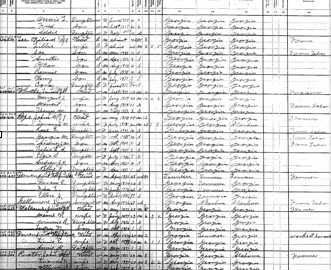
2013-10-07 03.46.42 pmAfter our tour through some of my favorite census hurdles, let me sum up with some of my corresponding tricks for dealing with them.

Language Barriers
Think in terms of thick accents and how the names may have sounded.

SOLUTION: Create a list of all possible spellings of your name to use when searching.

Literacy
While you may know exactly how your ancestor’s name was spelled, the census takers and indexers did not. They did the best they could.

SOLUTION: Keep an open mind about how names were spelled in both the census and the census index.

Indexing Errors
Hard-to-read handwriting & typos

SOLUTION:  Learn about old handwriting. Read a lot of old handwriting. Look at tutorials, articles and examples on old handwriting. Be sure to make “corrections” at Ancestry.com using the “add alternate information” link.

Quality of Information Given
How do we know who gave the information and how accurate it is? We don’t.

SOLUTION:  Take every bit of information from the census as a clue, not the truth. Always, always, always corroborate census data with other research. Back up your findings with birth, marriage, death, land records and other research.

Microfilming Errors
Did all of the pages get microfilmed?

SOLUTION:  Pay attention to the page numbers in the upper corners of the census records. If there are missing pages, you can write to the National Archives for missing pages.

Are the images readable?

SOLUTION:  Not much can be done here. You may have some luck with putting the image into a photo editing software and adjusting the brightness and contrast. Also looking at the images in the negative can be helpful.

Some other things you can do to make your census research more successful:

  • Use indexes but do not rely solely on them, as we’ve seen, there are errors.
  • Make a list of spelling variations. Write down every way you can think of that the surname could be written. Write down every way you find it indexed.
  • Read the census line by line for a given district if you are sure they should be there and you can’t find them in the index.
  • Learn about old-style handwriting. You can learn a lot about this by volunteering your time as an indexer through FamilySearch Indexing.
  • Corroborate census info with other research.
  • Don’t give up. Just because you don’t find them in an index doesn’t mean they aren’t there. Get creative with your searches.

I hope this series has given some ideas of what our ancestors, census takers, indexers, microfilmers, and researchers have to deal with during each step of the process. Between when the census taker stepped foot on our ancestors’ doors to these census indexes and images displaying on our computer screens many potential mistakes could have been made. Keep in mind the reasons, try to imagine the situation, and be creative in searching and you will have more success using census records.


Genealogy Institutes – Part Six

If you’ve never been to a genealogy institute, you may not know what to expect. The first time for anything is always a little mysterious. I hope some items in this post will help dispel some of the mystery and give you a good idea of what to expect throughout your week. These tips are from my personal experiences at GRIP and IGHR. Some of the other institutes might work a little bit differently and have some aspects that I am not aware of yet. If you have been to one of the other institutes and would like to share something that I have missed, please feel free to do so in the comments.

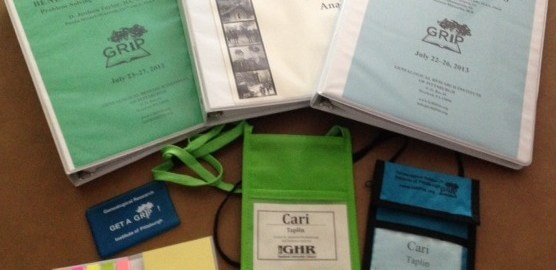
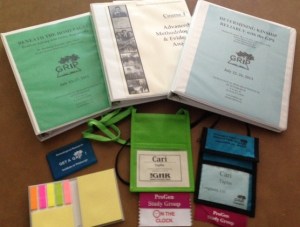
photo-13Generally registration and check-in occurs on Sunday afternoon. This is where you will be given your name badge, meal tickets, keys to your dorm room, your class binder and any other items necessary for your week. If you are not staying on campus, this is a good time to find your hotel, get acquainted with the area for any amenities you might require such as a grocery store, a coffee shop, restaurants and the like. Some institutes have a Sunday evening dinner with an orientation session. This is where you will learn about specifics for the week, what optional evening sessions might be available, any changes to the schedule, and other details about the campus or the institute. This is a great time to get to know your fellow classmates and institute attendees. In your binder will also be a schedule for the week, a class roster with contact information so you can connect with your classmates, and other informational pages in addition to your lecture notes for the week.

Plan on being in classes all week. There will be slight variations in starting and ending times depending on your course instructor. Throughout the day there are planned break and lunch times. Sometimes in the afternoon there are coordinated breaks with free snacks and drinks. Depending on the course, you might be expected to do homework. Of course this is optional, but you will get so much more out of what you are learning in class if you do the homework. Later in the week there might be a banquet with a dinner, a speaker and any awards or honors the group gives out. You may also experience the joy of class pictures day. GRIP especially loves the class picture and sells their own polo-style shirts for students to wear on picture day.

One of my favorite features of attending an institute is that the pace is slower than you might find at a state or national conference. There is time to speak with your instructors and fellow students. No one is rushing to get to the next lecture. The size of the classes is small enough to allow for very insightful discussions and meaningful relationship building. These are amazing networking opportunities and a great way to meet people at a similar experience level or who share specific interests as you. And of course, at the end of the week you earn a certificate for all of the hard work you put in all week.

I enjoy getting to learn from these distinguished instructors in a more intimate setting and I love seeing all of my genealogy friends and meeting new ones. I love attending institutes for all of the reasons I described in this series and probably some that I didn’t. The most important thing to remember is to have fun! I hope that you will try an institute in the future!

Genealogy Institutes – Part Five

It is an unfortunate fact that genealogy institutes only have so many seats for each class. If I have gotten you excited to attend an institute, great! Now, I want to share with you some tips for getting registered and sitting in one of those precious few seats. Have you ever bought concert tickets online? If so, the process is similar. If you have not, here are some tips.

Classroom
Classroom (Photo credit: James F Clay)

Each institute’s registration process is a little bit different so first you will want to become familiar with their website, locate exactly which page you need to be on to register. You may also want to set up an account ahead of time, if possible, so when it’s time to register, you don’t have to go through the entire process of entering your name, address, phone, and so forth. Once they make public the date of registration, mark that date on your calendar. I enter it into my Google calendar which also syncs with my iPhone calendar, so that on the day of registration I get a reminder before it’s too late. When the day arrives, be sure you are at your computer at least five minutes ahead of the registration time, find the correct page, and log in if possible. Then sit there and wait.

At about one minute till, I start clicking the “refresh” button on my browser. The webpage will not automatically refresh when the site opens for registration, so you’ll need to force your browser to do it for you. [UPDATE: The GRIP registration page has been changed to include a countdown timer to registration. When that expires, the page will automatically refresh for you. On their new system, it is actually to your disadvantage to click the “refresh” button.) Once that magical registration screen appears, get busy filling in the blanks. You’ll want to get through the process as quickly as possible as some of the courses have been known to fill up in a matter of minutes. Some institutes might require you to pay right then and there with a credit card. I know that both IGHR and GRIP allow you to pay by check as long as they receive the payment within 30 days of registration.

After that’s done, take a deep breath. You made it!

Up next, what to expect during the institute week and a few concluding thoughts.

Genealogy Institutes – Part Four

In my continuing quest to describe institutes and ultimately convince you to attend one if you haven’t already, this post will highlight the last two of the five major genealogy institutes that I have identified. I have not personally attended either NIGR or SLIG so the following information is a summary from what I’ve learned from reading their websites and from various friends and colleagues who have attended.

2013-08-09 12.32.26 pmI am registered to attend the Salt Lake Institute of Genealogy, or SLIG, this coming January. This institute is hosted by the Utah Genealogical Association and is held annually in January at the Radisson in downtown Salt Lake City. It offers a wide range of topics for various skill levels through 10-12 different tracks. The courses for 2014 are:

  • “American Research and Records: Focus on Families” with Paula Stuart-Warren, CG, FUGA
  • “New York Research” with Karen Mauer Green, CG
  • “Research in the South” with J. Mark Lowe, CG
  • “Advanced Research Tools: Land Records” with Richard G. Sayre, CG and Pamela Boyer Sayre, CG, CGL
  • “Credentialing: Accreditation, Certification, or Both?” with Apryl Cox, AG and Elissa Scalise Powell, CG, CGL
  • “Producing a Quality Family Narrative” with John Philip Colletta Ph.D., FUGA
  • “Researching in Eastern Europe” with Kory Meyerink, AG
  • “Advanced Evidence Analysis Practicum” with Angela McGhie and Kimberly Powell
  • “Advanced Genealogical Methods” with Thomas Jones Ph.D., CG, CGL, FASG, FUGA, FNGS
  • “Problem Solving” with Judith Hansen, AG, MLS

I will be taking the “Advanced Evidence Analysis Practicum” track and I am very excited for the experience. The benefit of this conference, like British Institute, is that it takes place in Salt Lake. Classes take place in the morning and research or homework in the Family History Library. This coming year, the Association of Professional Genealogists’ Professional Management Conference (PMC) is being held a few days before SLIG. I plan to attend that as well. At the writing of this post, their website had not been updated to reflect this yet, but the information was sent to members via email. Keep checking their website for more information.

2013-08-09 12.32.52 pmThe National Institute on Genealogical Research is held in Washington, D.C. annually in July (typically the week preceding GRIP). This institute stands out from the others in that it is very specific in scope. NIGR is not a beginning course and is aimed at a focused examination of federal records, there is only one track with everyone in the same course together. Most of the week is spent at the main branch of the National Archives with one day being spent at the Archives II in College Park, MD. There are optional evening sessions to spend at the Library of Congress and the DAR Library. This institute is different also by the registration format. This one is currently via regular postal mail only, no online registration at this time. You must go to their website and be added to their mailing list. Then, when registration time comes, you need to fill out the application and mail it back as soon as you get it. They have a limited number of spaces in the course so it is important to return the application promptly.

This institute also has two scholarship opportunities that help pay for tuition and some of the travel expenses. One scholarship is from the American Society of Genealogists, the other is the Richard S. Lackey Memorial Scholarship. The details are on their website.

That wraps up the details on the five major institutes. Up next, some tips on registering for institutes and later, what you might expect during your week.