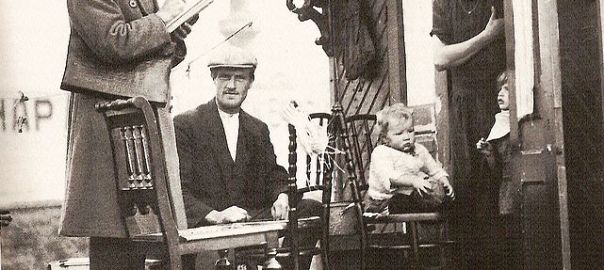
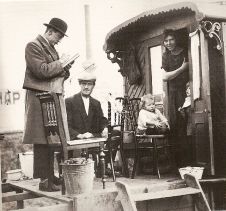
 You might think that your ancestors were always home when the census taker knocked on the door. Or that they all sat down, had a cup of coffee or tea while they cooperated completely with the census taker’s questions. Honestly, we have no idea what happened. With the exception of the 1940 census, we have no idea who gave the information to the census taker. We don’t know if it was the head of household, his wife, one of the children, a neighbor, or if the census taker made it all up. We just don’t know.
This not knowing creates a lot of problems for genealogists who are trying to establish proof using the principles of the genealogical proof standard. Having an unknown informant on a record does not allow for the researcher to determine how much firsthand information that informant was likely to have. Therefore we have to assume that the information given to the census taker is suspect, likely to have errors. This should not stop us from using the census. On the contrary! The census is one of the records sets I use most often to establish ancestors in a time and place.
Having an unknown informant is one of those hurdles of the census. Use the data you find in the census as a road map to other documents, as the skeleton upon which other research is built. Corroborate everything you find in the census with other documents, with known informants. Only then will you be able to know you have the correct information.
Unfortunately there is no genealogical time machine that allows us to go back to the day the census taker visited our ancestors. (I’m still working on that technology in my lab. I’ll keep you posted.)


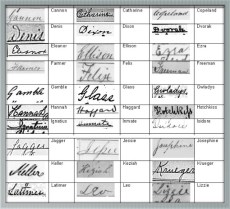


 I have deep Germanic roots. My grandfather told stories of how his grandparents sat around the table and spoke in German. They were not the immigrants, in fact, I’ve traced back several generations beyond theirs and still haven’t found the immigrant ancestors! This tells me that they were proud of their heritage and carried their culture with them through many generations. Our country is made up of countless cultures all blending together and collectively adopting English as the primary language.
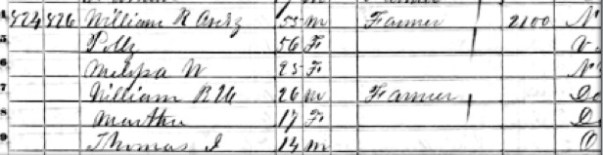
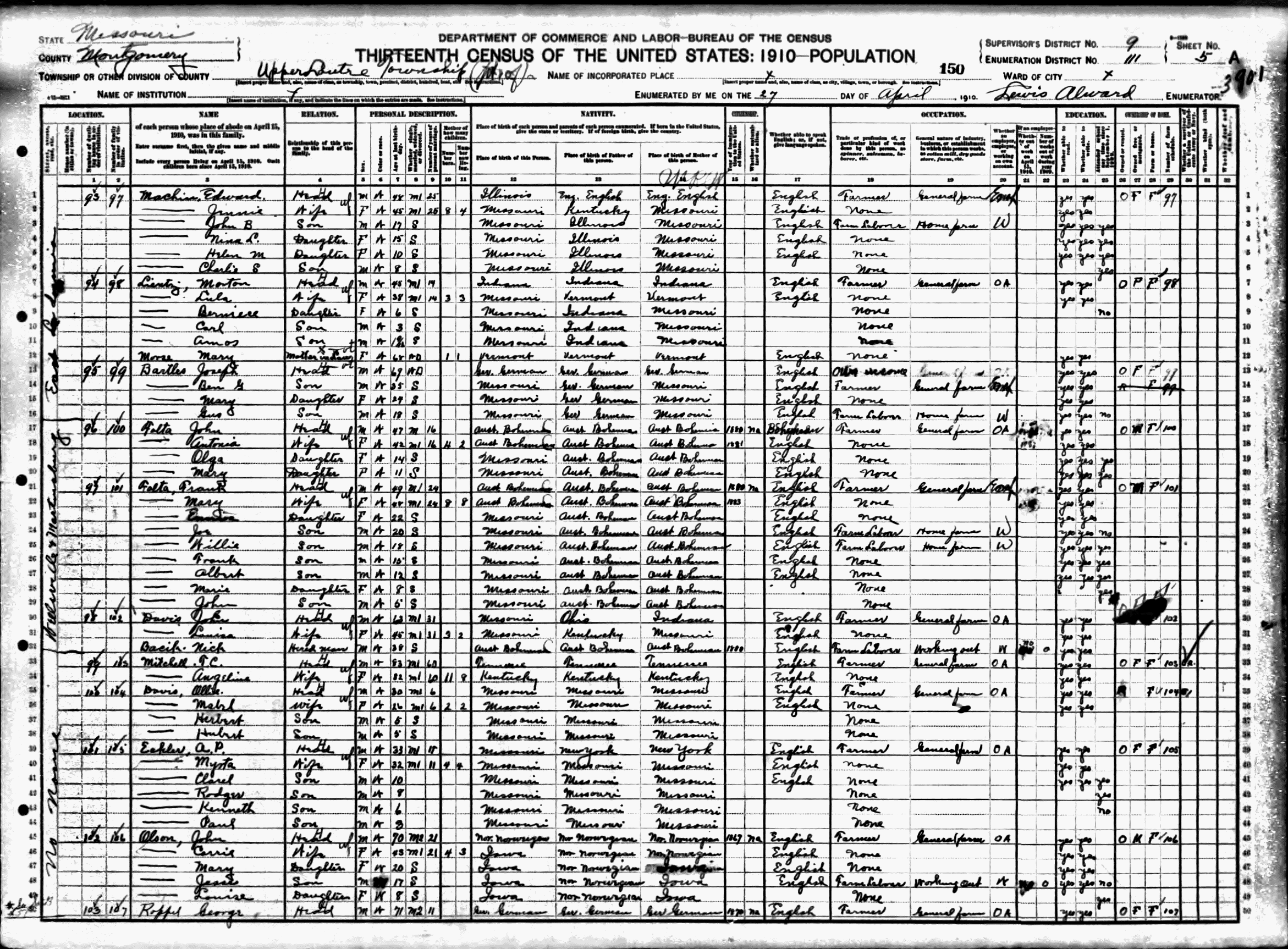
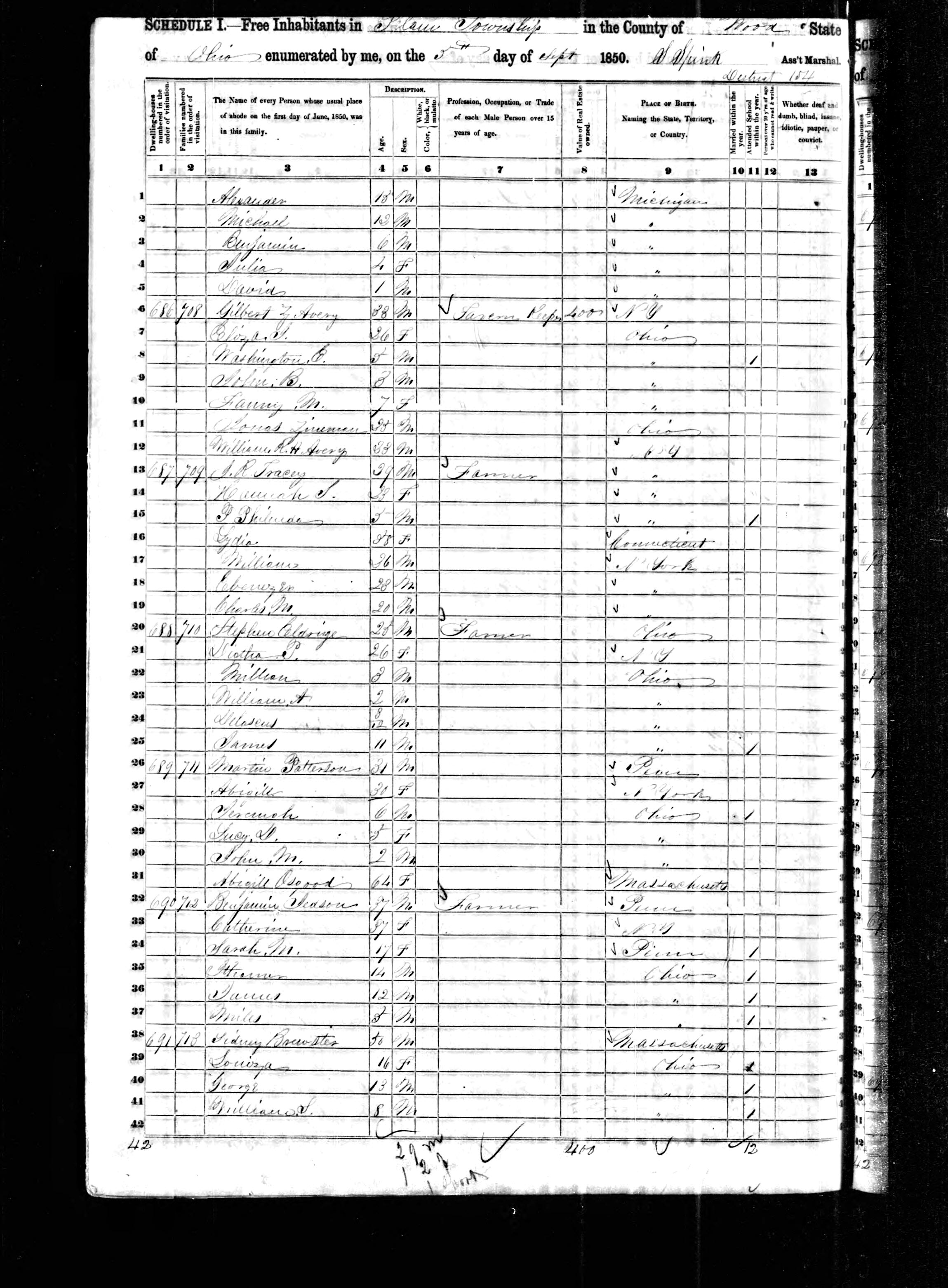
 One of my favorite record sets for creating a framework for any given family is the census. Census records can be an invaluable wealth of information putting ancestors in a time and a place every ten years (every five if you are lucky enough to have them in a state that held a state census every five). In the censuses from 1790-1840, only the names of the heads of households were recorded (and using those censuses can be a whole different animal). However, in 1850 we begin to get more information with every census. Heads of household, relationship to that head, birthplaces, birth month and year, occupations, whether naturalized, military service, and so on.


 Genealogy Pants