It is an unfortunate fact that genealogy institutes only have so many seats for each class. If I have gotten you excited to attend an institute, great! Now, I want to share with you some tips for getting registered and sitting in one of those precious few seats. Have you ever bought concert tickets online? If so, the process is similar. If you have not, here are some tips.
Classroom (Photo credit: James F Clay)
Each institute’s registration process is a little bit different so first you will want to become familiar with their website, locate exactly which page you need to be on to register. You may also want to set up an account ahead of time, if possible, so when it’s time to register, you don’t have to go through the entire process of entering your name, address, phone, and so forth. Once they make public the date of registration, mark that date on your calendar. I enter it into my Google calendar which also syncs with my iPhone calendar, so that on the day of registration I get a reminder before it’s too late. When the day arrives, be sure you are at your computer at least five minutes ahead of the registration time, find the correct page, and log in if possible. Then sit there and wait.
At about one minute till, I start clicking the “refresh” button on my browser. The webpage will not automatically refresh when the site opens for registration, so you’ll need to force your browser to do it for you. [UPDATE: The GRIP registration page has been changed to include a countdown timer to registration. When that expires, the page will automatically refresh for you. On their new system, it is actually to your disadvantage to click the “refresh” button.) Once that magical registration screen appears, get busy filling in the blanks. You’ll want to get through the process as quickly as possible as some of the courses have been known to fill up in a matter of minutes. Some institutes might require you to pay right then and there with a credit card. I know that both IGHR and GRIP allow you to pay by check as long as they receive the payment within 30 days of registration.
After that’s done, take a deep breath. You made it!
Up next, what to expect during the institute week and a few concluding thoughts.
In my continuing quest to describe institutes and ultimately convince you to attend one if you haven’t already, this post will highlight the last two of the five major genealogy institutes that I have identified. I have not personally attended either NIGR or SLIG so the following information is a summary from what I’ve learned from reading their websites and from various friends and colleagues who have attended.
I am registered to attend the Salt Lake Institute of Genealogy, or SLIG, this coming January. This institute is hosted by the Utah Genealogical Association and is held annually in January at the Radisson in downtown Salt Lake City. It offers a wide range of topics for various skill levels through 10-12 different tracks. The courses for 2014 are:
“American Research and Records: Focus on Families” with Paula Stuart-Warren, CG, FUGA
“New York Research” with Karen Mauer Green, CG
“Research in the South” with J. Mark Lowe, CG
“Advanced Research Tools: Land Records” with Richard G. Sayre, CG and Pamela Boyer Sayre, CG, CGL
“Credentialing: Accreditation, Certification, or Both?” with Apryl Cox, AG and Elissa Scalise Powell, CG, CGL
“Producing a Quality Family Narrative” with John Philip Colletta Ph.D., FUGA
“Researching in Eastern Europe” with Kory Meyerink, AG
“Advanced Evidence Analysis Practicum” with Angela McGhie and Kimberly Powell
“Advanced Genealogical Methods” with Thomas Jones Ph.D., CG, CGL, FASG, FUGA, FNGS
“Problem Solving” with Judith Hansen, AG, MLS
I will be taking the “Advanced Evidence Analysis Practicum” track and I am very excited for the experience. The benefit of this conference, like British Institute, is that it takes place in Salt Lake. Classes take place in the morning and research or homework in the Family History Library. This coming year, the Association of Professional Genealogists’ Professional Management Conference (PMC) is being held a few days before SLIG. I plan to attend that as well. At the writing of this post, their website had not been updated to reflect this yet, but the information was sent to members via email. Keep checking their website for more information.
The National Institute on Genealogical Research is held in Washington, D.C. annually in July (typically the week preceding GRIP). This institute stands out from the others in that it is very specific in scope. NIGR is not a beginning course and is aimed at a focused examination of federal records, there is only one track with everyone in the same course together. Most of the week is spent at the main branch of the National Archives with one day being spent at the Archives II in College Park, MD. There are optional evening sessions to spend at the Library of Congress and the DAR Library. This institute is different also by the registration format. This one is currently via regular postal mail only, no online registration at this time. You must go to their website and be added to their mailing list. Then, when registration time comes, you need to fill out the application and mail it back as soon as you get it. They have a limited number of spaces in the course so it is important to return the application promptly.
This institute also has two scholarship opportunities that help pay for tuition and some of the travel expenses. One scholarship is from the American Society of Genealogists, the other is the Richard S. Lackey Memorial Scholarship. The details are on their website.
That wraps up the details on the five major institutes. Up next, some tips on registering for institutes and later, what you might expect during your week.
This time in my series on genealogy institutes, I’m going to describe IGHR and GRIP. These are the two institutes I have actually attended so I have my firsthand experiences to also share. Both of these institutes take place on a college campus and come with all of the perks (or not, depending on your perspective) of campus life, dorm packages and meal plans.
The Institute of Genealogy and Historical Research, also commonly referred to as “IGHR” (pronounced eye-jer) or “Samford,” takes place annually in June at Samford University in Birmingham, Alabama. There are typically ten courses offered for beginners to advanced researchers. The Samford campus is quite lovely with a lot of shade when walking from building to building. This year the temperatures were quite bearable and we experienced a few days of rain, not unpleasant for someone from Colorado where the days are mostly dry. You may choose to stay in the dorms (beware of the snakes) but there are also hotels nearby and the institute coordinates a shuttle service between the hotels and the campus. If you happen to drive, there is free parking on campus. They also have meal plans in their cafeteria or a student center with fast food, a carryout and a coffee bar.
At IGHR the courses being offered for 2014 and 2015 are posted on their website. Here is a quick look at 2014’s lineup by course number:
Techniques & Technology
Intermediate Genealogy & Historical Studies
To Be Determined
Advanced Methodology & Evidence Analysis
Writing & Publishing for Genealogists
Advanced Library Research: Law Libraries & Government Documents
Virginia: Her Records & Her Laws
Researching African American Ancestors
U.S. Military Records
Irish Genealogical Research
There are a lot of topics to choose from and for complete course descriptions you will want to check their website.
Also, if you are interested in attending IGHR, there is a scholarship available to pay for your tuition. It is the Birdie Monk Holsclaw Memorial Scholarship. According to the Colorado Council of Genealogical Societies website, “Distributions are awarded to those who have an interest in genealogy and wish to pursue genealogical related education at the Samford University Institute of Genealogy and Historical Research (IGHR). Application is open to all genealogists and consists of a short resume listing genealogical experience and a 150-200 word essay describing how IGHR will help advance their genealogical research skills. Deadline for Applications is October 1 each year.” There is a downloadable application on the site. Don’t miss this amazing opportunity!
The Genealogical Research Institute of Pittsburgh (or “GRIP”) takes place annually in July at La Roche College, located a few mile north of downtown Pittsburgh. La Roche College is a small college, easy to locate, with amenities near by. They too offer a dorm and cafeteria package. There are hotels nearby but they do not have a shuttle service yet. If you rent a car or drive to the conference there is also free parking available. This institute offers courses for varying levels of experience. The line-up and course descriptions for 2014 is posted on their website but here are the titles and instructors:
“Intermediate Genealogy: Tools for Digging Deeper” with Paula Stuart-Warren, CG, FMGS, FUGA
“Determining Kinship Reliably with the Genealogical Proof Standard” with Thomas W. Jones, PhD., CG, CGL
“Becoming an Online Expert: Mastering Search Engines and Digital Archives” with D. Joshua Taylor, MA, MLS
“Finding and Documenting African-American Families” with J. Mark Lowe, CG, and Deborah Abbott, PhD.
“Practical Genetic Genealogy” with Debbie Parker Wayne, CG, CGL, CeCe Moore and Blaine Bettinger, Ph.D., J.D.
“Law School for Genealogists” with Judy G. Russell, J.D., CG, CGL and Richard G. “Rick” Sayre, CG, CGL
These institutes are very similar in structure. The classes run from about 8:30am-4:30pm. There are set break times with free snacks provided and a great time to get up and stretch your legs and network with your classmates. Both of these institutes offered optional evening sessions on various topics. At GRIP this year we got to watch the first episode of Who Do You Think You Are? (full episodes available on tlc.com) which is a lot of fun when you do it with a huge room of genealogists!
Both of these institutes are top notch, offer a wide variety of topics and activities. They are both located in some very scenic locations with a lot of history to explore. Be sure to plan time for site-seeing and fun!
There are what I would consider five major genealogy institutes: British, IGHR, GRIP, NIGR, and SLIG. Readers, if there are others that I’m missing, please don’t hesitate to let me know. I may want to attend! By institute, I mean the week-long, in-depth course you take on one topic with one or two instructors for the entire week. You can read the previous post to read my description of an institute. This post will begin the tour of those five and give some insights into what I know about each of them. They are being presented here in random order, and just to remind you, I have only been to GRIP and IGHR personally although I will be attending SLIG in January. So while some of this is firsthand knowledge, other bits are what I have read, heard or found on their websites, which I will also be linking to for easy access.
I find institutes to be invaluable learning opportunities for genealogists wanting to know more and go deeper into a topic. There are many choices within these five institutes. They all seem to have a core of classes that are taught annually and some that rotate. Check their websites for each year’s lineup.
The first institute that I will be covering is the International Society for British Genealogy and Family History Institute (or “British Institute” for short). As the title would suggest, this institute focuses mainly on British Isles research, including Irish research. It is held annually in October at the Radisson in downtown Salt Lake City which is located within walking distance of the Family History Library. Classes are designed so that you have class/lecture time in the morning with time at the library in the afternoon and individual instruction time with your instructor. For current pricing, visit their website.
This year the institute is offering four tracks:
“Sources For Tracing Pre-mid-nineteenth Century English Ancestors” with Maggie Loughran and Paul Blake
“From Simple to Complex: Applying Genealogy’s Standard of Acceptability to British Research” with Tom Jones
“Irish Land Records and Fragmentary Evidence Correlation” with David Rencher
“Using the Cloud for British Family History Research” with Graham Walter
The website currently only lists David Rencher’s course as being sold out, so there may still be time to register and go if you are interested. I have not attended this institute yet, but it is in my future plan to do so. If any of you have input on your experiences with British Institute and would like to share them, please do so in the comments.
This summer I attended two outstanding genealogy institutes, IGHR and GRIP. I attended my first last summer and I am hooked. If I had unlimited resources, I’d attend them as much as possible! Genealogical institutes are great because you get to delve into one topic, in-depth for a full week. Also, being in the same class with the same people all week allows for networking and relationship building that one might not get at other educational events. Plus, there tends to be more time to ask questions from the instructors that might not be available at national conferences when they (or you) might need to rush off to another lecture.
Over the next several posts, I am going to share some of the information I have collected to help those of you who have never been to one know what to expect, what to pack, things to consider ahead of time and other tips to enjoy these great opportunities for genealogical education.
Before you go there are few things you’ll want to consider. First of all, you will want to consider your travel arrangements. Depending on where the institute you will be attending is located, you may want to fly. However, taking a car, train or bus are also viable alternatives. You will want to decide if you will stay in the dorms, a hotel or on a friend’s couch (or guest room). Will you want to take advantage of the cafeteria meal plan, eat out or pack your lunch. Also, when you are there, depending on where you stay you will want to determine if you will need daily transportation to and from the venue. I usually have to locate the nearest coffee shop when I travel. And don’t forget to plan some extra time for sight-seeing. Why go all that way if you can’t see some of the local attractions while you are there?
Here is my packing list (besides toothbrush and underwear):
banquet clothes (often there is a banquet and you might want to dress up a bit)
comfy clothes (for sitting in class all day, all week)
walking shoes
computer or iPad or other electronic devices
power cords (you don’t want to forget these, been there)
business cards (if you have them as there are plenty of networking opportunities)
highlighters, pens, pencils, notebook, sticky notes, etc.
backpack/bag to carry your stuff in all week
cash (my trip to Pittsburgh this year included a day of sightseeing that encountered many “cash only” establishments)
camera (if you don’t use your phone)
extra reading materials (plane rides are excellent times to catch up on NGSQ reading)
an umbrella (if you think you’ll melt, I personally don’t own one as I have never needed it here in Colorado, some might want one though)
While I’m sure there are other things to bring. If you have been to an institute and would recommend something else, please feel free to add it to the comments below. Over the next several posts I will be looking at the 5 major institutes and give some of the unique details about each.
The FGS conference in Fort Wayne, Indiana is about a month away. I am leaving for GRIP this Saturday. I will be going on a research trip to Salt Lake City in September. My summer travel plans are ticking by. Regardless, I do have a checklist for what to bring to any given event that’s genealogy related.
Bring a sweater. I don’t know about you but even though it might be 90 degrees and 99 percent humidity outside, being inside can sometimes be like the arctic. For that matter it can also be 90 degrees and humid. My point being bring a sweater and dress in layers. There is nothing more miserable that being too hot or too cold. Be prepared.
I have a small zipper pouch of essential office supplies: sticky notes, sticky flags, pens (1 ball point and a few colored felt-tipped), pencils, a few paperclips, highlighters (I prefer yellow), etc. I don’t use this as much as I used to, but I am one of those people who write in the books that I buy so I use these items a lot.
Business cards. I will be milling about with fellow genealogists and potential clients, so it’s important to have some cards on hand at all times.
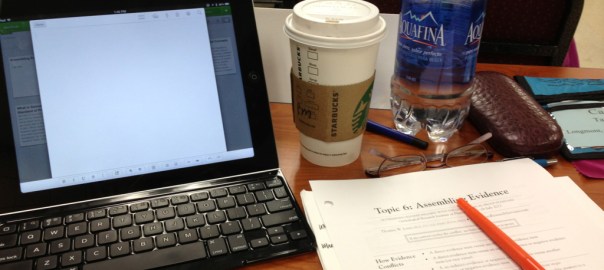
I used to always bring my laptop, but since I got a blue tooth keyboard for my iPad, I am loving the lightweight portability of just carrying around a small bag rather than my backpack or rolling suitcase. (Don’t forget the chargers for all of the electronic devices!) When going on a research trip, I make sure that I have all of my files synced with my iPad, mainly my latest Reunion file. I also put all of my travel itineraries, hotel, air, car reservations in Evernote, which syncs to my iPad/iPhone.
Pre-planned list of the programs I wish to attend. I will copy the syllabus to my iPad to have with me at the lectures. I have a .pdf viewing app that allows me to highlight and make notes right on the syllabus pages. No more need to print them out ahead of time, only to realize you printed the wrong pages, or carry around the giant books they used to give out at conferences.
Leave extra suitcase space for the books you might buy and the free swag you will pick up.
Of course, the above list is in addition to all of the socks, undies, t-shirts, shorts/pants, and toothbrushes needed to have an enjoyable trip. Good reading material is a plus as well. I usually have the latest NGSQ or other genealogy book with me for the plane ride. I hope to see you at FGS or any of the other amazing genealogical conferences and institutes available throughout the year.
I recently returned from a two week vacation. My family and I had the pleasure of spending a week on a lake with my husband’s folks. It was beautiful. The weather was great! Not too hot, not too cool. Of course there were the mosquitoes but when we were on the boat (which was a large part of the time) they didn’t bother us. I turned off my cell phone, there was no internet and no cable TV, and it was glorious! I felt little to no stress or worry the entire week.
Fishing isn’t something I just go do. I will fish when the opportunity arises however, and I kept up with the “boys” and caught my fair share. We had a big fish fry one night and ate a lot of our catch. I was not involved at all in the cleaning of the fish (nor in the unhooking of them for that matter), I left
Ellie and a turtle
that up to those with stronger stomachs! My kids had a great time catching the fish also. But one of the coolest things we got to see were turtles laying eggs! Ellie, my daughter, had the best time watching the turtles climb the hill behind our cabin, dig holes and lay eggs. We also encountered many other wild animals: herons, loons, bald eagles, osprey, bowfin (very large fish) with swarms of their babies (fishlets?), deer, and a pair of mallard ducks that hung out in our little bay every night.
I caught a big bass!
After our week at the lake, the grandparents took the kids back to Kansas with them and Seth and I were FREE to do some roaming on our own. We took the slow way home through North Dakota, South Dakota and Wyoming. We visited historical sites, wineries, and took only back-road highways, no interstates. We did visit one cemetery on our trip (I have no ancestors that I know of yet across these states). We visited historic Mount Moriah Cemtery in Deadwood, South Dakota, where Wild Bill Hickok and Calamity Jane are buried. The entire way we saw the most beautiful scenery and ended our trip by watching fireworks at Devil’s Tower.
What does all of this have to do with genealogy? Maybe not much, however, it was a great time cultivating relationships with LIVING family members. But also, it was a great time to just relax, enjoy the beautiful scenery that makes up our country.
I wasn’t sure what to expect from IGHR or Elizabeth Shown Mills’ Advanced Methodology Course. I heard a lot of rumors about how hard it was. When people would find out which course I was taking they’d say “Ooooh. Gosh, be ready for a lot of homework.” Of course then I begin to second guess myself. “What if I’m not at the level needed to take this course? What if I’ve overestimated my abilities?” It turned out to be at just the right level and pace for me. I was familiar with almost all of the topics covered, with the exception of the government documents (gov docs for short) section. I’ve listened to lectures about gov docs before but never had the opportunity to use them. Everyone has a unique brain and therefore a different way of doing things and I thoroughly enjoyed learning how someone of Elizabeth Shown Mills’ caliber approaches a problem, what interpretations she makes from any given record and where she goes from there.
I think the biggest lessons I learned from the course are:
There’s always something more.
Citations are an art not a science.
Research the neighbors.
Of course there were many lessons to learn. I definitely have a new way of approaching my research problems! And there was a fair amount of homework. I spent about 4 hours per night, but I found myself going off on tangents. (Anyone else have that problem?) I did not attend any of the evening events except the banquet, because I wanted to do the homework to my satisfaction, and I wanted sleep. Craig R. Scott taught a lecture or two in our course and my favorite thing he said was “A good genealogist needs sleep.” I still didn’t get enough sleep, but an adequate amount. (I hope Elizabeth takes the yawns as a sign of hard work and not as commentary on her lecturing!)
I was surprised when I received a gold star on my certificate. I was doubly surprised when I got home and received an email from Elizabeth letting me know that I had won the Walter Lee Sheppard Jr. Prize. This is from the press release:
Cari Taplin of Longmont, Colorado, has been named the 2013 recipient of the Walter Lee Sheppard Jr. Prize, bestowed annually upon one or more genealogists who demonstrate sound practices and exceptional potential. Candidates for the award are drawn from the Advanced Research Methodology and Evidence Analysis track at Samford University’s Institute of Genealogy and Historical Research. The stipend awarded to each recipient covers the preliminary and final application fees for pursuing certification by the Board for Certification of Genealogists. Past recipients of the prize include Debbie Hooper, CG, of Millsboro, Delaware; Judy Russell, CG, of Avenel, New Jersey; David Ouimette, AG, CG, of Highland Utah; Phil Burnett Adderly, CG, of Shreveport, Louisiana; and Teri Tillman, CG, of Natchez, Mississippi. The Samford University IGHR and the Board for Certification of Genealogists (BCG) were both founded in 1964 by a cadre of genealogical educators seeking to advance quality and professionalism within the field. Across the decades, BCG has co-sponsored the IGHR; and a significant number of Board-certified genealogists have been its course coordinators and instructors. The prize itself memorializes the late Walter Lee Sheppard Jr., one of the twentieth-century’s leading genealogical scholars whose example strongly promoted sound reasoning and careful analysis in all genealogical specialties. As a mentor, his discerning eye could be counted upon to identify a missed source or clue in family reconstructions, thereby strengthening a colleague’s conclusions. A founder and president of BCG, Lee was also a fellow and president of the American Society of Genealogists, the National Genealogical Society, the Genealogical Society of Pennsylvania, and other bodies. In 2007, he was elected to the National Genealogy Hall of Fame. The Sheppard Prize is privately funded by an IGHR Track 4 graduate, for whom Lee acted as mentor and patron. The prize has no affiliation with the Board for Certification of Genealogists itself.
The Walter Lee Sheppard Jr. Prize is funded by a private person who was mentored by Lee. This is serendipitous because having had an awesome mentor is the only reason I am here (in the genealogy world) today. My dear friend and mentor Birdie Holsclaw told me I could be, she told me I could do this, that I had potential, that what I was doing was fun and interesting and that people would want to hear about it. So I began speaking and writing articles. We would sit up until Buffalo Wild Wings kicked us out (around 2am) talking about my work and she’d just impart her wisdom on me, freely and with such patience and grace. Then she and some other friends invited me to a small group of people who were thinking about becoming certified. And I’ve been on that path slowly ever since. Well, now, it’s not going to be slow anymore.
The next 18 months is going to fly by and I hope to do Birdie proud! And I hope to be able to pay forward the mentoring gift someday. All in all, that is not a bad first time at IGHR!
I have been working to trace the descendants of Thomas Carroll and Angeline Mitchell, especially the descendants of Martha (Mitchell) and Harvey Long.
I just recently made a tour of 4 cemeteries in Wood County, Ohio and found several of the descendants. I took my helpers along.
Ethan and Ellie were eager to help look even in the heat. They earned 25¢ for looking and another 25¢ for finding the sought after tombstone. In the end they each earned $1.50!
Before I started, I used Google Maps and mapped out the cemeteries I wanted to visit along with who I was looking for in each:
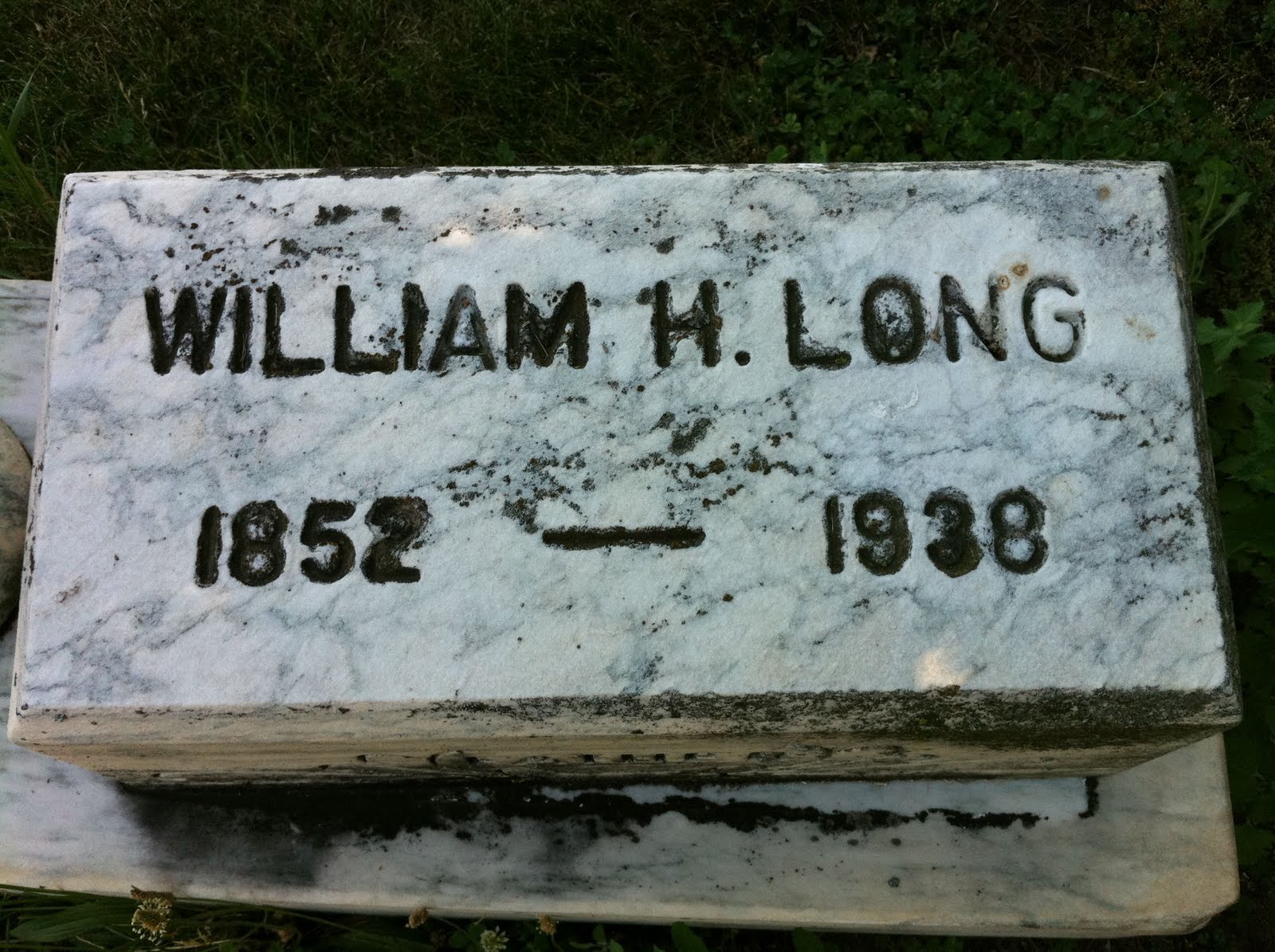
William H. Long – Went by “Harvey” most of the time, Weaver Cemetery, Wood County, Ohio
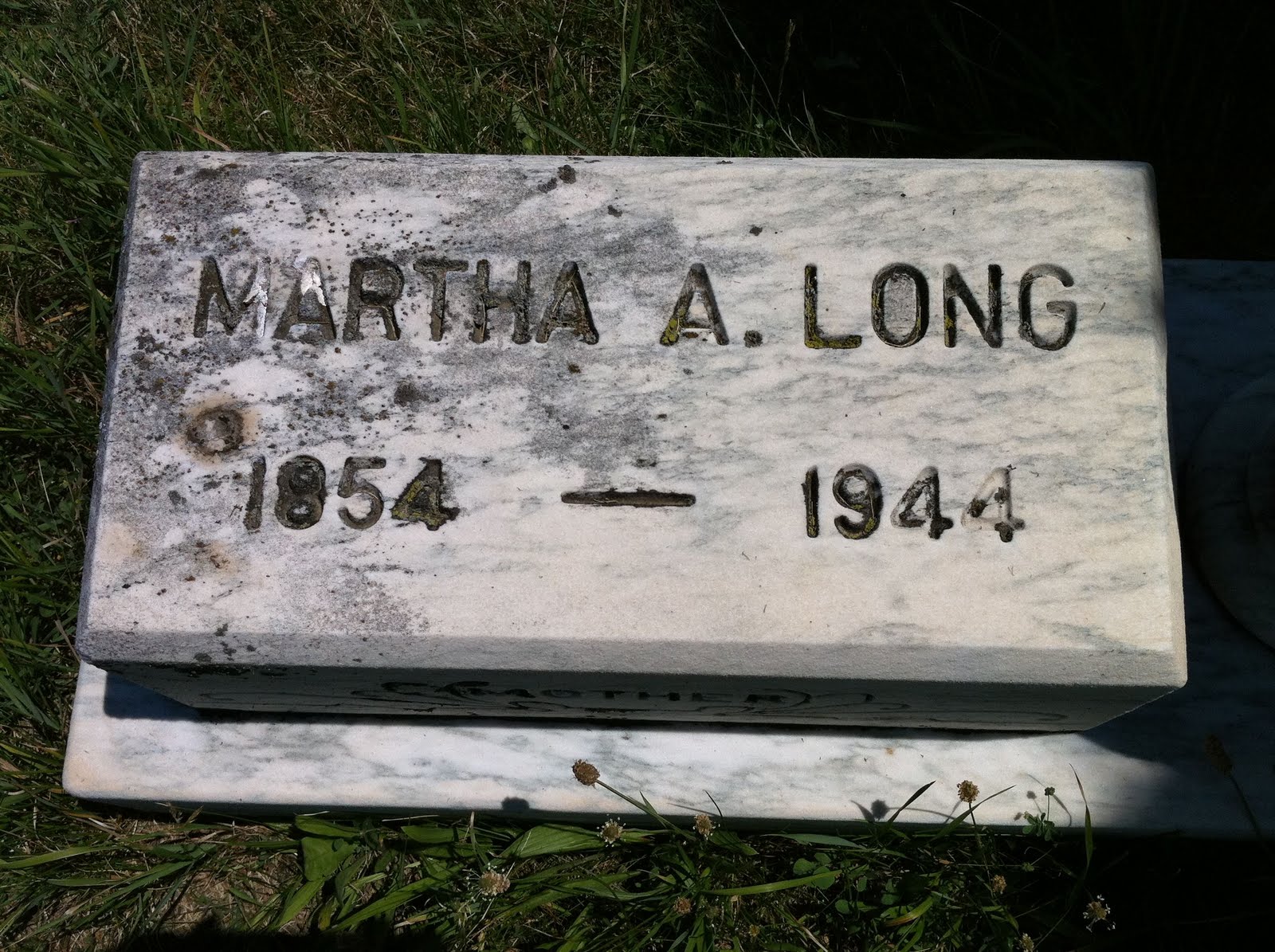
Martha A. Long – Went by “Mattie”. Her maiden name is Mitchell, daughter of Thomas and Angeline. Weaver Cemetery, Wood County, Ohio
I also found their son “Willie W. Long” who I had previously only known to have “died in infancy” and his father’s obit also listed him as “William S.” not “W”.
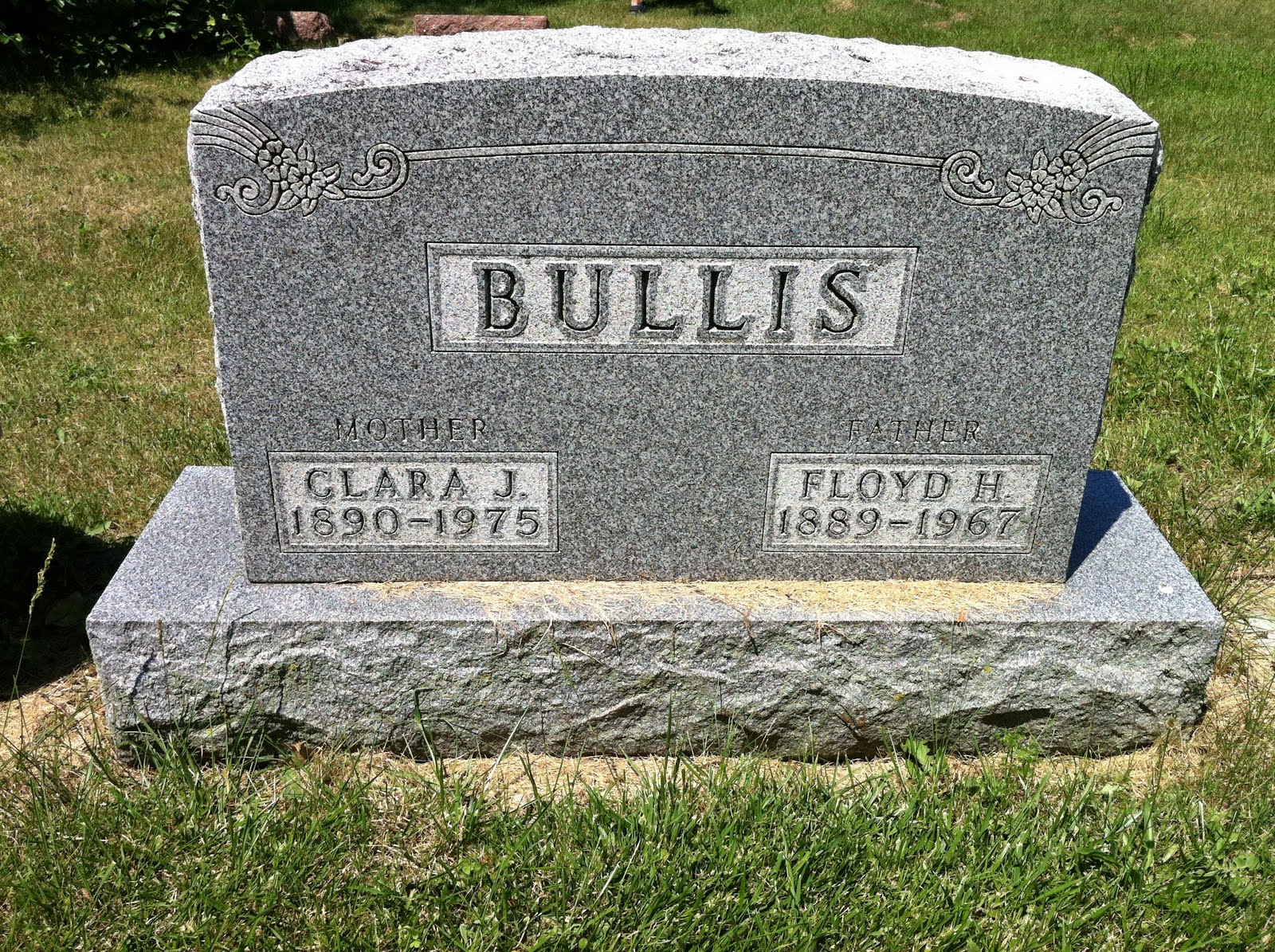
Clara (Long) and Floyd Bullis – Clara was a daughter of Mattie and Harvey Long, Plain Cemetery, Wood County, Ohio
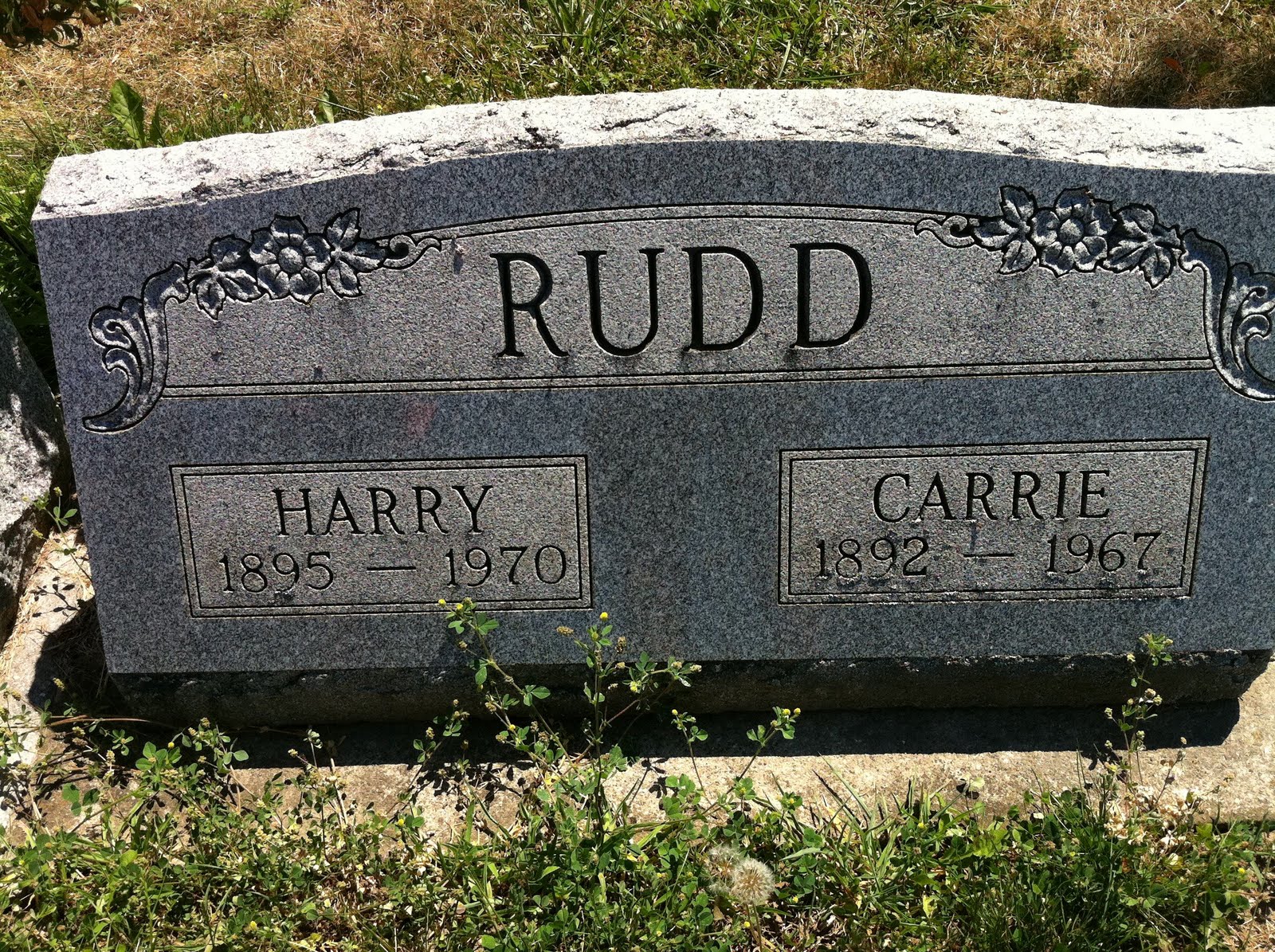
Carrie (Long) and Harry Rudd – Carrie was a daughter of Mattie and Harvey Long, Tontogany Cemetery, Wood County, Ohio
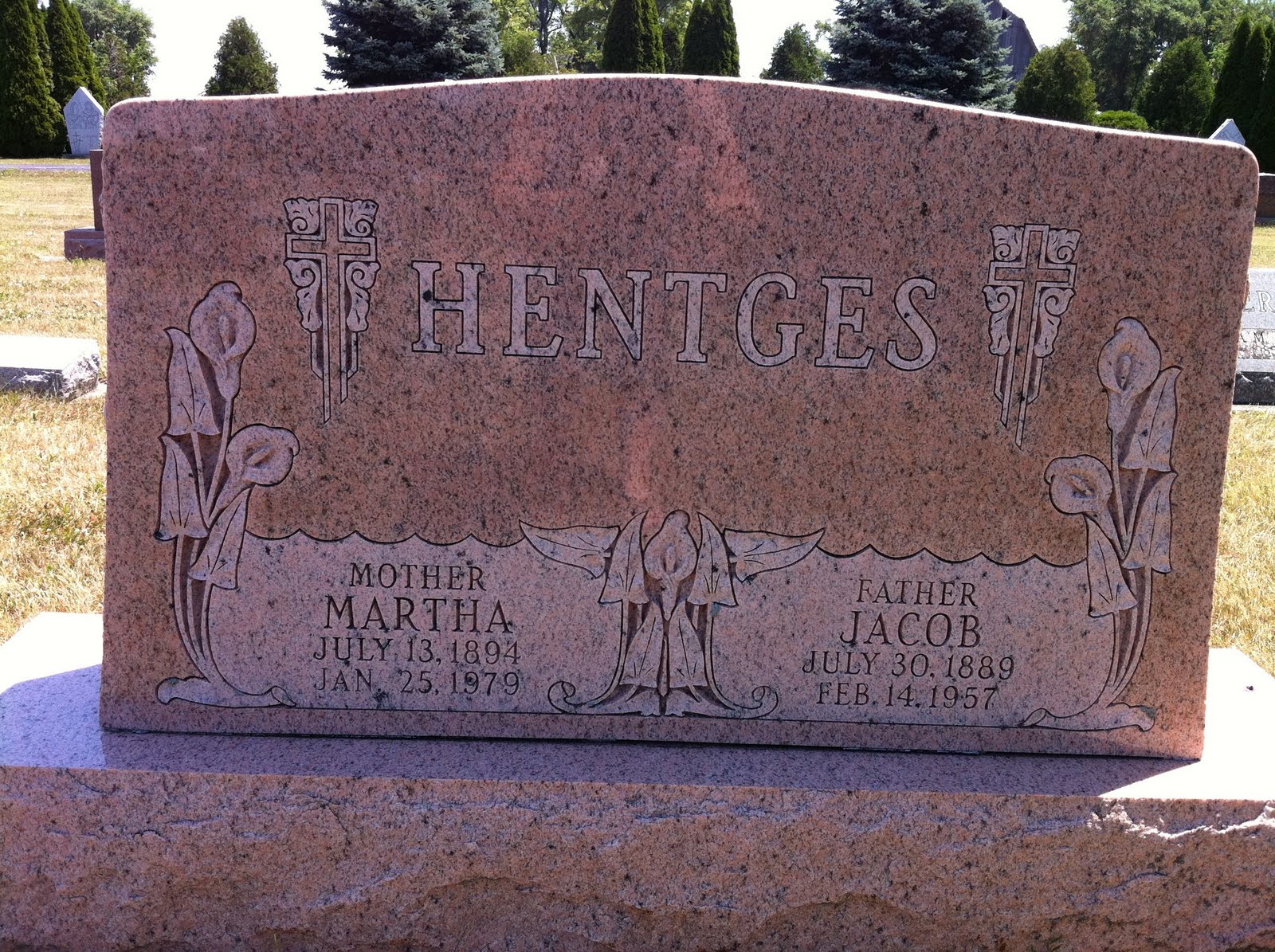
Martha (Long) and Jacob Hentges – Martha was a daughter of Mattie and Harvey Long, Saint Louis Cemetery, Wood County, Ohio.
That’s the 4 cemeteries and the 4 couples I was trying to locate. Check out the Google Map above to see what I did with it to help the research and keep track of my results. Click on the name of each cemetery and you will get a description of what I was looking for, a photo of the tombstone I found.
I feel as though I have confirmed Angeline Mitchell’s maiden name as “Higdon/Higden.” I have been trying to identify the children of Thomas C. and Angeline Mitchell for some time, with not much to go on. I had previously found a website that has transcriptions or extractions of Audrain County marriage books with citations and have extracted some Mitchell brides who I am hoping are the daughters of T.C. and Angeline. However, looking for them in the census has turned up very little so far, at least in Missouri.
Lately, I have been using the Missouri State Archives‘ wonderful index and many images of death certificates. I have been searching that for what has seemed like days looking for these few married names to no avail. As a last ditch effort to uncover something, I decided to try searching for the informant on T. C. Mitchell’s death certificate. It was a name I had never heard of before, “Schwendker,” and thought maybe I could learn who this person was and how they knew Thomas.
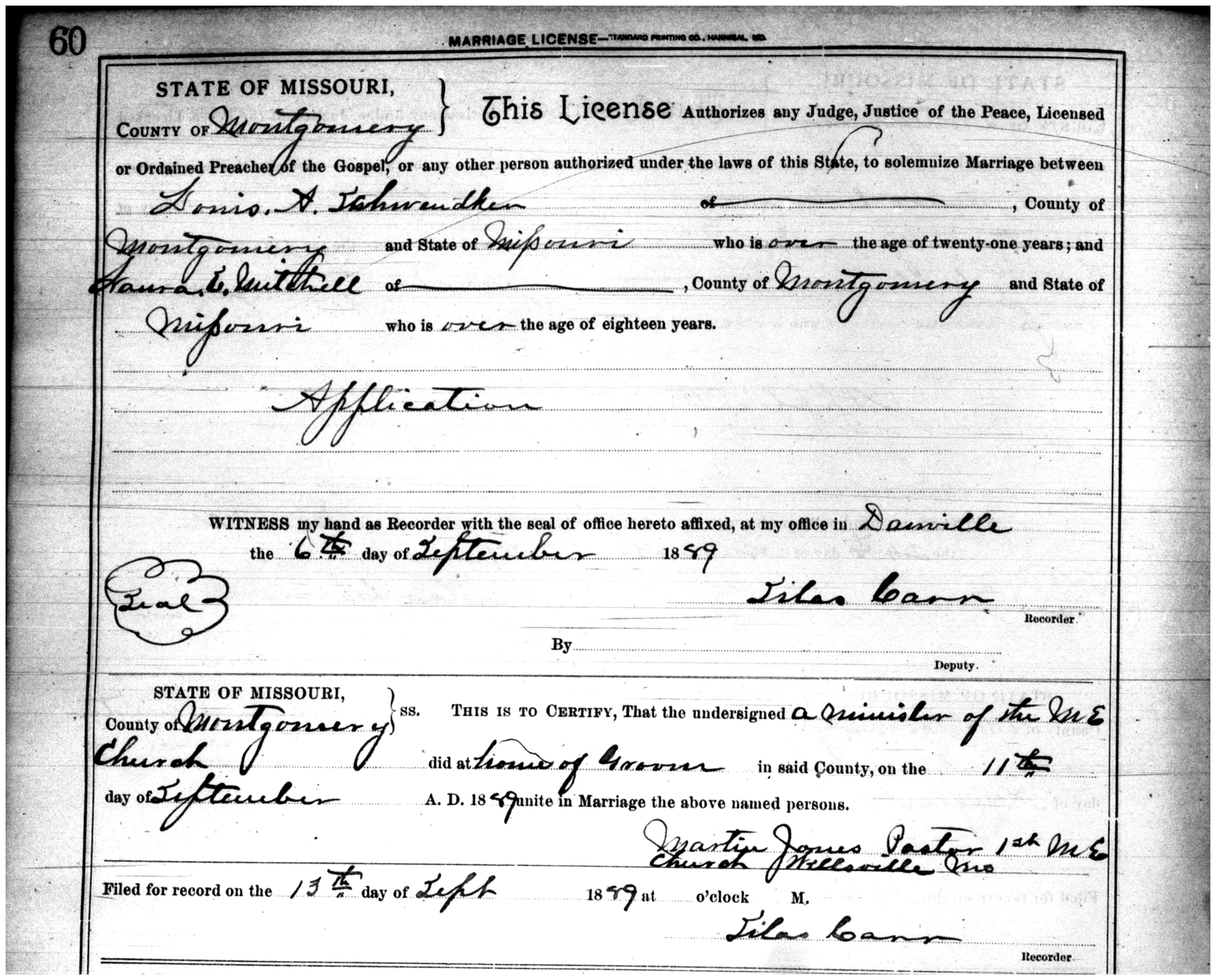
Using the MO State Archives, I searched for “Schwendker” in the death certificate database for all counties in Missouri, and lo and behold, only 4 came up, in the county that T. C. was living in when he died. The informants name was “L. A. Schwendker” and there were two “L” names in the index. One of them, Lewis A., does not yet have an image you can download, so I picked the other, Laura. Well, Laura’s death certificate says she is the daughter of Thomas Mitchell and Angeline Higden!
I had long suspected that Higdon was Angeline’s maiden name but this has clenched it for me! I felt so proud of myself for using those genealogical “skills” I have been learning about for so long and had them pay off!


 I am registered to attend the
  The
The  The
The  The
The 

 This summer I attended two outstanding genealogy institutes,





 Genealogy Pants