Tag Archives: research

Many Paths to Sources: Newspapers, Part 3a

(I know these titles are getting a little bit ridiculous, but there are a couple of steps to this third part and I figured I’d break it down into bite-sized chunks.)

The last two posts talked about online options for finding newspapers. You’ve got the “bigger” websites such as Newspapers.com, but there are also smaller, lesser-known projects out there to discover as well. Now, once you’ve exhausted every online resource you have been able to discover, what then?

I know this might come as a shock to some, but it isn’t all online. I know it seems like it is, because so much is! But it’s not. So, what do you do when you’ve discovered that there are no online options for what you are hoping to find in terms of newspapers. You have to jump in to what I refer to as “two-step” research. The first step is to determine if and where an offline record exists, and most of this first step can be done online or from home with some phone calls. The second step is determining how best to access those offline newspapers.

The first step of this I also call the “pre-research.” If you’ve listened to any of my lectures, I use this phrase a lot. It is the research you have to do to be able to do the research. Make sense? Clear as mud? Well, let’s clear it up. I have a perfect example. I conduct a lot of research in Bowling Green, Wood County, Ohio. That’s where I was born. Many generations of my ancestors lived in Wood county since at least the 1840s. Newspapers from Wood County are only slightly digitized and available online. The main newspaper for Bowling Green is not. So, what’s a researcher to do.

My first stop when looking for any newspaper in the United States is Chronicling America’s “US Newspaper Directory, 1690-Present.” The Library of Congress has put together this directory of newspapers published in the United States since 1690. The best part is that it tells you what newspapers existed for a time and place, AND how to access them.
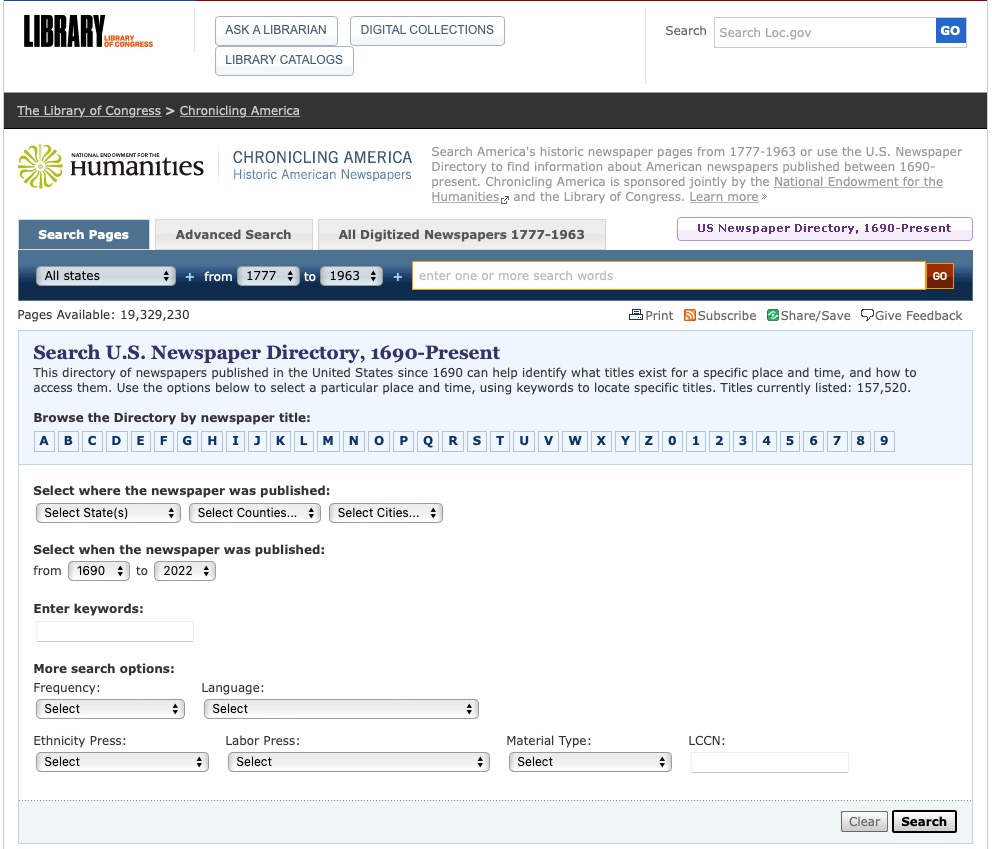
Chronicling America’s US Newspaper Directory

Selecting Wood County, Ohio shows that there are 104 titles in Wood County. The one I most want to access is the Daily Sentinel-Tribune (in red below).
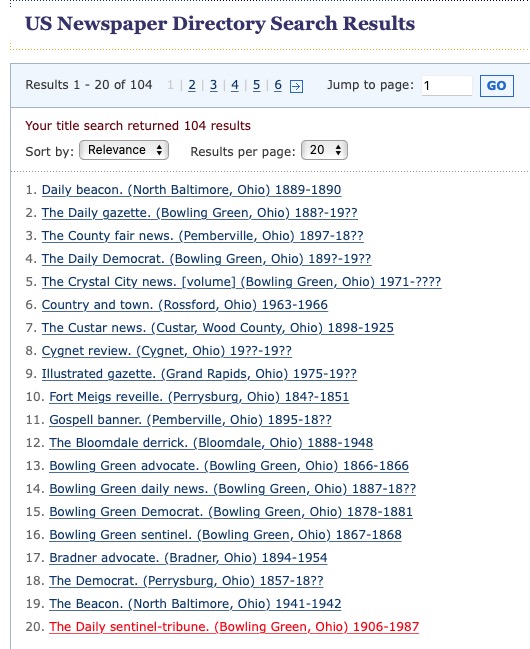
Clicking on that link provides you with a nice informative screen about that particular newspaper, including when it was published and preceding and succeeding titles.
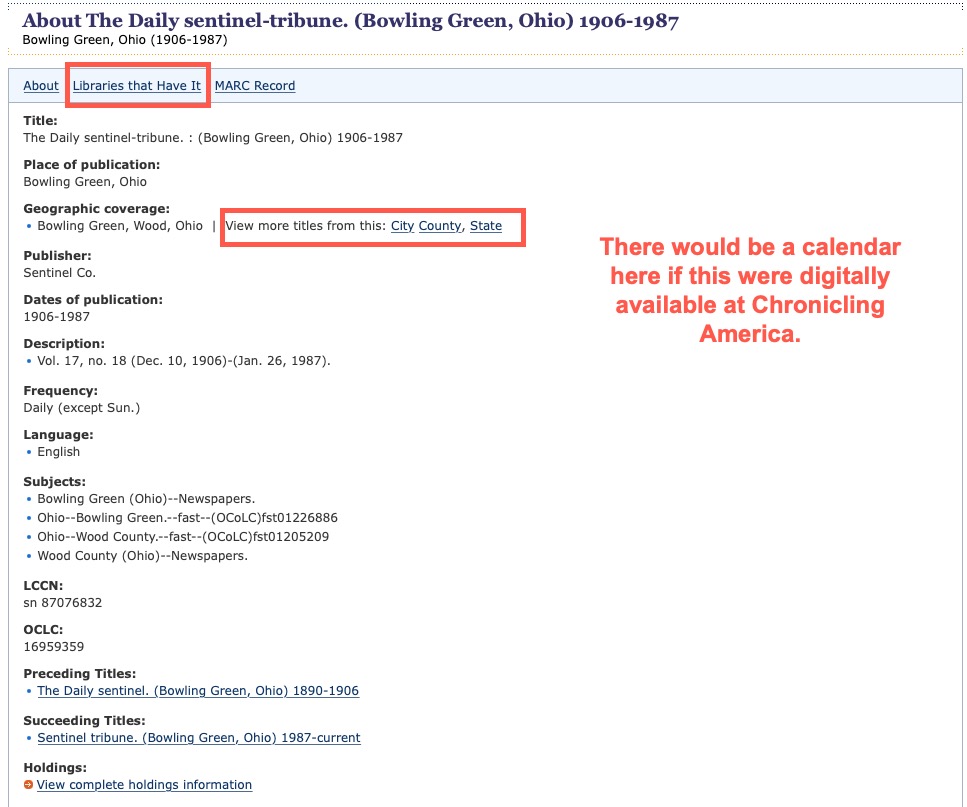
If there were a digitized version at Chronicling America, there would be a calendar view of available issues in the large white space to the right of the catalog entry. In this case, there is not. If you want to see other titled in that city, county, or state, there is a button for that. However, the most valuable button on this catalog is the “Libraries that Have It” link at the top. I issue a word of caution, however. This particular entry does not list the Wood County District Public Library in Bowling Green, which I know for a fact holds the entire run on microfilm. I’ve spent countless hours there going through the films.
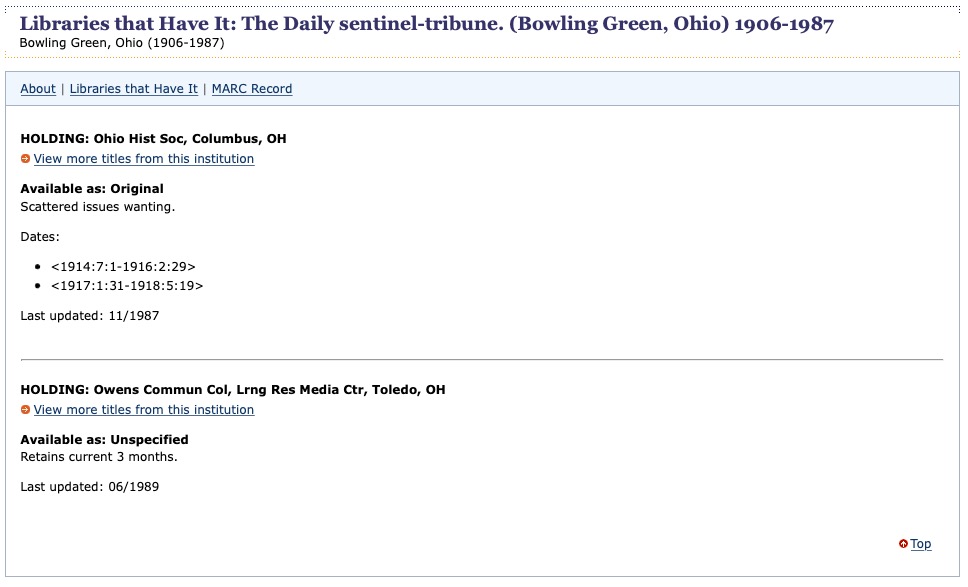
My point here is to not stop looking… again. Just because the LOC doesn’t list a local library for a source for newspapers, do not stop looking. ALWAYS, ALWAYS check that local public library for the possibility that they hold the records you are looking for.
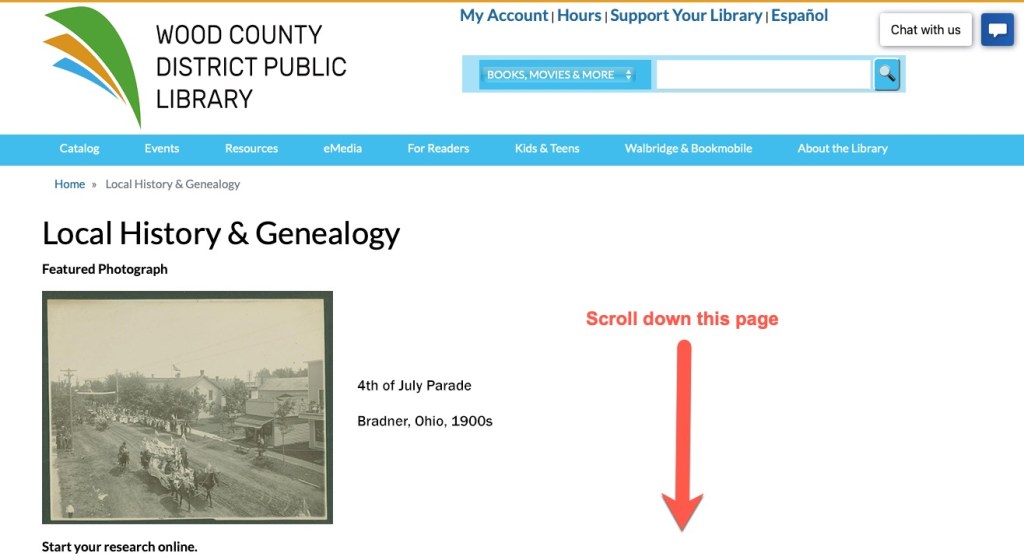
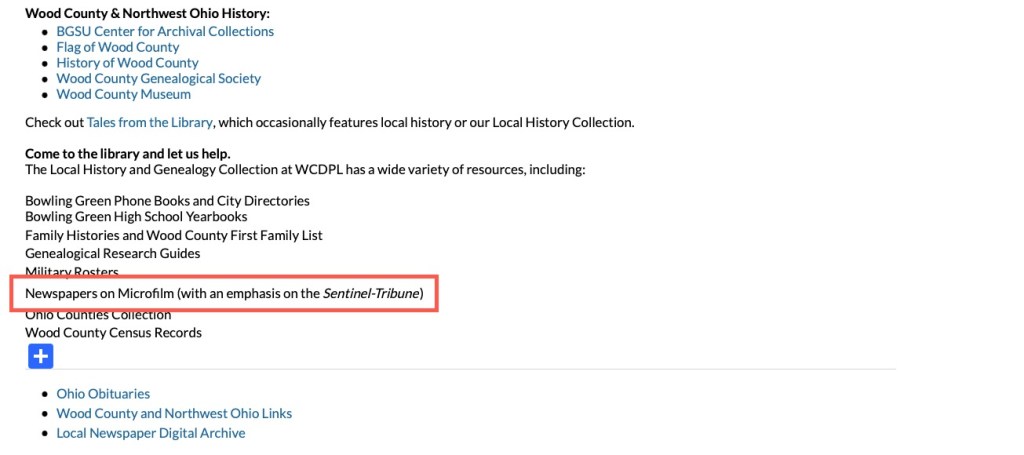
The Wood County District Public Library Website for Local History and Genealogy

If I hadn’t already known that the WCDPL holds those microfilms, I may have stopped there and assumed that the newspapers did not exist anywhere. Which is not unreasonable. Newspapers were not printed on acid-free paper and stored in temperature and humidity-controlled rooms until sometimes it was too late.
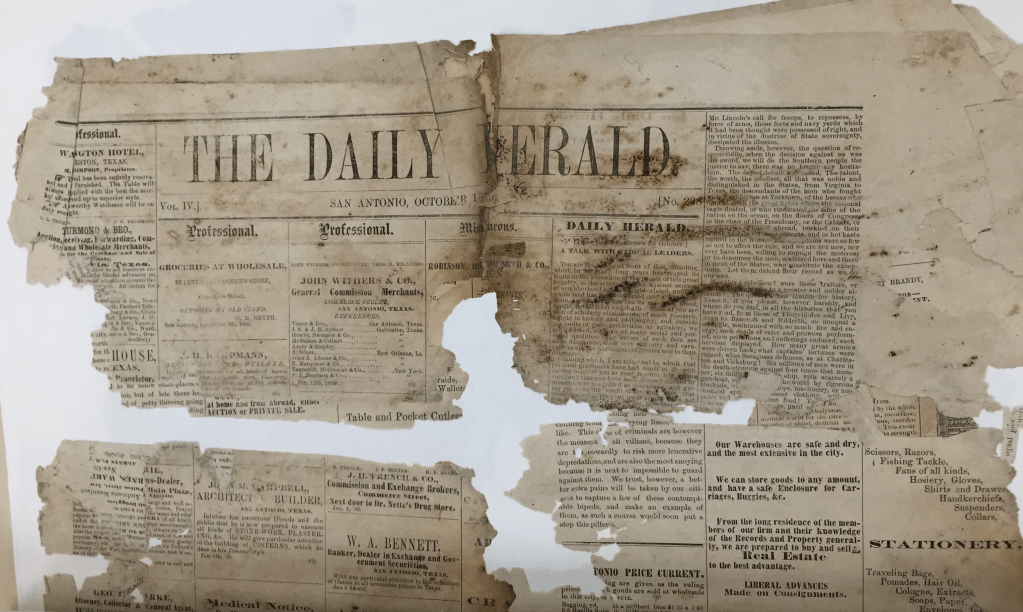
Newspaper crumbles, photo taken by author

Do you see what I mean by “pre-research”? You have to research where the sources are before you can access them. Next up, how to best to access the newspapers that are not online.

Many Paths to Sources: Newspapers, Part 2

Last time we looked at some of the big and obvious sources for finding online newspapers. But there’s more out there. You just have to have a lot of persistence and a little bit of luck. I’m talking about not stopping at just the major sites I shared last week. That is literally the tip of the iceberg. There are so many digital collections that are separate, part of a small local project, and just not known to the larger outside world. Here’s where you start (one of these, not in any particular order):

  • Local public libraries, especially if they have a local history collection
  • Local historical societies and museums
  • Local genealogical societies (“local” might mean regional, look at the next biggest town)
  • Nearest university (and then the next, etc.)
  • Town, city, county, state (and whatever the jurisdiction setup is in other countries) repositories such as an archive, library, historical and genealogical society, and so on

To learn about these you could do a simple Google search (‘Wood County Ohio public library,’ for example) or you could use other resources such as Cyndi’s List or the FamilySearch Wiki for genealogically specific information. Let’s look at an example.

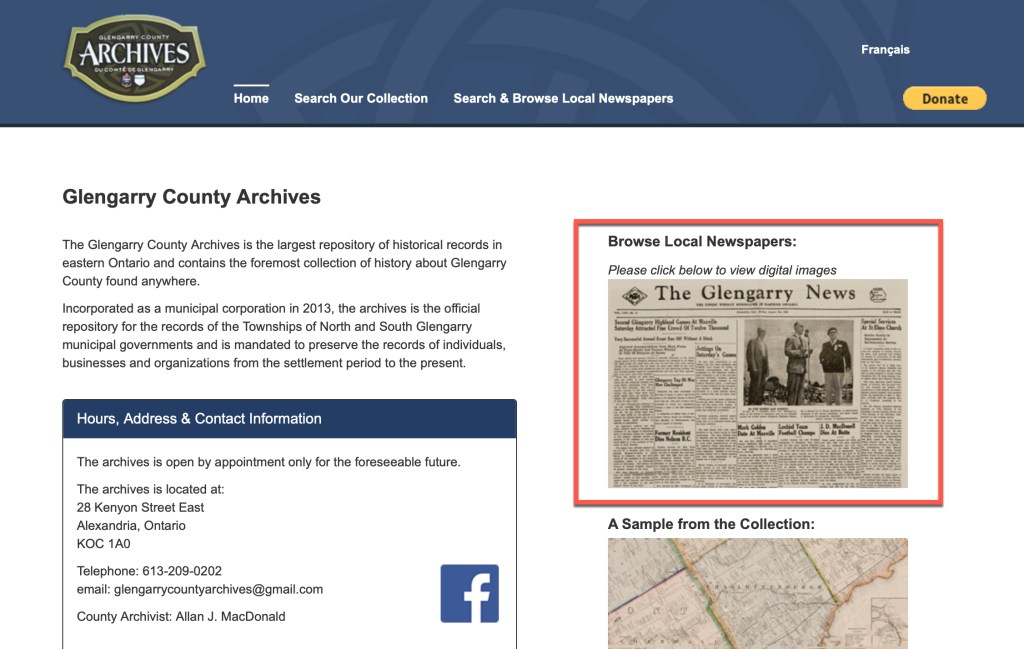
I had a client who’s ancestors were from Glengarry County, Ontario but one of a set of sisters had moved to New York City where she became a nurse. I needed to prove that the particular sister was in New York City at the right time to have given birth to my client’s grandmother. Of course, this is between census years; city directories were not easily available for the right years for the right borough; and etc. I was also unable to find mention of this sister in any newspaper in New York City and vicinity. However, I found a treasure trove of digitized newspapers at the Glengarry County archives.

Glengarry County Archives – Browse Local Newspapers

Lo and Behold! I found articles describing when the sister went to New York for nursing school, when she came home for visits, her progress, her graduation, her new job in a New York hospital, and more. I was able to prove that she was in New York City at the right time and place. This is not a collection that is highly visible through other sites. These digital images are not a part of a large subscription service.

I found this resource that helped solve my client project because I have a list of places I start looking when the “big” sites fail. That list is the bullets listed above: libraries, historical societies, genealogical societies, universities, county and state level archives. This method has worked too many times for me not to follow it. If it helps, make a sticky note with that list on it and keep it near your computer.

Whatever you do, don’t give up when those major sites do not provide what you are looking for. You can’t give up until you’ve exhausted those and this list. Next time, we will discuss what to do when you’ve exhausted both of those. Keep searching!

Many Paths to Sources: Newspapers, Part 1

First, let’s take a look at newspapers. Newspapers are one of my favorite subjects to speak about. Finding your ancestors in the newspaper gives you a nice, albeit often short, snapshot into their lives and gives their lives extra flavor. It helps turn them into real people that existed rather than just names on a document.

There are some fantastic online options for finding newspapers. The big three sites for subscriptions:

And there is not one that is better than the other. They all have different collections, so the one that is right for you, is the one that has the series of newspapers with your ancestors in them. Be sure to check their catalog for coverage before buying a subscription. All of these sites let you do that, so don’t skip this step and then get disappointed if they don’t have the papers you needed.

There are many free sites for newspapers across the U.S. Many states have a state digitization project and corresponding website. Here are just a few:

Of course, there is the Library of Congress’s collection of digitized newspapers:

Internationally, there are also some free digital newspaper sites as well. I know of a couple where I’ve done research:

Then there are link sites such as:

The above, is a lot. But is is literally just scratching the surface of what you can do with newspaper research. In Part 2 we will look more closely at finding newspapers online. In Part 3, we will delve into finding and accessing newspapers offline.

Many Paths to Sources: It’s Not All Online

In the genealogy field, you might see the statement “it’s not all online” frequently. Unfortunately, with so much being online, we tend to think it ALL is. Ancestry, FamilySearch, and others, with their hint systems and click to add to family trees has trained us that if it isn’t online, delivered by a hint, then it probably doesn’t exist. This is simple neurology as well. The brain does not like to work hard.1 So, if there is not an easy way to find or get something, the brain gets on board with “if it isn’t online then it doesn’t exist” mentality. But it’s not all online.

As an admin on the Facebook group The Genealogy Squad, we see this happen all the time. People ask for where they can find vital records, yearbooks, city directories, newspaper articles, and so on. When the answer comes back that the particular thing they are looking for is not online and they will need to call or email a specific repository, they balk. Surely it is online somewhere. Oh, I have to make a call, and possibly PAY for said document?!?

TV shows and movies do not help this either. I watch NCIS and Criminal Minds, all of which would have you believe that the smallest bit of information can be found online, regardless of whether you have a warrant to obtain that information, but that’s another topic altogether.

The companies that are digitizing, are choosing to do so based on whether they can sell a subscription, with the exception of FamilySearch. They digitize to preserve according to their religious beliefs. It takes a lot of time and resources to do the digitizing, store the digital images, create databases linked to those digital images, etc. so you can sit at home and do this from your computer with minimal effort. I’m all for it. But if you truly want to obtain those harder-to-find documents, solve those mysteries, and break down the proverbial brick wall, you have to go further sometimes.

In this blog series, we will look at some common sources and explore some of the other ways you might consider to obtain that source. Fair warning, it may take a little more thinking, exploration, and effort to obtain. But I want us all to get a little less comfortable so we can get a little further ahead with our research projects.


1. Elliot T. Berkman, “The Neuroscience of Goals and Behavior Change” (Consult Psychol J. 2018 Mar; 70(1): 28–44; digital copy, US National Library of Medicine (https://www.ncbi.nlm.nih.gov/pmc/articles/PMC5854216/).

PERSI: Tips for Getting Copies of Articles

You might notice, when you use PERSI, that once you find an article you want to read, there’s no link to view it. Can you imagine the task and resources needed to digitize, store, link, and do all of the other techno-shizzle-wizzle needed to house digital images of the over 8,000 titles in the collection that starts from publications in 1847 to today? That’s millions and millions of pages. So, remember, PERSI is an index. In our day of instant gratification, we want to be able to click and see the article. But that is not possible, here and now. You have to do some extra work to get the benefit of PERSI.

When you find an article you want here are some ways to try to obtain a copy. These are not in any particular order. It depends on the journal, the society, the library, etc. There’s no way to know ahead of time which one of these will work best for that journal.

  • Look up the journal title on WorldCat to locate a library that holds that journal. Then see if they have a copy/scan service to provide the article. Most do. Or you can try interlibrary loan to obtain a copy.
  • Look up the publishing society’s website. I have found several genealogical societies that have already digitized their own quarterlies and make them available on their website, often for free.
  • Hire a professional to make copies. You could hire someone that frequents Allen County Public Library, or someone that frequents a library you located using the WorldCat step above. I recommend the Association of Professional Genealogists’ Directory. This link will show you those that list Allen County Public Library under their repositories.
  • Contact ACPL directly. There is a form for ordering articles under the “Our Services” link found under “Explore Genealogy” on the ACPL homepage. No offense to anyone that works at ACPL, but that form indicates that it will take “6-8 weeks” and I’m an impatient genealogist, so I try any of the other steps before I will try this one. And I have never had to use this form. Something else invariably works, and works faster than 6-8 weeks.
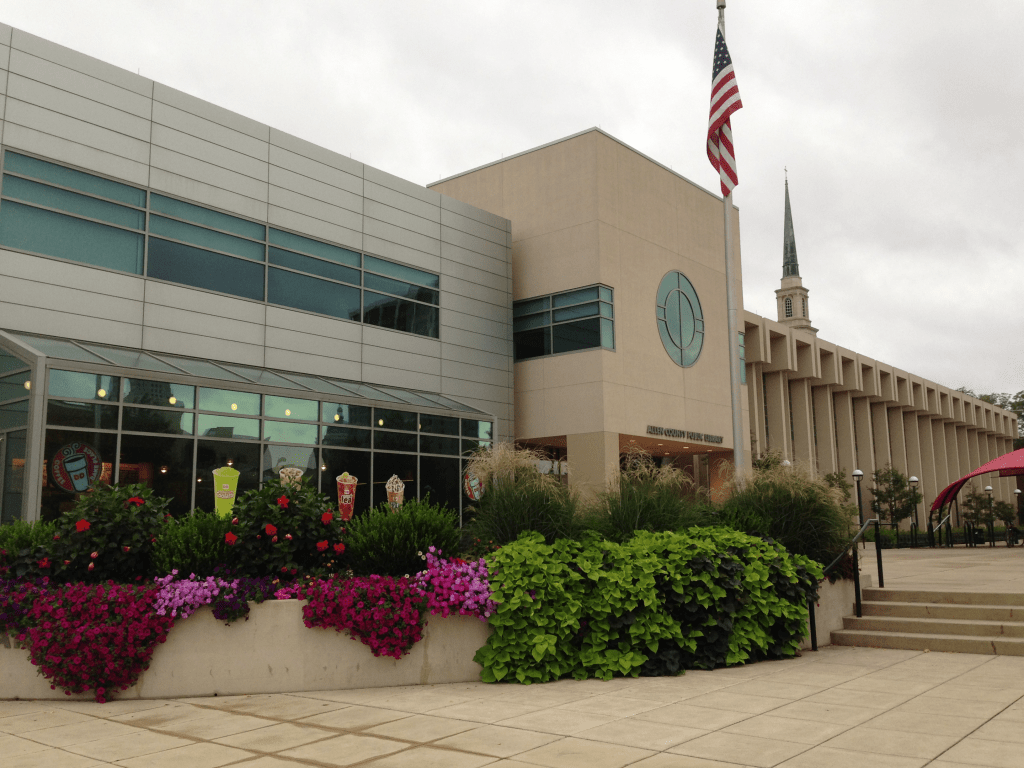
  • If none of the above work (which I highly doubt, but anything is possible), then visit ACPL and find them yourself. (Highly Recommended!) The library is lovely (see below).
Allen County Public Library, photo by author, 2013

Those are my best tips on PERSI, on of genealogy’s most under utilized resources in my opinion. I hope you will use it more and learn how to use it more effectively with the tips in this series.

PERSI Tips: What Kind of Index is it?

The Periodical Source Index (PERSI) began as a print publication in 1986 by the staff at Allen County Public Library (ACPL). ACPL’s collection holds over 8,000 titles of genealogical society journals. PERSI was first published as a 16-volume set covering the years 1847-1985, and then annually. It was also available on microfiche at FHL and CD-ROM through Ancestry.

Print volumes of PERSI, located at the Texas State Library and Archives Commission, Austin, Texas, photographed by author.

In 1997, Ancestry made PERSI available as a free online database. This was also the last year it was available in print. PERSI has been available for free through HeritageQuest and most recently through Findmypast (FMP). However, the contract with FMP is ending and for reasons not disclosed, ACPL is going to host the index on their own site: https://www.genealogycenter.info/persi/

What kind of index is it? Let me sum up the biggest misunderstanding in one sentence:

PERSI IS NOT AN EVERY NAME INDEX!

The biggest misunderstanding and misuse of PERSI is that users expect to be able to put in their person’s name or even a surname, and find information about that person. That is not how PERSI was indexed. PERSI is a keyword and subject index. The indexers did not index every name in a cemetery transcription published in a local society quarterly. They did not index every name in a transcribed local tax list. They did not index every name published in a military draft list for a county.

To best use PERSI, you need to think in terms of subjects and keywords. If someone is the subject of an article, you will find their name in the index. But if they were among those listed as petition signers, for example, you will not find them.

Over the next several posts, I will share some of my best tips, case studies, examples, and how to obtain copies of the articles, so that you can get the most out of PERSI.

Check out the New PERSI!

If you’ve heard me speak, you may know that I am a huge fan of the Periodical Source Index, or PERSI. This index has been around for a long time, started by the Allen County Public Library, whose indexers indexed nearly all genealogical society quarterlies and journals since the beginning of time. Well, that might be a slight exaggeration, but it truly is nearly accurate. They have been doing small genealogical society publications a great service over the years, making the work of the local researchers and writers more accessible to researchers far and wide. PERSI has taken may forms over the years from a printed publication to a set of CD-ROMs to microfiche to an online index. Most recently it has been housed at Findmypast.

ACPL – Creator of PERSI

I attended a webinar yesterday put on by the Allen County Public Library sharing the new version of PERSI which will be housed on their website. The presenter made the point several times that one of the benefits of this is so that PERSI would be free. However, I want to make a point of correction here. PERSI has always been free. At Findmypast, you did need a login (set up a username and password), but no credit card was required to do that. You could access PERSI for free at Findmypast. There were a few features you could not access such as the full ACPL call number, volume number, or digital image if it were available. You were able to find titles of articles, authors, journal titles, and years of publication. Everything you needed to access the article, all for free. Not that it matters now, but I want to give credit where credit is due.

Over the years, as I’ve presented my lecture about PERSI, I have often had to dispel the myth that it was not free at Findmypast. I guess because it was housed at a company everyone thought you had to pay for it. I have a secret I want to share: nearly every website has some number of free databases you can access without paying for a subscription. PERSI was one of those at Findmypast.

The link to the new PERSI is: https://www.genealogycenter.info/persi/

The presenter stated that they are still working out some of the kinks and soon there will be a button for PERSI on the main database page. For now, you will find the link to PERSI at the bottom footer of the page for any of their other free database pages. Or you can just bookmark the link above.

The NEW PERSI homepage at ACPL.

I wanted to first share the link and a screenshot of the new PERSI website. Over the next several weeks I will share some of the details and reiterate some of my favorite tips for working with PERSI to get the most out of it for your research.

Research in the Equality State: Online Card Catalogs

If you haven’t used the card catalog feature on a few of the main genealogical sites we all might use every day, let me take this moment in Wyoming research to demonstrate it. Main of the big genealogy sites have this feature but I have found that over the years, not many know about it or use it. I’ll show both Ancestry and FamilySearch’s card catalogs today, but be on the lookout for a similar feature on other sites.

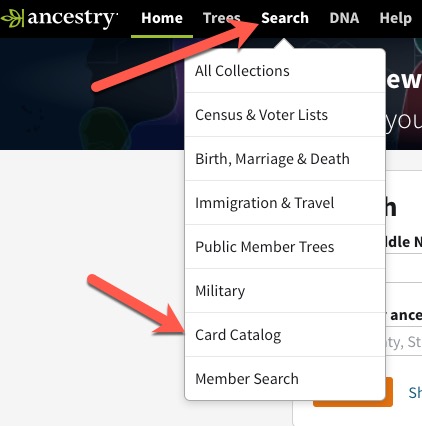
At Ancestry, you can find the Card Catalog under the Search Tab:

Ancestry’s Card Catalog

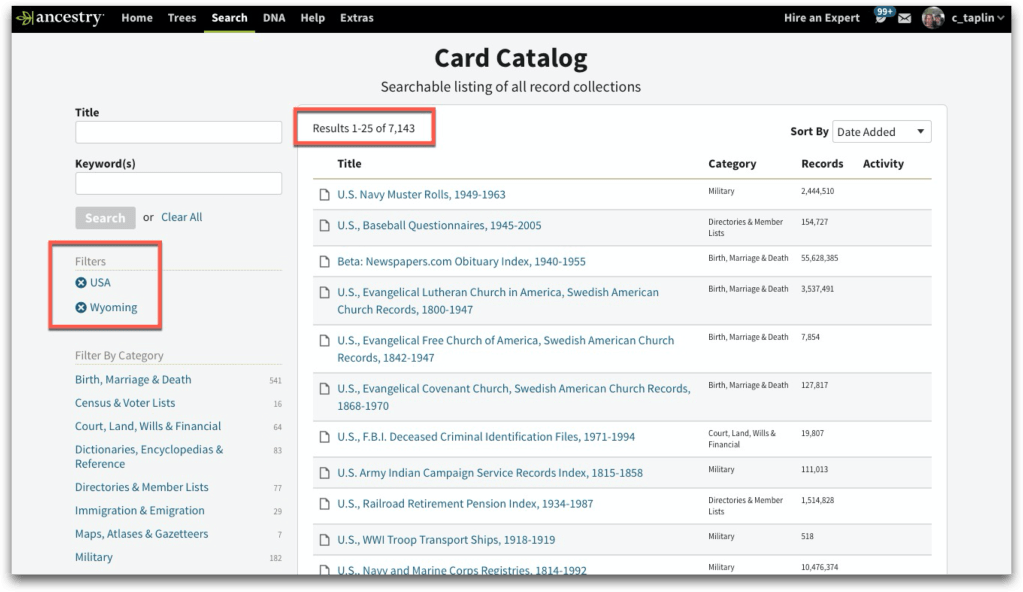
Once your in the card catalog, you can filter your results by using the options on the left. For this example, I have filtered by “USA” and “Wyoming:

You can further filter by the county, record category etc. This will help you see more quickly databases, record sets, and sources that Ancestry has for Wyoming specifically.

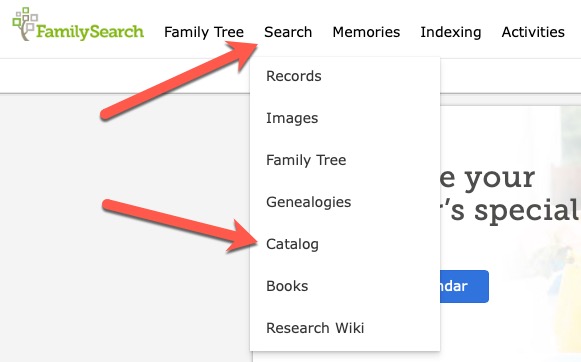
Similarly, at FamilySearch, you can also search the “Catalog.” From the home screen, it can be found under the Search tab:

FamilySearch’s Catalog

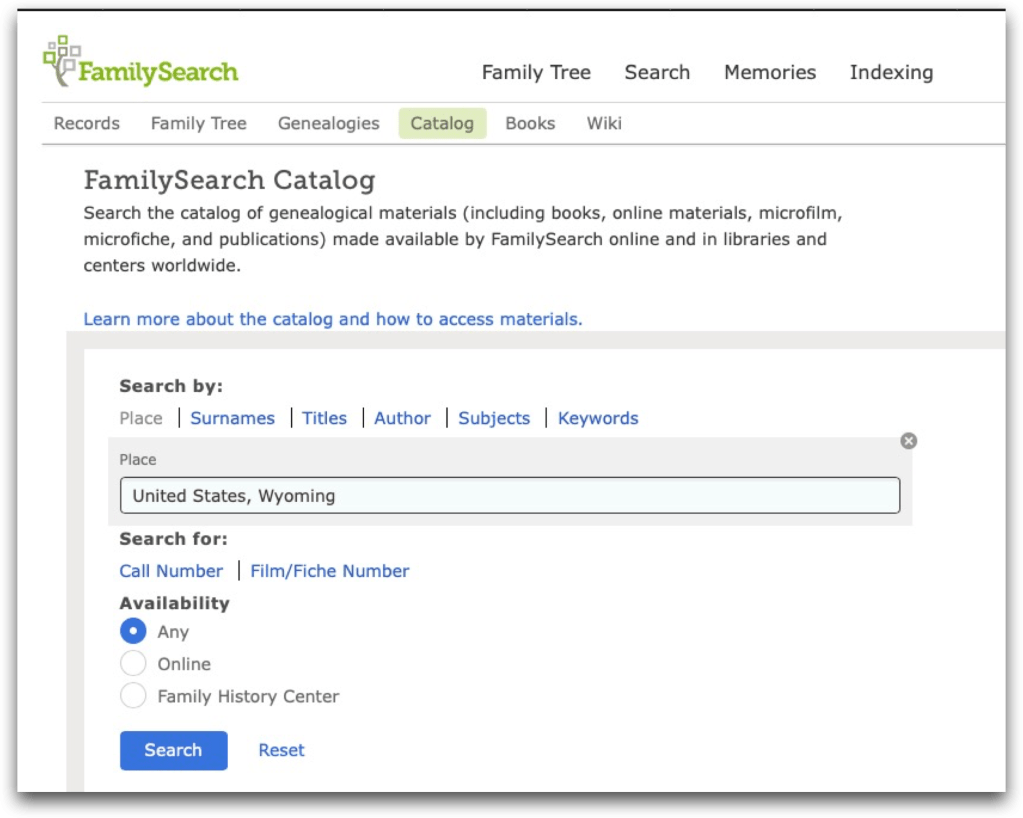
From this screen, you will see options to search by Place, Surnames, Titles, Author, Subject, and Keywords. Most of the time, I find I use the Place search.

FamilySearch’s Catalog

You can start your search broadly by typing in “Wyoming”:

FamilySearch’s Catalog

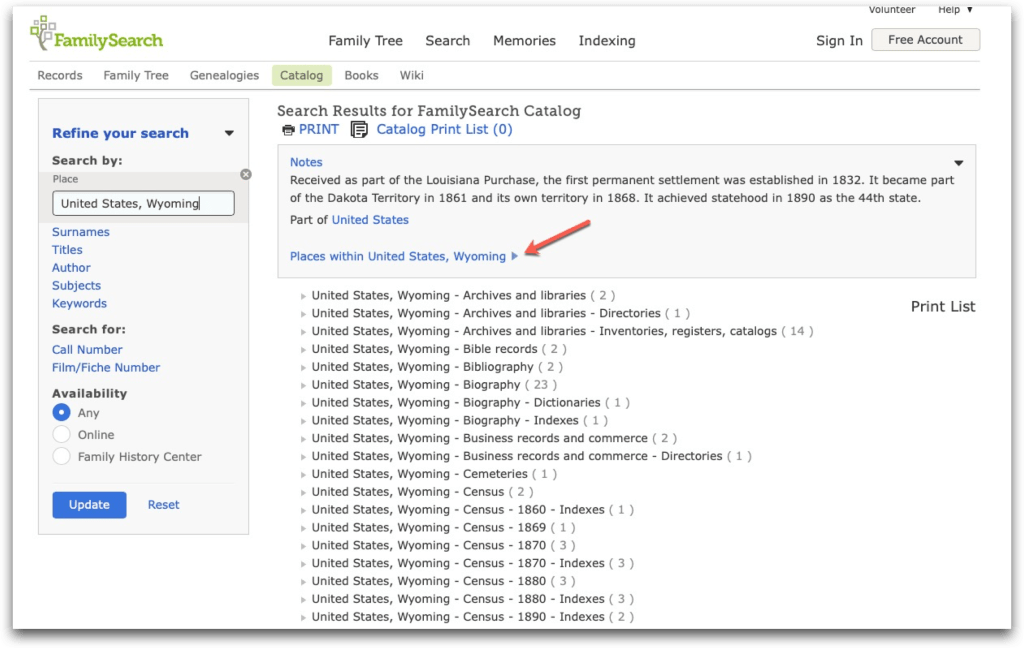
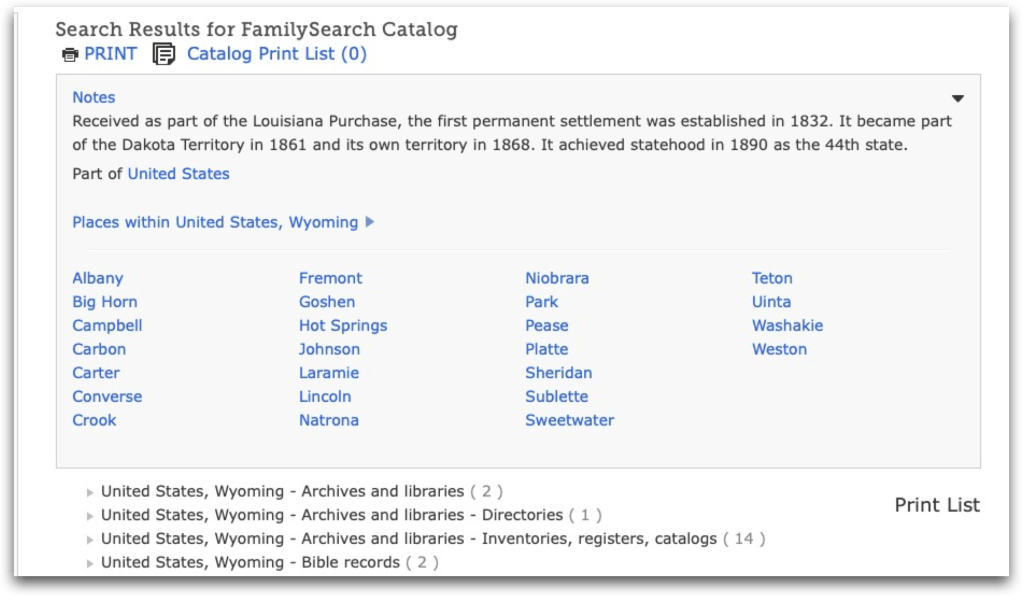
From there you can see all of the options that are at the state level, or you can click on “Places within United States, Wyoming” and see a list of counties:

FamilySearch’s Catalog – Wyoming
FamilySearch’s Catalog – Wyoming Counties List

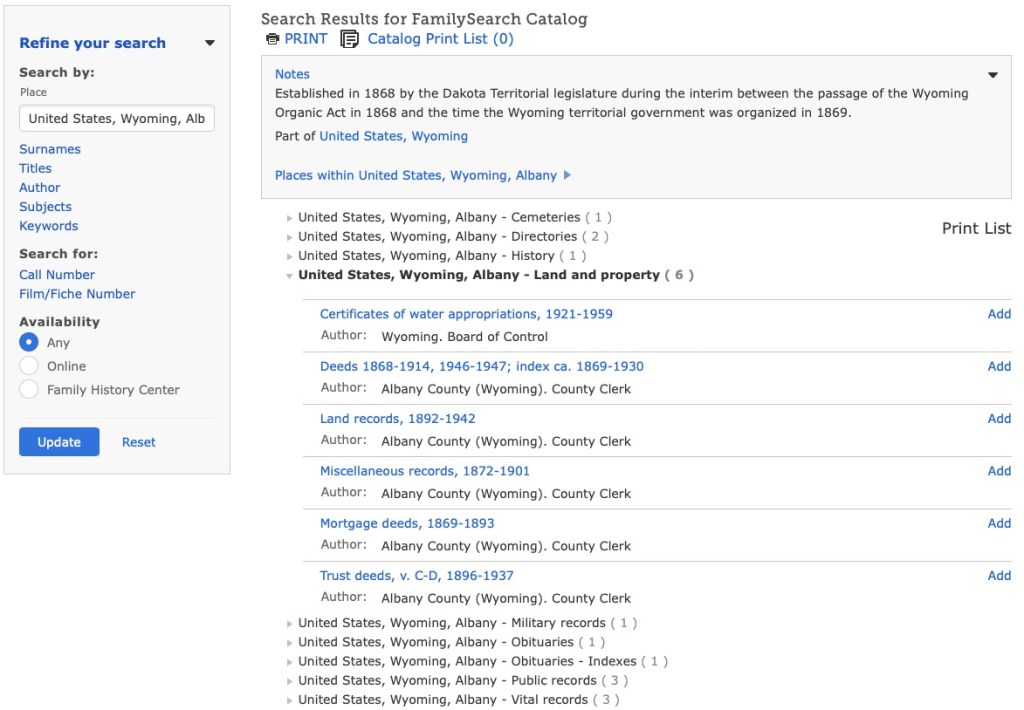
Once you’ve picked a county, you can see what records they have for Albany County land records:

FamilySearch – Albany County Land Records in the Catalog

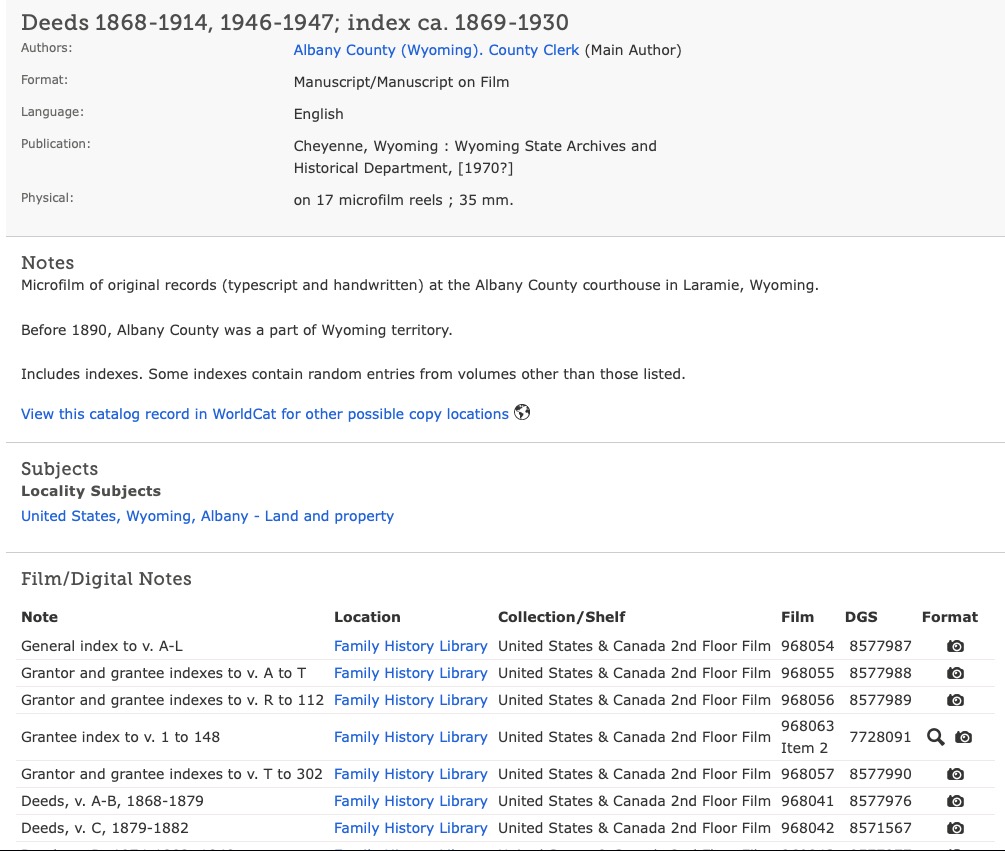
From there, it is almost like the “old days” of scrolling through microfilm, except you are at home. (Of course, there are some digitized films that must be looked at while at a Family History Center or Affiliate library due to contract restrictions.)

FamilySearch Catalog Entry for Deeds
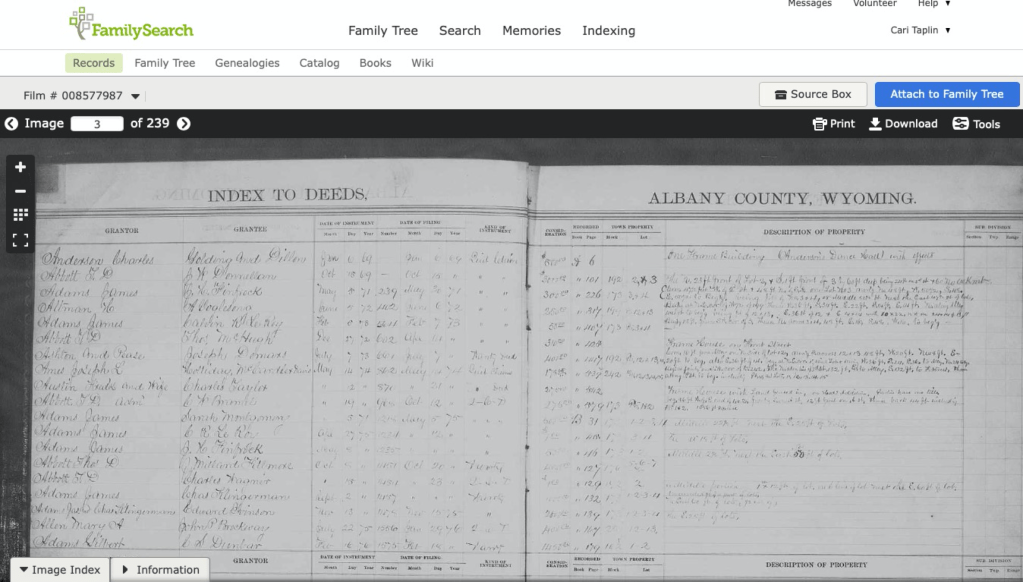
FamilySearch Deed Index for Albany County

So, if I want to look up any deeds for Susan Baily, I can start “scrolling” or clicking and find the B entries in this index and then find the deed.

Using the card catalog allows me to be more thorough and intentional with my research. If you are just using the global search function from the front page of any of these large genealogical sites, you are probably missing a lot of records. Give the card catalog a look.

Research in the Equality State: Migration and Transportation

Wyoming may be largely made up of wide-open spaces, but there are several important migration routes and transportation events. I’m going to cover five migration routes:

  • Bozeman Trail – connected the gold rush areas of Montana to the Oregon Trail
  • Oregon Trail – from western Missouri into the Rockies and on to Oregon City
  • California Trail – from western Missouri across the Rockies into the California Gold Fields
  • Mormon Trail – from Nauvoo, Illinois to Nebraska and on to Salt Lake City and beyond to California
  • Chisholm Trail – branch that ended in Cheyenne and joined the Oregon, Mormon, or California Trails

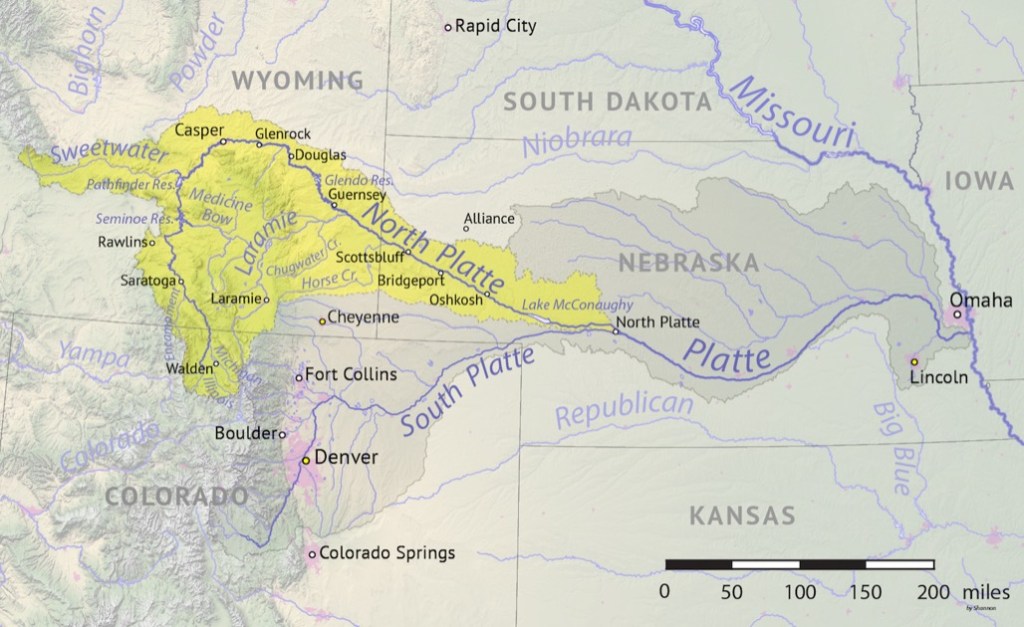
Rivers served as migration and settlement points. The North Platte River and the Sweetwater, a long tributary of the North Platte, are part of the Mississippi river system and the water eventually reaches the Gulf of Mexico. These two rivers are along the Oregon, California, and Mormon trails. They offered important water for explorers and settlers. Wyoming is a very dry state (I could never seem to drink enough water!) It was imperative for explorers and settlers to stay near water sources.

Image by “Shannon1” permission by Creative Commons license (https://commons.wikimedia.org/wiki/File:North_Platte_basin_map.png : viewed Aug 2021).

The railroad played an important role in the expansion and settlement of the state of Wyoming. The Union Pacific Railroad was vital in that it financed town-building across the state. The railroad fostered economic growth not only for itself but also for the state of Wyoming. It helped move livestock out, and other goods in to the state. When coal was discovered in southwest corner of the state, it powered the railroad while the railroad also moved coal out of the state to sell to other regions and consumers.

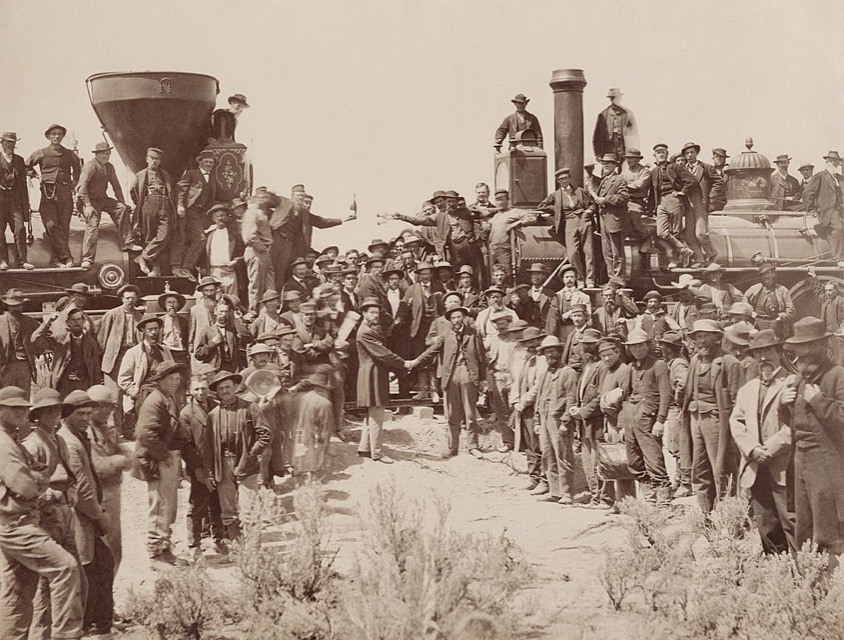
Lincoln signed the Pacific Railway Act, 1 July 1862. This act created the Union Pacific (UP), and subsidized the UP and the Central Pacific by granting 10-square mile sections of land for each mile of track laid. In 1864, the second Pacific Railway Act doubled the land grant to 20 square miles and also gave mineral rights to the railroad. The sales of this land then paid for the building of the railroad. The pounding of the Golden Spike on 10 May 1869 at Promontory Summit, Utah, connected the railroad from the Atlantic to the Pacific. This opened trade and transportation to and from farther locations. This made Wyoming much more accessible for settlement. Transportation by train was more preferable to wagon trains.

The ceremony for the driving of the golden spike at Promontory Summit, Utah on May 10, 1869; completion of the First Transcontinental Railroad. At center left, Samuel S. Montague, Central Pacific Railroad, shakes hands with Grenville M. Dodge, Union Pacific Railroad (center right). By Andrew J. Russell – Yale University Libraries, Public Domain.

Next we will look at land in Wyoming. There’s plenty of it… mostly filled with sheep and sagebrush.

Research in the Equality State: Background & History

I’m going to start a new series with this post, about researching in one of my favorite states: Wyoming. We moved to Wyoming from Ohio when I was 14. I went to high school and college there. I met my husband there. He was born there. And now, my daughter is about to start attending the University of Wyoming this semester. So, Wyoming is a special place for me and my family. I also created a locality guide for the state (I don’t recommend doing a guide for an entire state, but that’s another story.)

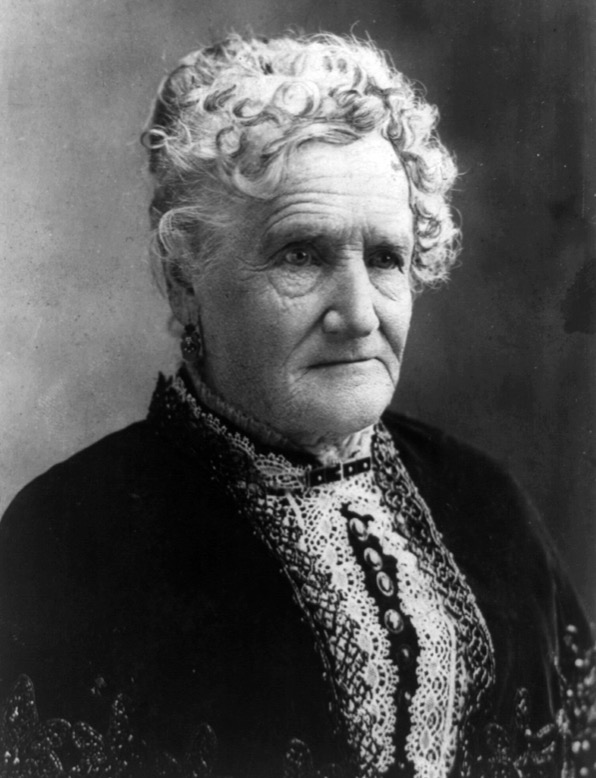
Wyoming is a state with a lot of firsts for women, giving it the title “The Equality State”:

  • Esther Hobart Morris – first female Justice of the Peace, served in South Pass City, Feb. 1870
  • Mrs. Louisa Swain, first woman to vote in the nation in Laramie, 1870
  • Estelle Reel became the first woman elected to a state office, 1894
  • Mrs. Nellie Tayloe Ross, first elected female governor in the United States, 1924
Esther Hobart Morris, first female Justice of the Peace, Library of Congress image in the Public Domain.

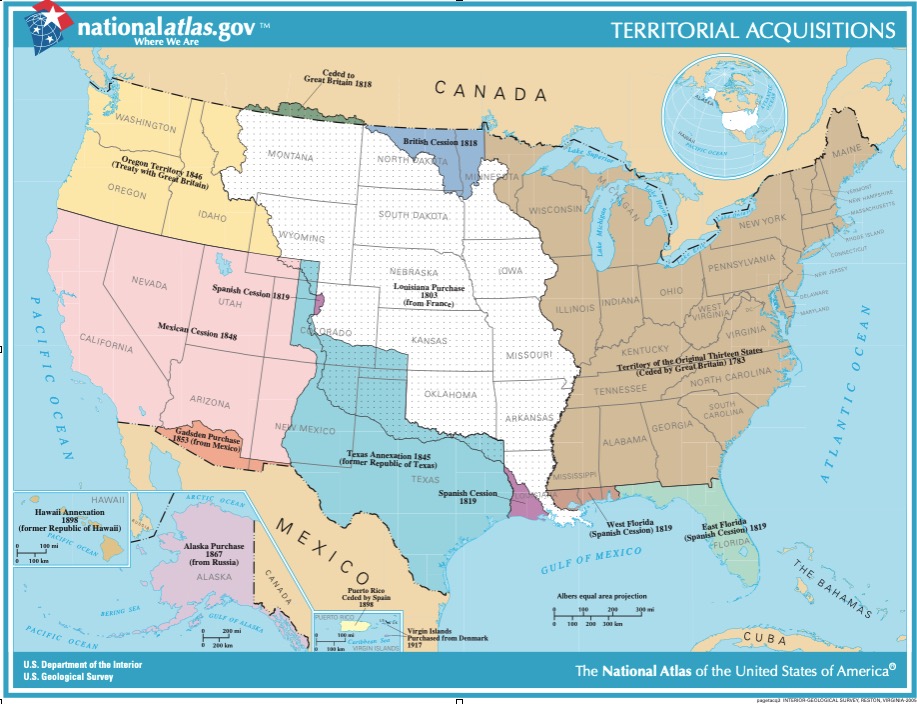
Most of the Wyoming’s land was acquired by the US through the Louisiana Purchase in 1803. Most of the southern portion of modern-day Wyoming was claimed by Spain and Mexico until the 1830s but there was no real presence by them in the area at that time. The Oregon Territory claimed a western portion. There was also a little bit that was part of Texas.

“The Territorial Acquisitions,” The National Atlas of the United States, digital image (https://commons.wikimedia.org/wiki/File:U.S._Territorial_Acquisitions.png)

The first known explorer to Wyoming was John Colter in 1807. Later, he was a member of the Lewis and Clark Expedition. He first wrote about the geological features in what is now Yellowstone National Park. In 1812, South Pass was discovered by a party of men returning from Astoria, Oregon. This important route would later be used by the Oregon Trail, the Union Pacific Railroad, and eventually become Interstate 80 that runs along the south part of Wyoming from east to west.

When traveling from my home in Colorado to Salt Lake City to visit the Family History Library, I drive across I-80. There is a lot of flat nothing much out there. I often find myself wondering about those first explorers and what they must have thought about that landscape as they traveled across it. By car it takes me about 7 hours to get to Salt Lake City. It would have taken many days by horse, wagon, or walking. Plenty of time to think about life while crossing the state!

We will explore important migration and transportation routes next week.