 When getting started on the writing, you might feel overwhelmed. Where do I begin? What should come first? How do I build this story so that it is clear, concise, easy to understand, and makes the case?
Consider this: try writing BEFORE you finished the research. Maybe even at the outset or early-to-middle stages of your research. When you’ve determined you have a tougher problem on your hands maybe? Start the writing then.
Start writing when you start the research. It can go like this:
- Research…discover you don’t have a straightforward problem.
- Write a research plan which starts with a clear and concise research question.
- As you research, you add to that document your findings, conclusions, analysis, summations, and add to the plan.
- Eventually that same document (or I like to make a copy to work from) can become your rough draft.
- Edit, rearrange, add, delete, and discover more research to be done.
- And as they say, “rinse and repeat” until you get a good solid third, fourth, fifth, sixth draft.
Tip: Keep a copy of each draft. If you’re like me, you’ll change your mind about something and wish you had an earlier copy to refer back to.
Whether you write before you think you’re finished or at the end of your research, you will find “holes” or things you didn’t consider when you begin writing it all out. This is good. And this is why I try to start writing before I get too far along in the research. It helps my research stay focused, and points those holes out to me sooner rather than later.
This rough draft stage can and should go through many versions. In this stage consider:
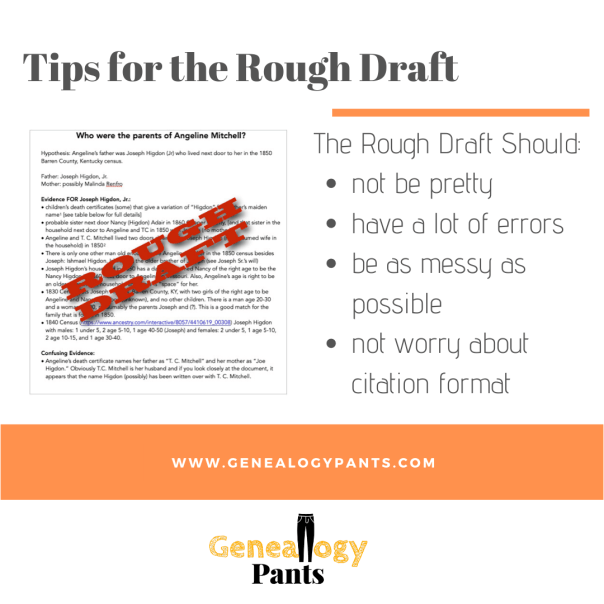
- The rough draft should not be “pretty.” It should be quite ugly, actually. The uglier the better. Let it be as ugly as possible, then you’ll know you are doing it right!
- DO NOT EDIT yourself, the writing, get out the Chicago Manual Of Style, or anything like that at this stage. Keep the errors, typos, misspellings, etc.
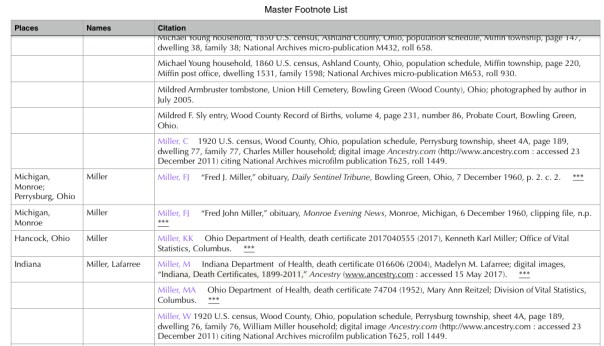
- DO NOT worry about citation formats at this stage. If you don’t have the citation written already, do not worry about it when doing this part. Put a placeholder footnote in so you know where you need to add the citations later.
Worry about editing, errors, typos, style, citations, and all of that will only slow you down and deter you. Don’t do it! My rough drafts begin with a lot of bullet points that can easily be made into full sentences later. I tend to repeat myself, use the wrong their, there, or they’re, put in too many commas or not enough. DO NOT WORRY ABOUT IT! That is what the editing phase is for when you think you’re nearly done with the bones of the writing.
Get some writing done! There’s no time like the present…seriously.
 I like to write in “bits.” By ‘bits’ I mean short thoughts, a couple of paragraphs on one idea, or a page at a time. My ‘bits’ can be found everywhere: notebooks, margins, on my phone in the notes app, in emails or texts to myself, slips of paper on my desk, sticky notes sticking to all kinds of things, in Evernote, and in other places. This is not very organized! Unfortunately, many writers that I’ve talked to are like this. When an idea hits you, you have to take a moment to write it down wherever you can.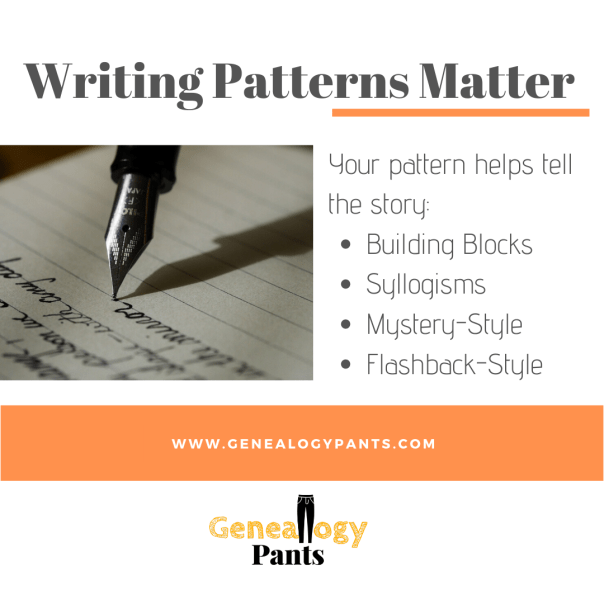


 Who among us genealogists doesn’t struggle with maintaining focus? We all know too well about finding a tantalizing record that sends us down a road that we find ourselves still traveling at 3 a.m. Lack of focus can happen in the writing aspect as well. Distractions are often procrastination in disguise, particularly if you find writing difficult. We will always find something to keep us from writing. Procrastination feeds writer’s block and forms a cycle that is hard to break. Below are a few of my tips for maintaining focus when writing.
 more intelligent after he’s given these things a read. So find someone who is willing to do that for you. You can find another writer and trade. With the internet, email, video calls, screen-sharing, and so on, you don’t need to be in the same region to do this. If you’ve connected with a like-minded person you get along with at a conference, build up a relationship and become writing buddies.
 judgy or elitist, but if you want your work to stand the test of time, to be accurate, unable to be overturned when new evidence surfaces, the standards are there to help guide you. There are standards for many aspects relating to genealogy. Those regarding writing can be found in chapter 4.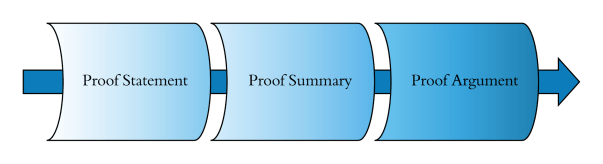
 I can hear many of you saying “I’m not a good writer.” And to that, I say “pish posh!” That is what editors are for. Editors (whether they are a trusted friend, someone you hire, or that from a journal) make your writing better! Don’t let that “I’m not a good writer” thought stop you from doing it. I sit in my office every day and look at my binders and worry that someday I’m going to come to a point in my life when I don’t get that work published somewhere, anywhere, where it can be used by future researchers. (I used to say “what if I’m hit by a bus” until a friend was literally hit by a bus, don’t worry, she’s ok. Another friend told me to think “what if I win the lottery and move to a private island” instead. She’s right. That’s a lot more fun to imagine. But even then, I’d probably figure out how to get the internet and do genealogical research even on my island.)
 Genealogy Pants