“Crossing the Pond” An upcoming course at the British Institute

britishI will have the pleasure and honor of teaching at the “British Institute” hosted by the International Society of British Genealogy and Family History (ISBGFH). I will be teaching three classes in the course titled “Crossing the Pond: Finding Your Immigrant Ancestor in Their Homeland” coordinated by Eric Stroschein, along with Luana Darby and David Ouimette, CG. The following is an excellent description of the course:

Are you stuck? Have you hit the European immigration research brick wall called the Atlantic Ocean? Want to learn how to resolve your own research problem? Whether your immigrant ancestor came directly to America or through the British Isles this class is for you. For this class, it does not matter where your immigrant came from.

Crossing the Pond teaches proven beginning to advanced methods, instructing students how to resolve their own research problems. Students in this course will bring up to 5 of their own European research problems to work on throughout the week. Crossing the Pond demonstrates sound methodology translates to all countries.

This workshop style course has the look and feel of private consultations centered around morning classroom instruction on methodology and followed by problem solving with guided research by your instructors in the Family History Library while using your own research problems.

The three classes I will be teaching are:

  • Using Lists to Find Proof
    • Genealogists examine lists every time they conduct research, whether it be in the form of censuses, tax lists, directories, petitions, or others. This class will demonstrate methods of examining lists as a research tool for proving the identity of our ancestors.

  • Using Church Records to Find Ancestral Origins
    • Use maps, directories, county histories and other clues from family lore and tradition to determine the religious affiliations of your ancestors. Locating, examining, and analyzing the records for a given church, might be the key to identifying an ancestor’s place of origin.

  • Canadian Migration and Immigration
    • When we think about our immigrant ancestors, we often visualize them coming directly to a United States seaport such as New York or Philadelphia. However, many of our forebears entered through Canadian ports before migrating south overland to become U.S. citizens; some may have crossed back and forth several times creating many records for genealogists. This class examines some of the common migration patterns and the documents they created.

I know I wish I had this course when I was beginning my genealogical research. There is still time to register! If you sign up by September 15 you will save $65 on the registration fees! The classes take place at the Plaza right next door to the Family History Library in Salt Lake City. There is no better format than a half day learning and a half day researching, if you ask me. I am sure this course will be of use to anyone who is looking for their ancestors’ origins “across the pond.”

More information on the other instructors:

Course Coordinator:

Eric Stroschein, is a professional genealogist located in Mount Vernon, Washington. He owns Generations Detective, a genealogical research firm that offers a wide variety of services. Eric has roots in the British Isles and has had great success finding ancestors in their native countries for his clients and his own family. He lectures nationally at various genealogy conferences. To contact Generations Detective please visit: http://generationsdetective.org/contact/

Course Instructors:

Luana Darby, MLIS, is a professional genealogist and lecturer, based in Salt Lake City. She is the owner of Lineages by Luana, a genealogical research company which focuses on US/Canada and Western European research. She has served as president, vice president, and treasurer of the Utah Genealogical Association and currently serves on the Association of Professional Genealogist’s board. She also is employed as an adjunct faculty member at BYU-Idaho in the family history department. 

David Ouimette, CG, CGL, manages Content Strategy at FamilySearch, prioritizing historical records worldwide for digitization and online publication. He has conducted archival research in dozens of countries across the Americas, Europe, Africa, and Asia. David lectures at national genealogical conferences and institutes and authored Finding Your Irish Ancestors: A Beginner’s Guide.

My lecture at the APG PMC is all about the “PERSIbilities”

In just two short weeks I will be attending and presenting a lecture at the Association for Professional Genealogists Professional Management Conference in Fort Wayne, Indiana. (My how time flies!) I will be presenting a lecture on a resource that is one of my favorites: the Periodical Source Index, or PERSI.

“PERSI Possibilities: Better Research with ACPL’s Periodical Source Index” will take place on Thursday 22 September 2016 at 1:15. So right after lunch… I do hope the great examples I will share and the stories I plan on telling will keep everyone awake!

A colleague and genea-pal Darcie Posz suggested I start a hashtag for my program #PERSIbilities. I love that and wish I had thought of it myself… I may have to retitle my lecture! In this program I will give the audience a look into the Periodical Source Index (PERSI), its new partnership with Find My Past, and tips and techniques for getting the most out of this valuable genealogical resource.

There is still time to register for the conference. Click here to go to the APG conference page. The entire conference runs from 22-24 of September at the Allen County Public Library. There are some fantastic presentations in the line-up that I am truly looking forward to attending. There are twenty-five different lectures and five workshops to choose from high-caliber genealogists working in the field today.

Besides the opportunity for learning, the conference is being held in one of the best genealogical repositories, the one that started PERSI, the Allen County Public Library. Who could ask for anything better? So, consider adding the PMC to your genealogical education plan. I hope to see you there!

Village Genealogical Society Seminar

villagesI am VERY excited to be presenting an all-day seminar to the Village Genealogical Society and the Akansa Chapter, NSDAR on 17 September 2016. The seminar will be held at the Coronado Community Center, 150 Ponderosa Lane, Hot Springs Village, Arkansas. To register visit this website http://www.rootsweb.ancestry.com/~arhsvgs/ or click here:  VGS Workshop 2016 Flyer and Entry Form (pdf).

The group has picked some fantastic topics. I will be presenting:

  • “Census Hurdles: How to Jump Over or Go Around”
  • “From Deeds to Dirt: Case Studies in Analyzing Research with Maps”
  • “Cluster Research and the Fan Principle: Finding Your Ancestors through their Friends, Associates, and Neighbors”
  • “The Heart of it All: Migration Research Methods”

This seminar will begin with some foundational research record sets and methodology (censuses and maps), and then build on those lectures in the afternoon with two methodology lectures. The “Cluster Research” lecture will explain the FAN Club principle (thank you Elizabeth Shown Mills) and demonstrate some of the best methods for identifying your ancestors’ FAN club. The second, “The Heart of it All” will bring together all of the records, techniques and methodologies from the day into a final case study on determining one family’s migration route and their reason for moving.

I’m looking forward to this opportunity and I hope to see some of you there!

Genealogy-world News

I have had a VERY busy summer which has resulted in a very inactive blog. However, there have been several happenings in the genealogy world that I wanted to share. You may have already learned about some of these, but if not, check them out:

1. From the FGS Voice Website: “The Federation of Genealogical Societies (FGS) and the National Park Service’s Palo Alto Battlefield National Historical Park announce a partnership to develop a searchable database of more than 130,000 soldiers of the U.S.-Mexican War…The database will allow descendants of U.S. soldiers to connect to their personal history and help Palo Alto commemorate and tell the stories of these soldiers. After the database is developed, unit histories, digitized documents, and information on U.S.-Mexican War soldiers will be added. Efforts will also be made to include names and information about Mexican soldiers in this war.” This is going to be another fantastic partnership from FGS for preserving records.

2. The Board for Certification of Genealogists (BCG) has partnered with Legacy Family Tree Webinars for their monthly webinar series. From the news release: “The Board for Certification of Genealogists and Legacy Family Tree Webinars are excited to announce a new partnership. Legacy, host of the webinar series at FamilyTreeWebinars.com, will now also serve as host, producer, and publisher for future BCG webinars. This arrangement will produce and promote high-quality education in genealogy standards and methodologies by one of the leading creators of genealogy webinars.” The first webinar under this new partnership will be “Another Kind of Navigation: GPS for Genealogy” presented by Shellee Morehead, Ph.D., CG on Tuesday August 16, 8pm Eastern and can be registered for at: http://familytreewebinars.com/webinar_details.php?webinar_id=477

3. PERSI (the PERidocial Source Index) has a new landing page on FindMyPast. From the PERSI webpage: “The Periodical Source Index enables you to easily locate key information about people and places. It contains over 2.5 million entries from thousands of historical, genealogical and ethnic publications, making it an invaluable, comprehensive family history resource.” PERSI is one of my favorite resources. I will be giving a lecture on the subject at the Association of Professional Genealogists Professional Management Conference September 22-24, 2016 at the Allen County Public Library in Fort Wayne, Indiana.

4. “Refining Internet and Digital Skills for Genealogy,” a new SLIG course being offered by Cyndi Ingle (of Cyndi’s List), is sure to be one of those courses you think you might not need but you really do. We all get really comfortable with our computers, and our data and research processing systems, but we don’t know what we don’t know about how to be better or more efficient researchers. From Cyndi’s List Facebook Page: “There are still some spots open for SLIG 2017, the Salt Lake Institute of Genealogy. My course is, “Refining Internet and Digital Skills for Genealogy.” We will focus on getting your digital research organized, performing more productive searches online, locating records and repositories necessary to move your research forward, using tools that help you analyze data in your research, and the final output of your research efforts. If you’ve been spinning your wheels for a while and want to take full control over your computer, please join us in SLC next January. Sign up for the course here: http://slig.ugagenealogy.org.”

Those are four things that I’ve been excited about in the genealogy world. I hope you check some of them out and can utilize, donate, or benefit from them! Happy summer!

A Father’s Day Look Up My Family Tree

FullSizeRender-2
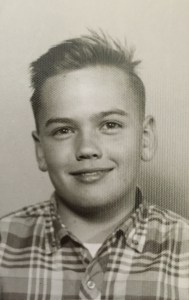
Kenny “Crazy” Miller

My dad, Kenneth Karl Miller, still living although he maybe shouldn’t be after all of the “crazy” things that have happened to him over the years: he blew up a house once accidentally, lived through a major motorcycle accident, car accident, tornado, lung cancer, numerous broken bones and other odd accidents that would only happen to him. He’s like a cat with 9 lives. He is usually called Kenny, but my kids call him “Crazy” or “Crazy Grandpa” because he always plays little jokes on them or acts a little off to tease them. For example, he would lay his hand on the table and tell them to hold it down and wind it up using his thumb as the crank. Then, when they’d let go, he’d flop it around on the table like an out of control wind up toy. They’d squeal in delight. I’m not sure how old he was in this photo, probably in his early teens, but even then, he looked a little mischievous. My dad lives in Findlay, Ohio.


IMG_5277
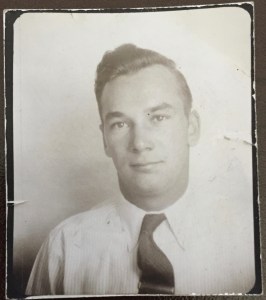
Karl H. Miller

Karl H. Miller, my grandpa, was born 19 February 1922 and died 12 November 2005, and a native of Wood County, Ohio. We are all still sad about losing him. He was one of the kindest, most gentle people I knew, and many say the same. He loved his wife for 60 years, they married in Zoar Lutheran Church in Perrysburg, Ohio in 1945. He worked his ass off despite a debilitating injury to his hip when he was nine years old. He always walked with a limp and used a cane most of the time I knew him. He worked an 80-acre farm with my grandma and drove a cement truck. He did all of that heavy physical labor despite his bad leg. He always had a smile on his face and never complained even in his worst pain, at least not that I heard. In the end, he had some strokes and spent many years in a nursing home, barely able to communicate. It was hard to watch a man of such perseverance, kindness, and strength be reduced to a pile of skin and bones, laying helpless in a bed. He always had a kind thing to say, a smile to give, or a funny story to share. I can still remember the shape of his hands, hard-working but gentle hands.

Miller-CharlesErnaWedPic
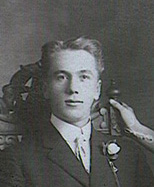
Charles Miller, from wedding photo


Karl Henry “Charles” Miller, 1889-1972,native of Wood County, Ohio, died before I was born. I don’t know much about him except that after his wife Ernestine died, likely due to complications after childbirth, he left his three kids (Wilma, Karl, and Jim) to be raised by his parents, William and Carrie Miller.


IMG_5279
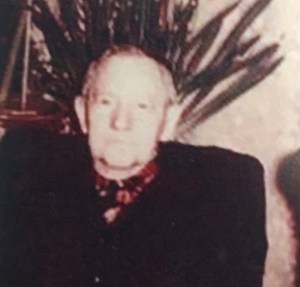
William “Bill” Miller, the only photo I have of him, from his 60th Wedding Anniversary

William John “Bill” Miller, 1863-1952, native of Wood County, Ohio. I didn’t get to know this man either, but I think my grandpa looked up to him. He always had good things to say about him and appreciated him for taking him and his siblings in. Bill was a farmer. Bill married Caroline “Carrie” Ann Limmer. I am named after her, but my parents spelled it “Cari.” (Which coincidentally, gets misread or misspelled as “Carl” all of the time. So, my grandpa “Karl” gets remembered in my name as well sometimes.) All my grandpa ever wanted was his own farm, which he eventually bought. My grandpa told me that his family knew German, would speak it sometimes at home. However, I have not yet found the Miller/Mueller immigrant in this line. Bill Miller’s parents were Fred and Mary Miller; Fred’s parents were John and Mary Miller, with no clues YET about their origins.

I don’t have any photos of Fred Miller, another native of Wood County, Ohio. He was born in 1842 and died in 1911. He married Anna Maria Artz in Wood County in 1862. His wife came from Nordheim, Germany. The Artz line has been traced back to Nordheim by some distant cousins. They have gotten me in touch with a cousin who still lives there. He’s a few months younger than me and I see him on Facebook from time to time. (Hi Ruediger!) Perhaps I’ll get to visit someday.

I feel most attached to researching this line but it is also the most difficult. With a brick wall like “John and Mary Miller” in the 1840s, it’s a tough research road. But one I’m gladly walking down.

Thoughts About Online Trees

IMG_3012In our time as genealogists, we have probably uploaded a GEDCOM file or two (or a dozen). It seems that every month a new site (or an old one) has a system for uploading and managing your family tree on their website. The most popular site today for building a tree is probably Ancestry.com. There are others:
Each of these has their advantages. Ancestry.com probably has the best system for locating hints from their databases as seen by the “shaky” leaves that appear. FamilySearch’s Family Tree is more like a wiki where you don’t actually “own” the individuals in the tree but instead collaborate with other researchers and have the ability to have discussions or post proof arguments.

Family information didn’t trickle down the family tree evenly. My cousins probably know more about my Businger ancestors than I do because they lived nearby whereas my branch of the family moved “out west.” They most likely have more family photographs and papers than I do stored in their attics or basements. I happen to have a lot of information on my Miller ancestors simply due to the relationships formed and the relatively small “competition” pool to get old photos and papers (there’s me, my brother, and our one cousin Andy). However, think about those families not so many generations ago that bore eight, ten, twelve, or more children. There were a lot of children to pass these treasures down to, and it didn’t all flow evenly. If there was a rift in the family, these artifacts may have followed one line only. If there was estrangement, these might have gone to a family friend, or not have been saved at all.

Just like family information, online trees today are not all located on one site. Some people only put their tree up in one location. I happen to have mine in a few, but not “all” of them. Posting your tree online can be an exceptional research tool, especially if you are looking for collaborators; people who may have been on that side of the family tree where the information flowed more fully. By posting your tree online, and in several locations, you can cast a wider net and reach more potential cousins who are researching the same or connected family lines.

I have a few ideas on what I think are some best practices for posting your tree online:

  • Make sure your email address or other contact information is up-to-date. You could even include your social media contacts if you have them, your Facebook profile, Twitter handle, or other social media of your choice.
  • Make sure you keep your tree at least moderately updated. The problem with having many trees online is that there is not an easy way to keep them all updated at the same time, no syncing across sites. If you are not doing any attaching of documents like what happens at Ancestry.com, you could simply delete an old tree and upload a new GEDCOM periodically. However, I don’t recommend this if you do a lot of attaching from the host site. One solution: you can post a “skeleton” tree with basic information in order to “catch” those collaborators, then invite them to your better tree, wherever that is hosted, once you’ve made contact.
  • Attach as many source citations to your trees as possible. If you keep one main tree and then post skeleton trees to a variety of sites, make some mention of this in your profile information. Something like “This tree does not contain many sources, but if there is a name or family group you are interested in, please contact me for more information.” This will at least let them know that there are sources available.
  • There are other more obvious “rules” I like to follow such as not posting personal information of my living relatives, not spreading gossip or rumors about living people, or the recently deceased, and not copying the trees or work of others without their permission (and I mean by asking them directly, not just clicking “add to my tree” because of the “well, if it is out there, they must not mind sharing” attitude to sharing.

If you do not know how to make what I call a “skeleton” GEDCOM file, I recommend reading some of the help files and/or video tutorials that came with your genealogical software. But in a nutshell, there is usually a way to mark a line of people you’d like to create a GEDCOM for. For example, if I only want to post a tree for my Kindervater ancestors, I can choose to begin with one particular person and then in Reunion (for Mac) there is a command to mark all ancestors of said person, and I can also choose whether to include all children or not, all spouses or not, etc. What you choose here will create a larger or smaller file to post.

These are just some thoughts I have about online trees. I have been working on a project trying to identify the parents of a female ancestor. I have been combing through many online trees, most of which have no sources and appear to repeat the same information that I am not sure is correct. It is a lot of time-consuming work. Most trees have no sources, they don’t all have working emails, and not everyone responds to emails when they are working. Online trees can offer many useful clues and hints and send you in directions you may not have known to go, and perhaps some of the people posting these trees online were on the side of the family tree where the information flowed down more freely than mine. I will keep investigating.

Some helpful articles or resources I found online:

http://lisalouisecooke.com/tag/online-family-tree/

http://blogs.ancestry.com/ancestry/2014/10/01/6-tips-to-get-your-family-tree-off-to-a-good-start/

http://enchantedfamily.com/blog/family-tree-tips/

http://www.archives.com/experts/breland-claudia/online-family-trees.html

http://www.cyndislist.com/family-trees/online-family-trees/

*I love the Find My Past site a lot, and it is growing on me more and more with every addition and update. This is the only like of which I am an affiliate. If you click through this link and sign up with Find My Past, I will get a small amount of compensation. This is one of the ways I try to supplement my income and to allow me to provide educational opportunities for low cost. Many of the things I do are pro-bono. So consider using an affiliate link (from me or any other generous genealogists who are in the same boat I am).
**Please know that I am not affiliated with any of the other above links and do not receive any compensation from them when you click on their links.

Summer and Fall Schedule

The summer is fast approaching! It seems like Christmas was not that long ago. (Don’t tell anyone but I still have a string of Christmas lights hanging on our banister.) Since April is already here, I thought I’d take a moment and share my Summer and Fall travel and speaking schedule with you. Exciting things are on my horizon and I hope to see some of you at one of these events!

April

May

  • May 7 – 15, my spouse and I will be taking a trip to Salt Lake City for nothing but research, research, research!
  • May 21 – I will be attending the Austin Genealogical Society Annual Seminar featuring Thomas MacEntee.

June

  • June 2-5 – I will be attending the Southern California Genealogy Jamboree, and will be presenting on Sunday.
  • June 15-25 – I will be on a family vacation to Detroit Lakes, MN with a few genealogy stops tucked in somewhere along the way.
  • June 26- July 2 – I will be attending GRIP and taking the Forensic Genealogy course.

July

  • July 9 – I will be speaking at the Austin Genealogical Society, Education Program – “Intermediate Concepts in Genealogy”
  • July 17 – 22 – This year I am lucky enough to attend both weeks of GRIP. The second time, I am taking the Practical Genetic Genealogy course.

August

  • August 3 – I am presenting a webinar for the Minnesota Genealogical Society titled “The Third Coast: How the Great Lakes Shaped America”
  • August 13 – I will be speaking at the Austin Genealogical Society, Education Program – “A Tour Through Major Record Types”
  • August 25 – 27 – I will be attending GenStock to see what it’s all about! (Click here to read a blog post from Rev. David McDonald, CG who attended last year.)

September

  • August 31-September 3 – I am attending the FGS Annual Conference in Springfield, IL.
  • September 17 – I will be presenting an all-day seminar in Hot Springs Village, Arkansas for the Village Genealogical Society.
  • September 22-25 – I am attending the APG’s Professional Management Conference in Fort Wayne, Indiana. I will also be presenting a program on Thursday titled “PERSI Possibilities: Better Research with ACPL’s Periodical Source Index”

October

November

  • November 11-13 – I am considering attending the FamilyTree DNA Conference in Houston, but we will see what my budget and energy will allow by then. After writing up this list, this one may have to wait until next time.
  • November 17 – I will be speaking at the Sun City (TX) Genealogy meeting.

Wow! I’m exhausted just writing this up! Well, that’s what’s in store for me for the rest of the year. I’ve got other projects underway as well. So, if you find yourself near me at any of these events, be sure to say ‘hi’!

A Quick Update

It has been several months since I’ve managed to post on this blog. I have plans for several new series topics so stay tuned. In the meantime, here is a quick update on what I’ve been up to.

I have been asked to give a lot of NEW lectures this year, which means I have a lot of work to do to get prepared. So I’ve been working on all of the leg work required to create an entirely new lecture for many lectures! This is a blessing but it has taken time away from blogging, but will no doubt give me ideas on blog topics to share with you later.

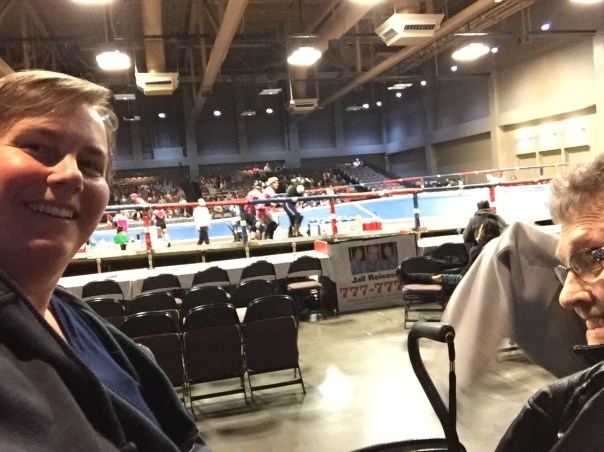
My 90 year old grandmother came to visit for 2 weeks last month. This too was a blessing, but one that kept me from my typical work schedule. (This is not a complaint at all, just letting you know that what’s happening in the “real world” is often much more important than what is happening in my computer world.) We had a great time visiting, touring Austin and surrounding areas, and trying to come up with things that a 90 year old may not have done yet. (We took my grandma to a Roller Derby. There was a fist fight, just like in hockey. That did the job!)

IMG_3864
Me on the left, grandma on the right, Roller Derby in the middle!

I have recently been appointed the Education Chair for the Austin Genealogical Society and have had a great time developing and teaching Saturday classes for the group. I have also been asked to speak at local societies and so my speaking schedule is picking up since moving to Texas about 1.5 years ago.

Not to mention all of the other projects I do such as writing articles, curriculum and Quick Guides.

I haven’t even mentioned that my 15 year old son has gotten his learner’s license and we take drives on the weekends. He has gotten better each time and so I no longer feel like I might die each time we go out, only sometimes, typically when he drifts across the shoulder line because he is not sure how big the car is or when he takes a 90-degree corner without slowing down enough. And my daughter was in basketball and the school musical and in band…

The list could go on and on. But I wanted to let you know, I’m still here, still working, and am hoping to be back on a regular blogging schedule soon.

Genealogical Preparedness – Part 6 – Getting the Wind Knocked Out of You

Birdie and Russ Holsclaw at the author's 35th Birthday party.
Birdie and Russ Holsclaw at the author’s 35th Birthday party.

It happens to everyone at some point. Something big. Something that just really knocks you off course. I know it’s happened to me several times. But in genealogical terms, there have been a few times when I just didn’t want to do it anymore, or at least for a while. I’m positive this has happened to almost everyone. You are happily living your life and something happens that just changes your whole attitude. Everything you had in place was somehow changed, your thoughts and plans seemed superfluous and unnecessary. Whatever the “thing” was that changed your outlook, it takes some time to get the wind back in your sails.

One major thing that happened to me as far as genealogy life goes, was the death of my mentor Birdie Holsclaw in 2010. I know I’ve mentioned her before in my blog. Sometimes you just meet people who stick with you long after they are gone. Birdie was one of those people. She gave me the confidence and encouragement to move forward with genealogy beyond being a hobbyist. When she died, many of us were devastated. She left us too soon. I know a lot of those feelings are selfish. It was her time. It was the will of God or the Universe or Science… whatever you believe. It was just her time. Many of my thoughts about her are really about me and what I miss from her, what I would like to talk to her about, her opinions I want to hear about genealogical topics of the day and I wasn’t done learning from her or enjoying her company.

After she died, I really just did not want to do genealogy. The wind was definitely gone from my genealogical sails. It was approximately 3 or 4 months before I got myself back up again. I would look at a unique record I found and think about tell Birdie about it, or get confused on some problem and want to ask for her opinion or guidance, or I would see a new movie and wonder what she would have thought about it (she loved movies). And when the realization that I couldn’t would flood in, well, I would just not want to do the work. This still happens actually, but I’ve moved passed the pain and the not wanting to do it into a place of doing it in her honor. I think of the encouragement that she gave me, the belief she had in me, and think that I need to be doing what I’m doing to be a good steward of her memory, to fulfill what she saw in me.

There have been minor things that have happened that steal my thunder. Clients not wanting to do more research, projects falling through, checks lost in the mail, critics, online arguments, seeing colleagues not be nice to each other, hearing complaints over things that are super minor, having to go through a lot of revisions on a small item, general negativity… When too many of these things that happen everyday, sometimes I just turn the computer off and go do something else. It is just too much and it is not worth getting stressed out over. I can usually deal with these small crises better when I’ve had time away. If I want to keep the wind in my sails, I have learned that I have to protect myself from the negative.

Few things are as devastating as the loss of a loved-one. Learning skills to deal with these times and “get back on the horse” can be crucial to long-term success. Sometimes, you might just need to do a complete overhaul of your genealogical life. Sometimes you may just need a break. After I turned in my BCG portfolio, I don’t think I did anything genealogical for almost 3 weeks. And that’s ok. The important thing is to take care of yourself and get back in the game.

Genealogical Preparedness – Part 5 – Conference Planning and Participation

Photo taken by my friend Deena Coutant, November 2015.
This year I have had the opportunity to speak at several state and regional conferences. Up until this point I had only spoken at smaller venues, mostly local societies with audiences of 100 or less, in my local area. This year I also had the opportunity to witness a little bit on the conference planning side. This by no means makes me an expert on either of these sides at any level. I have the utmost respect for those who have the ability to plan conferences, to delegate, to deal with stressful situations, and to keep on smiling throughout! But I did learn a few things along the way that I will use to better prepare for next time I am invited to speak at a conference.

The first thing I learned outside of the general nuts and bolts of being a speaker (you learn these things by speaking to the local societies near you, they are often looking for speakers), is to be sure I understand the contract. When speaking at my local societies I have yet to sign a contract and most of the business has been done over email, so the contract was new for me. I made some assumptions I shouldn’t have. Had I asked questions when things weren’t clear instead of thinking “well, it will be fine” or “I’ll just figure that out when I get there” some confusion and awkward conversations wouldn’t have happened.

From that came the need to have flexibility. This applies to conference planners and speakers alike. When you get to a venue and things aren’t what you had in mind, it really does no good to have a major hissy fit (or even a minor one). All that does is get people upset. Everyone should breathe just a little more deeply, take a few minutes to calm down, and then problem-solve. Usually there is a solution to just about anything if you can keep calm.

Be prepared for strange situations. Rooms get changed, times get changed, projectors stop working, power goes out, people fall down stairs, the lunches aren’t lined up in an efficient way, the fire alarms go off, speakers get sick or injured or miss flights, weather happens, microphones have feedback or their batteries stop working… This list could go on and on and on. For every speaker out there, there is probably at least one story of strangeness happening during conferences. Flexibility helps with strangeness. There are a lot of things out of our control and being rigid only helps in raising blood pressure. Laughter is the best medicine. Make light of strange situations, make jokes, be witty, and in general “roll with it.”