Tag Archives: Genealogy

Revisiting My Roots: A Case in Point

Several posts ago, I talked about how I “believed” others who had built the family tree before I started researching. I put a lot of “trust” out there.

“I believed everyone out there doing genealogy on the same families as me had been doing it longer and therefore must know more than I did, must have found the records already, and therefore their pedigrees, family group sheets, and trees posted online were correct.”

Well, I have just discovered an error that I’ve believed, and other genealogists before me had believed as well.

During my tree cleanup, I have recently been working on the Avery family. In one generation, the Averys and the Meekers lived next door to each other. From that, four Avery siblings married four Meeker siblings, creating a lot of chaos in my family tree. One generation down from this, I had another Avery marrying another Meeker. I hadn’t noticed before, because the Averys and Meekers are so intermingled. However, today, I noticed that this coupling was not in the right generation. I have in my tree, as many others do, that Mahlon I. Meeker married Pauline Avery. This would make these two first cousins. As I set out to research that, I could not find a marriage record for them, at a time when the marriage records exist and are pretty good.

So, I did a more global search for the Avery bride. I noticed a hint to another online tree that had the right groom, but the bride was Pauline Dunning, not Avery. At first, I thought this tree must be incorrect. So many trees have Pauline Avery as the wife of Mahlon I. Meeker. Well, I’ve learned that genealogy is not democracy, and just because there are so many “votes” for one thing does not make it true.

I reviewed the information I had that gave Pauline’s husband as Mahlon I. Meeker: they were all things from other researchers, not actual records. (See, I was believing them.) Then I reviewed the actual records I have. Pauline’s father’s obituary lists only “Polly deceased.” It does not give her a married name like her other siblings. Following the records for Mahlon I. Meeker, I do find a marriage record for him to Paulina Dunning. He is the correct Mahlon I. Meeker, but she was not the correct Paulina. I did consider that maybe Paulina was previously married before marrying Meeker, but I did not find that to be true. Mahlon’s wife’s maiden name was in fact Dunning and her parents have been identified; they are not Averys.

This was just the perfect situation to demonstrate why it is important to go back through your old research and clean it up. The good news, at least in this situation, is that both Mahlon and Paulina Avery are still in my tree, so I’m not lopping off an entire branch in this case.

Now on the hunt to find out what happened to the “real” Paulina.
Educational Opportunities in 2026

As 2025 winds down, I want to let you know about some of my plans in 2026.

The study groups that Cyndi Ingle and I lead are planned for 2026 and the schedules are posted on this website here: https://genealogypants.com/studygroups/

The only ones open for registration currently are the NGSQ study groups. These start in January and run for 11 months (we take December off). You can find more details and the registration links here: https://genealogypants.com/studygroups/ngsq-study-groups/ The other study groups open as we get closer to their start dates.

Also, coming up in February 2026, I’ll be presenting an all-day seminar for the lovely folks down at the West Valley Genealogical Society in Sun City West, Arizona. I for one am exciting to visit Arizona in the cold part of the Colorado winter! It is going to be a fun day in case you’d like to get out of the cold and join us. Details on that event can be found here: https://azwvgs.org/education/seminar/

Springtime with IGHR I’ll be teaching in the course “Repository Research: From Website to Doorway” which begins on March 12, 2026. Registration is open! You can find more details about this course or the many others here: https://ighr.gagensociety.org

I’ll be teaching at GRIP Virtual this summer in June with our course on “Not “Just” Farmers: Records, Relationships, and the Reality of Their Lives” with myself, Cyndi Ingle, and Paula Stuart-Warren. This course sold out last time so be ready when registration opens. For those details, see: https://grip.ngsgenealogy.org That week I’ll also be teaching in Paula Stuart-Warren’s course “Digging Deeper.” I hope you’ll join us!

That gets me through the summer… I’ll post more as new opportunities pop up. Consider adding one or more of these to your genealogical education plan for 2026.

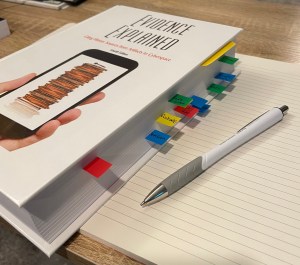
NEW! Study Group Based on Evidence Explained 4th Ed.

We (Cyndi Ingle and I) have developed a five-week study group based on Elizabeth Shown Mills’s book Evidence Explained 4th Edition. This will be a nice companion to our study group based on Tom Jones’s book Mastering Genealogical Documentation. While it is not a requirement to have taken the MGD study group first, we will discuss some of the similarities and differences in their approach to documenting your genealogical research.

Image of the book Evidence Explained 4th Edition by Elizabeth Shown Mills.

Basically, outside of some standard conventions, there are also a lot of options when it comes to creating your citations. Mills’s book offers some differing options, provides ample explanation of the “why” behind her suggestions, and provides us with this fantastic tome to help everyone through their citation anxiety.

The five-week group will cover the first three chapters of the book. We will have a reading assignment along with guided homework questions to be completed before the discussion sessions. We will have a private Facebook group for discussion between sessions. Each session will be about an hour. You must own a copy of the book which can be purchased at Genealogical Publishing Company or on Amazon.

The cost for the 5-week course is $75. Click the links below to register. Please pay attention to the days, dates, and times when making your selection since they vary.

There will be three sessions (limited to 25 students):

If you can’t make it this time around, sign up on our Waitlist to be notified of the next session when it is scheduled.

We hope you will joint us as we continue to try to demystify the practice of creating citations for your genealogical research.

Many Paths to Sources: Vital Records Part 1

Generally speaking, in the United States, the requirement to record vital records (I’m primarily referring to birth and death certificates here, marriages are a bit different and we will discuss them in a later post) did not begin until the early part of the 1900s. This requirement was done on a state-by-state basis, so each state’s law started at a different time. Each state will have different privacy protections in place based on the state law at the time. This means some states are very difficult to get a vital record from and others are easier. For example, a birth certificate may not be available to the public for 100 years, but a close family member (you will most likely have to prove your relationship) may be able to get a copy of the record. These requirements differ from state-to-state, and the laws change over time. So, it is best to examine the state’s vital records office for the most recent information.

Ohio Death Certificate for Marshall C. Dimick

When I am looking for vital records, I usually have a few things I do to locate them. The order in which I do these may depend on how old the birth or death certificate is. If it is more recent, I might start at the state vital records office. If it is an older record, I might start at the FamilySearch catalog. My steps:

  • Read up at the state vital records office website.
  • Read the FamilySearch Wiki for that state’s vital records.
  • Look at some of the larger genealogy websites for vital records databases, such as Ancestry.
  • Examine the state-level archives, historical society, genealogical society, or whatever repository the state sends its historical materials to (if they do).
  • Examine the state and county of interest at the FamilySearch catalog to see if they’ve been microfilmed. Some counties may have done a local registration for births and deaths years before the state requirement was in place. This is true for Wood County, Ohio and Audrain County, Missouri, two locations I have successfully found county level vital records.
  • Look at online, user-contributed sources such as Find a Grave or public online trees in case anyone has posted a birth or death certificate for the person in question. (This can be surprisingly successful.)

The most important thing when trying to get a vital record is understanding when each state began requiring them. And understanding that it took a while for the counties to comply with new state laws. If a death certificate was required in 1909 and you cannot find a death certificate for 1909 or even for several years after, realize that things did not happen instantly in the early 1900s. I have looked for vital records in some states and sometimes cannot find them for 10 or more years after registration was required. That doesn’t mean it wasn’t recorded at the county level (though it may). More likely, the systems weren’t in place yet to comply with the laws.

Next time, we will look at some vital records substitutes and places to look for alternatives to the traditional birth or death certificate.

Many Paths to Sources: Newspapers, Part 1

First, let’s take a look at newspapers. Newspapers are one of my favorite subjects to speak about. Finding your ancestors in the newspaper gives you a nice, albeit often short, snapshot into their lives and gives their lives extra flavor. It helps turn them into real people that existed rather than just names on a document.

There are some fantastic online options for finding newspapers. The big three sites for subscriptions:

And there is not one that is better than the other. They all have different collections, so the one that is right for you, is the one that has the series of newspapers with your ancestors in them. Be sure to check their catalog for coverage before buying a subscription. All of these sites let you do that, so don’t skip this step and then get disappointed if they don’t have the papers you needed.

There are many free sites for newspapers across the U.S. Many states have a state digitization project and corresponding website. Here are just a few:

Of course, there is the Library of Congress’s collection of digitized newspapers:

Internationally, there are also some free digital newspaper sites as well. I know of a couple where I’ve done research:

Then there are link sites such as:

The above, is a lot. But is is literally just scratching the surface of what you can do with newspaper research. In Part 2 we will look more closely at finding newspapers online. In Part 3, we will delve into finding and accessing newspapers offline.

Many Paths to Sources: It’s Not All Online

In the genealogy field, you might see the statement “it’s not all online” frequently. Unfortunately, with so much being online, we tend to think it ALL is. Ancestry, FamilySearch, and others, with their hint systems and click to add to family trees has trained us that if it isn’t online, delivered by a hint, then it probably doesn’t exist. This is simple neurology as well. The brain does not like to work hard.1 So, if there is not an easy way to find or get something, the brain gets on board with “if it isn’t online then it doesn’t exist” mentality. But it’s not all online.

As an admin on the Facebook group The Genealogy Squad, we see this happen all the time. People ask for where they can find vital records, yearbooks, city directories, newspaper articles, and so on. When the answer comes back that the particular thing they are looking for is not online and they will need to call or email a specific repository, they balk. Surely it is online somewhere. Oh, I have to make a call, and possibly PAY for said document?!?

TV shows and movies do not help this either. I watch NCIS and Criminal Minds, all of which would have you believe that the smallest bit of information can be found online, regardless of whether you have a warrant to obtain that information, but that’s another topic altogether.

The companies that are digitizing, are choosing to do so based on whether they can sell a subscription, with the exception of FamilySearch. They digitize to preserve according to their religious beliefs. It takes a lot of time and resources to do the digitizing, store the digital images, create databases linked to those digital images, etc. so you can sit at home and do this from your computer with minimal effort. I’m all for it. But if you truly want to obtain those harder-to-find documents, solve those mysteries, and break down the proverbial brick wall, you have to go further sometimes.

In this blog series, we will look at some common sources and explore some of the other ways you might consider to obtain that source. Fair warning, it may take a little more thinking, exploration, and effort to obtain. But I want us all to get a little less comfortable so we can get a little further ahead with our research projects.


1. Elliot T. Berkman, “The Neuroscience of Goals and Behavior Change” (Consult Psychol J. 2018 Mar; 70(1): 28–44; digital copy, US National Library of Medicine (https://www.ncbi.nlm.nih.gov/pmc/articles/PMC5854216/).

NGSQ Study Groups for 2022

Can you believe it is only a couple of weeks away until 2022? I can’t. This year has gone so slowly that I’m shocked to find us at the end of it.

Our NGSQ (National Genealogical Society Quarterly) study groups are forming for 2022 and we still have a few seats left! These discussions are run by Cyndi Ingle (of Cyndi’s List) and myself and between the two of us, we offer 4 different time slots.

We have worksheets that help us breakdown and discuss the articles. Also, each month you get 5-6 unique questions for that particular article to help lead the discussion. We focus on principles found in the book Mastering Genealogical Proof so we are covering the elements of the Genealogical Proof Standard from each article. We also host private Facebook Groups to facilitate discussion between sessions.

You can find more information and sign up at this page: https://genealogypants.com/research-and-consultation-services/classes-and-study-groups/

Just click on the section you are interested in to get more details.

We will be sending out more information to those of you who have signed up very soon. We hope to see you in 2022!

New Goals for 2014

HappyNewYearAs we look ahead to the new year, we tend to plan for new adventures, things we’d like to improve, goals we’d like to reach and a year better than the last. While we can’t plan for what we can’t control, we can make goals for what we can.

This is my 2014 “wish list” for myself, genealogically speaking:

  1. Get my BCG portfolio turned in (My deadline is December 15, 2014!)
  2. Write at least 3 major articles (These are aside from those that may appear in my home society’s quarterly.)
  3. Gain 1 new client per month
  4. Speak/teach at least 12 times this year

Ok, that list feels short to me. But look at number 1! I’m going to keep the list short because that first one is a doozy! I really should just make that one item the only goal I expect from myself this year, but I am an overachiever so of course I put more items on my list.

Good luck to you and I hope you take some time to make a few goals for yourself this year.

Happy New Year Everyone!!!


Genealogy Gratitude – The Genealogy Husband

mensethI will finish this series off with a sincere gratitude for my spouse, Seth. He’s the ultimate in being supportive of my genealogy obsession. He supports me, not only financially, but with helping out with the kids when I want to take off on a genealogy adventure. Sometimes, when he gets to come along on those adventures, he’ll be my microfilm fetcher, reader or scanner, or my tombstone spotter. He’s always accommodating when it comes to taking a side trip to visit a far flung cemetery or repository. He also helped build the aforementioned home office (and didn’t once demand a “man cave”), moved many books, shelves, desks, filing cabinets and office supplies to and fro. He also let me pick the bright colors we painted on the walls.

Overall, he is the best genealogy husband a girl could ask for! I love you honey!


Genealogy Gratitude – Volunteers

Thank You!
Thank You!

You’ve seen them. Maybe you’ve been one. But you’ve definitely benefited from them. Genealogy volunteers! They tirelessly index records, sit at a library help desk, do look-ups, teach classes, mentor, lead genealogy societies, plan events, write articles, edit quarterlies and newsletters, send emails … they do it all. I know that I personally have benefited from many hours of volunteer time. This is my shout out to all volunteers who are, ever was or ever will be giving of their time freely for the benefit of others! It is another aspect of how awesome the genealogical community is!  THANK YOU!