Spring Cleaning: Paper Stuff

If you follow me much, you know that during 2020 we decided to move out of Texas (and none too soon by the sounds of it) and back to Colorado, the state we love. We started out just moving into a rental while we got our house in Texas ready to sell. Then, just after the holidays, we bought a new home here and just last weekend finished the moving in and cleaning the rental, and all of that fun stuff. We are exhausted but happy to be in the new place and get settled again.

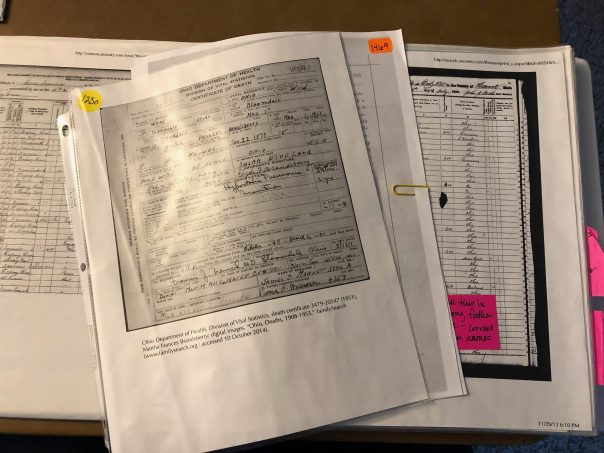
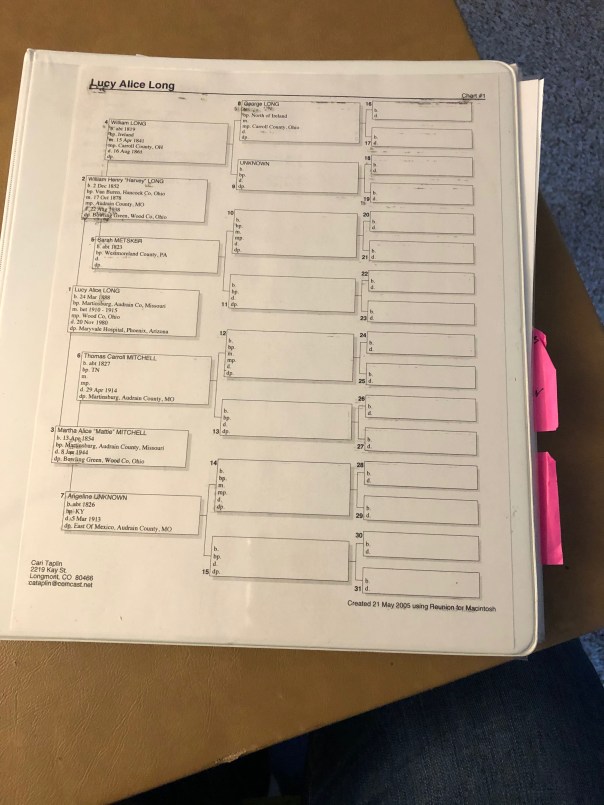
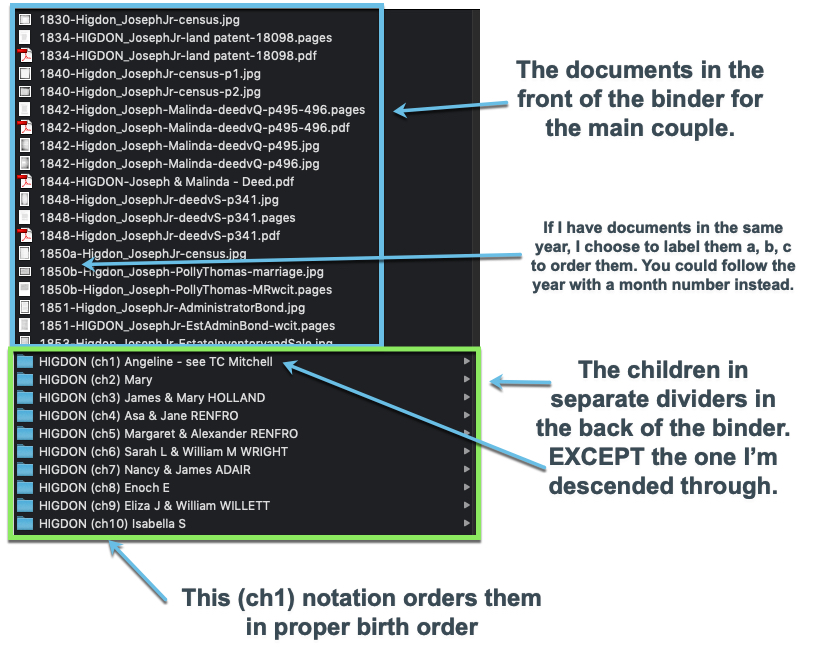
Now that my office is mostly unpacked, I found a huge stack of papers that just accumulated during the 6 months while living in a rental. We didn’t unpack everything while there so some things just couldn’t get filed properly. So, one of my jobs this week is to go through those papers and get them sorted, filed, or recycled. I will have a pile of things to scan as well and I will just put on some music and scan away until those are finished.

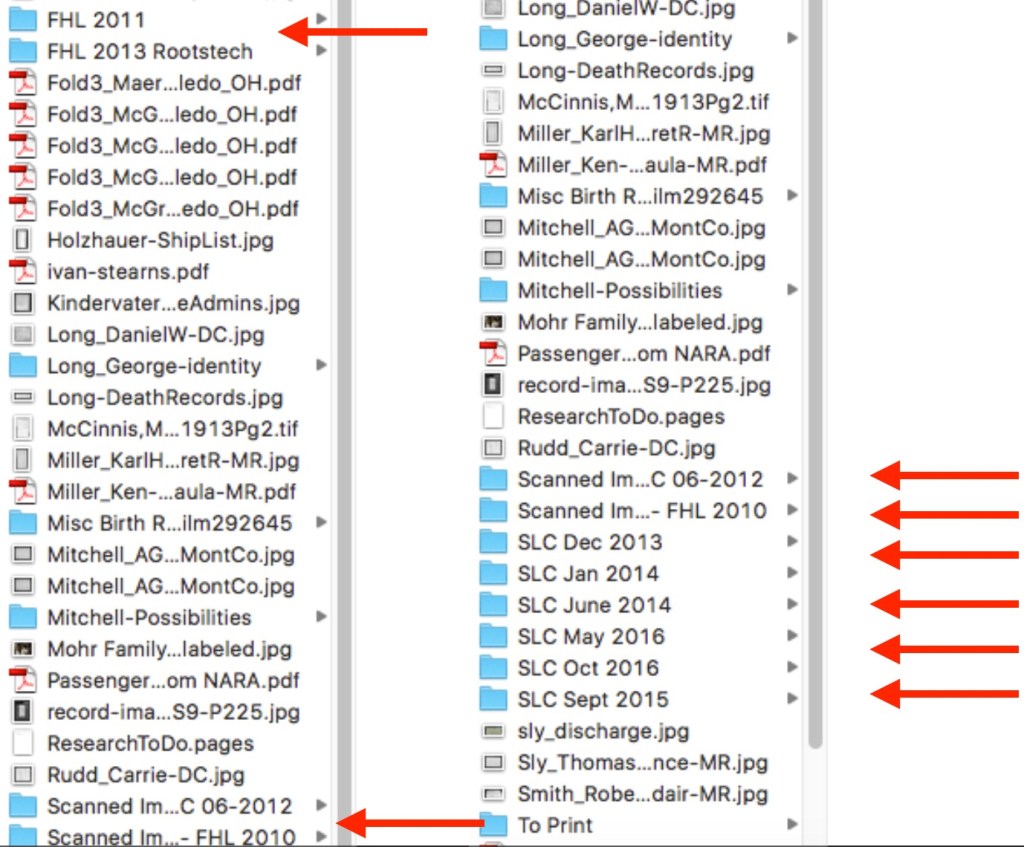
I also have a filing cabinet full of things that can probably be scanned and recycled or just recycled. There are some things that just don’t need to live in paper form if you file them in an organized way on your computer or in the cloud.

A Good Start in My Recycling Bin!

The biggest hurdle with getting organized is making the decisions. We, as humans, don’t like to make decisions. We like to know yes/no, right/wrong, good/bad, up/down, and so on. If we know what the “buckets” are, we know where to put the stuff. However, we get hung up on choosing the “buckets.” So, I have to decide what to keep, what to scan (and how to file it), and what to recycle.

I’m hoping to keep up with Cyndi Ingle‘s “Filing Fridays” on The Genealogy Squad group on Facebook, now that I’m in a permanent location!

Cyndi’s List Turns 25 Today!

One of my favorite colleagues is Cyndi Ingle, the grand web-mistress behind the ever invaluable Cyndi’s List. She is also one of the co-founders for one of the best genealogical Facebook Groups out there, The Genealogy Squad (last year they asked me to join their ranks as one of the administrators). She also teaches classes, webinars, institute course, etc. on technology topics, how to utilized websites better, how to organize your computer, how to use some cool technology tools to make your life easier, and so on. She has also become a discussion group leader for the study groups I offer after demand got larger and my time got smaller.

Cyndi is a powerhouse in the genealogy field, always helpful and generous with her time and knowledge.

Her website, Cyndi’s List, is turning 25 today, March 4, 2021. She has been providing this free service to genealogists for a quarter of a century! I remember when I first heard about Cyndi’s List. It was from my friend and mentor, Birdie Holsclaw. She was a huge fan of Cyndi and her list. She pointed me to using Cyndi’s List quite early in my genealogical life and I’m so grateful.

Cyndi’s List is a collection of links on just about every topic relating to genealogical research that you can think of. And if she doesn’t have a section for a topic, she’ll add one! You just have to let her know.

Why should you use Cyndi’s List when you can simply use Google these days?

For one thing, Google only indexes about 4-5% of the internet. The little Google bots that crawl the web to index it for their search engine, only drill down a few levels into a website. So, if you have a deep and complicated site, like a University for example, Google isn’t going to crawl all the way down into those layers and index the items you are probably looking for. For example, if you are looking for a digitized record on a University library website, the layers may look like this: University > Libraries > That Particular Library > Digital Collections > History/Genealogy > County/State/City or whatever identifying layer > Digitized Marriage Collection. That is at least seven layers on my hypothetical scenario here, and I’ve been on sites where it’s more. Google typically goes maybe four levels deep.

A second reason, you don’t always know what to Google for! Cyndi’s site is broken up into categories. If you start by browsing her categories, you will find something valuable that you didn’t know you should Google for! You will get keywords and phrases you hadn’t thought to use for your searches.

A third reason, Cyndi has hand-picked these links, vetted them as useful for genealogists before including them on her site. So the links you find are applicable. With Google you get all kinds of links and have to wade through a lot before you might find something that applies to your research.

I have a concrete example that happened just last week. I was on a Zoom with Cyndi and telling her I was having a hard time reading the name of an Irish town that was listed on a birth record. On Google, if you type in a place “close enough” Google will ask “Did you mean…?” and give you some results that may or may not be correct. I have had this help me many times when trying to decipher handwriting when it comes to old town names. However, this Irish town name was not coming up. And in fact, Google kept separating it so that it would become a celebrity’s name. (“Did you mean Tony Shaloub?” No Google. I certainly did not.)

While I was Googling, Cyndi was pulling up Cyndi’s List, going to her Irish category, pulling up an Irish atlas database that would show you all of the towns in a county alphabetically, and she came up with the answer in no time!

I just did the same at Cyndi’s List to write this blog post and found a broken link. Oh no! Cyndi depends on her users to help keep the site up-to-date. She has thousands of links to keep track of and can’t do it alone. On the left side of the page is a “report a broken link” button that will allow you to quickly let her know something has moved or is just missing. Do this. It takes a few seconds and helps her out tremendously!

We have to get out of the habit of Googling. Or only Googling. Sometimes Google is the right tool. However, Cyndi has provided us this fantastic free resource of genealogy-related links! AND she is a one-woman operation.

I have two requests:

  1. Visit Cyndi’s List. Examine her categories. Discover what you didn’t know you needed! Or find something to help answer your mysteries. (If you find a broken link, click that report button.)
  2. Send her a donation. Any amount is appreciated, I’m sure. Every penny helps her keep the site up and running! She foots the bill for all of the web costs (design, hosting, security) and puts hours and hours into maintaining those links!

Happy Birthday, Cyndi’s List! I for one appreciate you very much!

Marriage Announcements

You may have noticed that in October, Ancestry released a new database from Newspapers.com “U.S., Newspapers.com Marriage Index, 1800s-1999.” I have found the database to be a fantastic resource. From the Corporate blog:

“The Newspapers.com Marriage Index collection adds to the world’s largest, searchable digital archive of newspaper published historical wedding announcements. Since the early 1800s, newspapers across the country have been publishing rich information about engagements, marriage license applications, wedding announcements, and more.”1

I have been using the database for a couple of months now and I have to say I am quite impressed with some of the articles that I’ve found that I missed during other search sessions. I can’t say why I missed them, except that this database is narrowed down to marriage announcements only thereby narrowing down results you might otherwise get by doing a general search at Newspapers.com. I have found that it weeds out some of the “noise” for me in search results, allowing me to more easily spot articles that pertain to my research.

Of course, not every database is going to be flawless. And while machine learning algorithms can help, nothing beats human eyes and interpretation of the articles as we see them. So don’t rely solely on this database, especially if you know something should be there. However, it can help eliminate some of the chaff (we have millions of pages of digitized newspapers these days!) and perhaps bring forward some items you didn’t know existed.

If you have an Ancestry account, go to the card catalog and type in “U.S., Newspapers.com Marriage Index, 1800s-1999” in the title field, or the link directly to the database is here.2

I hope you find this new index as valuable as I have.


1. See “Ancestry® Debuts World’s Largest, Searchable Digital Archive of Newspaper Published Historical Wedding Announcements,” Ancestry Corporate (https://www.ancestry.com/corporate/blog/ancestry-debuts-worlds-largest-searchable-digital-archive-newspaper-published-historical : viewed 9 February 2021), published 19 October 2020.

2. Please note that Newspapers.com is a separate subscription from Ancestry unless you have one of their combined subscriptions. Also, if a newspaper article is in a newer issue of the newspaper, it might fall under their “Publishers Extra” subscription which is a separate fee. Among other things, this extra fee covers the extra licensing fees required to publish newspaper images that are still under copyright.

GRIP Registration Opens Today!

Just a quick note to let you know that registration for the Genealogical Research Institute of Pittsburgh (GRIP) opens today! Click HERE for more information.

I will be coordinating a course about Great Lakes research titled “The Spirit of the Inland Seas” with the wonderfully experienced and fun teachers such as Paula Stuart Warren, Cyndi Ingle, and Judy G. Russell.

I will also be teaching in Paula Stuart Warren’s course “Digging Deeper: Records, Tools, and Skills.” I will present on the topics of probate records and PERSI.

Registration opens today, Wednesday, February 17th, at Noon Eastern for June courses and 2 PM Eastern for July courses. I hope to see you there!

Valentine’s Day a Little Early

We are all working/schooling from home in my household. So, when the flower delivery came Monday, it was my husband who answered because I was in a meeting.

As long-time readers will know, we recently moved back to Colorado after being in Texas for 6 years. We had been planning to move after our daughter graduated high school, but when everything went online and we weren’t “tied” to Texas anymore, we decided quite quickly to take the plunge and head back. I missed the crisp mornings and the view to the west.

We just bought a house and will spend February moving into the new house. (We’ve been renting for 6 months while we shopped.) So, the blog might be a bit low-key, with shorter posts and announcements rather than a more in-depth series for a few weeks while we get re-settled. I’m just happy to be able to unpack my genealogy books soon!

Beginning Concepts: Genealogical Education

I cannot stress enough the importance of continuing education for genealogists whether you consider yourself a beginner, a hobbyist, a professional, an advanced researcher…whatever. There is always more to learn! And different people have different ways of doing things and their ideas or variations on methodology may make more sense to you and help you break through research challenges.

My setup at one of the genealogical institutes I attended.

If 2020, and it looks like a large portion of 2021, have done anything, they have brought genealogy education to our fingertips. Because of the COVID-19 pandemic, many educational opportunities, both large and small, have been made accessible to participants across the world. With our digital world and platforms like Zoom, we have had so many opportunities than we have ever had before. With so many week-long institutes, multi-day conferences, and day-long seminars going virtual, so many more people have been able to participate. Think about those who can’t travel for whatever reason (disability, finances, family obligations, etc.) and those who want to attend everything but can’t due to travel and time and finances. I do hope we keep offering virtual options as our world returns to whatever “normal” is after this.

My advice for genealogical education has several steps or layers:

  1. Identify where your skills and knowledge are lacking. This could be a long or short list, but determine where you’d like to grow, and write it down.
  2. Identify places that have classes, webinars, institute courses, etc. that cover those topics.
  3. Make a plan as to when you can attend those classes. Some things are available all the time (webinars at Legacy Family Tree Webinars, for example, are available 24/7 by subscription). Some are available only once per year, or rotate every couple of years. You might find books or articles on the subject(s) as well.
  4. Join a local genealogical society. EVEN if your research is not in the place where you live. Most genealogical societies offer classes, monthly lectures on various topics, and a social network of other genealogists that can help you. Many local societies are offering virtual meetings currently so see what is available in your area.
  5. Join the genealogical society (societies) in the places where you DO research. You will benefit from their newsletters, journals, blogs, monthly meetings (if they are virtual), and any other member benefits they offer. But they have the local knowledge!
  6. Join a state, regional or national society. I recommend the National Genealogical Society, the Utah Genealogical Association, the New England Historic Genealogical Society, the New York Genealogical and Biographical Society, or a state society in the area of your research. I am a member of the Ohio Genealogical Society, for example.

For a complete list of genealogical education opportunities, visit Cyndi’s List: https://cyndislist.com/education/ where you can find so much information on genealogical classes, course, study groups, institutes, webinars, books, and so on.

Family history is an important part of our identity; the more we understand our heritage, the more we understand ourselves. And I hope, whether you are a beginner or have been doing this for a long time, you found some useful items in this Beginning Concepts series.

Beginning Concepts: The Research Plan Part 2

Last week I described why a research plan/log or PLOG, is a good idea. This week, let’s get into some of the nitty gritty of what a research PLOG looks like.

First, you will want to have several research plans. They should be based on a particular project you are working on. Remember, we are past the “collecting” phase and are now into the FOCUSED phase of our research. (Refer back a few weeks to the post on Getting Focused.) Your research plans and logs will want to reflect that focus. I have a research plan for each individual project I’m working on. And my projects are generally driven by my research questions. So, I have a PLOG that holds research tasks and findings relative to a particular research question I am trying to solve.

You can create these PLOGs in any platform that works for you: word processor, spreadsheet, Evernote or One Note, Scrivener, and so on. Even paper. I’m not here to tell you which one to use. But I will share what I use: Evernote. Now there was a recent Evernote update that had a lot of people upset, they didn’t like the changes. Well, who likes change? I know I don’t. I am still working with the new update and forming my opinions, but so far, everything has been working ok with a few minor hiccups.

I like Evernote because of its ability to sync between my laptop, my phone, my iPad, and a web version, so I literally have access anywhere I have the internet. I can also access my notes offline as long as I synced everything before I left the land of the internet. It also acts like a word processor and I can add tables, images, links to other notes, and more. I can also search my notes by keyword or tags (if I added them).

When I create a research plan/log in Evernote, I put the research question at the top so that I remain focused and my notes are categorized and organized. I then have a table with the following column headings: Call#/Location, Title/Description, Names/Information I’m looking for, Results (notes, or a link to another note that holds the scanned images), Notes reflecting my thoughts. See the example below:

Screenshot of my new project’s PLOG to identify the parents of Thomas C. Mitchell.

I have several variations, and they change depending on circumstances. Sometimes I add a column for the date or the repository if it is a PLOG that covers many repositories. Most often, I have another note that contains the actual contents of what I found, usually photos I took with my phone and uploaded to Evernote. On those Evernote notes, I will write out the citation for that item, so they are together.

I also have research PLOGs that are repository focused. Pre-pandemic, there were repositories I visited on a semi-regular basis, so as I worked from home and identified things I wanted to examine at a particular repository, I would add them to those PLOGs, with a link to the overall log for that research question.

You can do a similar thing in other platforms. In a spreadsheet, for example, you can have multiple tabs in one spreadsheet. Perhaps you have a spreadsheet about your John Smith family and organize those tabs by the particular generations, brick wall problems, repositories, and so on. Or, if you prefer word processing documents, organize your hard drive in a similar way: a folder for each surname, then perhaps broken down by generation or research problem, and then the various documents within that pertain to that problem. The sky is really the limit in terms of how you organize.

The main point with the research plan and log is that you create a system whereby you can collect what you plan to look at and what you found, in an easy, effective, and efficient way that works for you. Then, when it is time to sit down and really analyze what you have, it is all logged in one location.

If you are a longtime reader, you know a phrase I often say in this blog and when I’m presenting to an audience: “Do what works best for you. But do it!” So, go get a system set up that you think might work for you. You’ll end up modifying it as you learn and grow as a researcher, but just get started.

Beginning Concepts: The Research Plan

In genealogy, there are two things you really ought to keep track of to help your research be FOCUSED and effective. Several weeks ago I wrote about how when we all begin, we are collectors of family history information, but eventually, we have to get focused to solve any of the “brick walls” we encounter. Two things that help you be focused are utilizing a research PLAN and a research LOG. In my world, these are the same document. I lovingly call them my Research PLOG (patent pending).

Different researchers have different techniques. Look around at what others have to say on the topic if my system doesn’t work for you or make sense for how you work. The main message here is to do it!

I’ve written about research plans twice before:

Both of those previous posts come from the angle of preparing for a research trip. However, you don’t have to be going on a trip to create a plan. It will make your time at a repository more efficient and effective if you have a pre-planned list of what you want to look at when you arrive. But we have all been stuck at home for a year, and it looks like we will be for a bit longer. Have you been planning your research before you do it at online “repositories”? I know I have not been doing it enough. I have an idea of what I want to find, I go look for it, I don’t find it, I move on to the next thing… but months from now, I am not going to remember that I did that search and will do it again. And if I don’t utilized my PLOG, I’ll do it again in another several months.

A research plan/log allows you to plan your research “attack” and record your findings so that you can review what you’ve done on a given project and NOT DO IT AGAIN! (I am sure I am not the only genealogist in the world who spent precious research dollars ordering the same death certificate twice…or three times?) A research PLOG, if used correctly, can save you time and money. I wish I had learned about research plans and logs earlier in my genealogical journey!

Of course, there are databases that are constantly growing, that you should go back and search again at a later time. Be sure to note in your log what years those databases covered at the time you looked at them (we will get into more on this later). Also, a caveat to using a PLOG correctly…you have to review it before you start in on another research session. This is where I find myself failing many times. I just don’t take a moment to read my log for a given project. So, it’s like I never logged anything if I don’t go back and review it!

Now that I’ve convinced you that you need to start utilizing a log, next I will get into the nitty-gritty of what my research PLOG system looks like.

Any plans for 2021?

2020 is in the rearview window. But what does 2021 look like? For me, it is still too full of unknowns. So I am only planning what I can reasonably expect to do from home until more is known and settled.

In the meantime, we’ve made the move back to Colorado and are in the process of buying a new home….so we will be moving again. But for the last time for a long time I hope.

I have some speaking plans for 2021, all virtual at this point. Click here to go to my speaking calendar.

The biggest project I have on my plate is teaching a newly revised and restructured course at GRIP this summer on the Great Lakes Region. I will also be teaching in Paula Stuart Warren’s course as well. All of the information on GRIP courses can be found on the GRIP website.

If you have “tackle writing citations” on your genealogical resolutions list, you might consider taking my study group based on Tom Jones’s book Mastering Genealogical Documentation. This is a seven-week study group that goes through the book together and discusses some of the exercises in the book. We have two sessions, daytime with Cyndi Ingle (of Cyndi’s List) or evening with me. More information on that course can be found here. Or click on “Services” at the top of this page, then “Classes and Study Groups” and then after browsing all of the study groups we are offering, find Mastering Genealogical Documentation toward the bottom of that page.

I hope we all find 2021 a better year!

Beginning Principles: Getting Focused

Every genealogist starts out in a “collection” phase. You just gather up anything and everything that pertains to your family tree, with very little focus on a particular project. I think this is the right way to do it. You have to have a base to start from and collecting and gathering important items and information from family members now, while they are still alive, is so important. But after a while, you may have noticed, you have quite a “pile” (whether physical or digital, or both if you are like me).

I’ve talked about organizing those piles before in my series about getting organized, so I won’t belabor it again. But you have to get organized before you can really move forward. OR you’ll do what I did and order the same records several times, download the same wills, search for the same obits, etc. Don’t do that. Get organized now, while the piles are small-ish, so you can be more efficient later.

Once you’ve gotten organized, you can start to see where your challenges are, the proverbial “brick walls,” or the research projects that are going to take more effort to solve. Filling in the gaps will require more structured research. When you get to this phase, it is helpful to define your research by establishing good research questions.

A good research question is a well-defined research goal. It needs to be as specific as possible, defining exactly who you are looking for, but not so specific that it isn’t possible to solve. The question has to be answerable for it to work. Here is an example from my own research:

Too broad: Who was the father of Fred Miller?

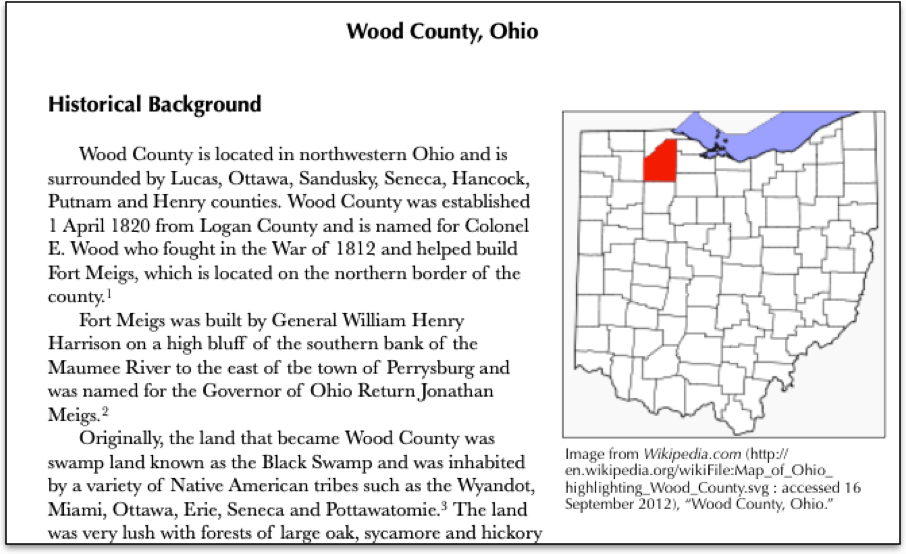
Well, which Fred Miller. There are about a billion of them in the world. And about a hundred in Wood County, Ohio in 1850. (Ok, I might be prone to exaggeration, but it sure feels like that sometimes!)

Too narrow: What is Fred Miller’s exact date of birth?

Well, for this one, we may never be able to find an exact date of birth due to record loss or just no records at all. The question may not be answerable so it is better to broaden the question a little bit. Perhaps to simply say “when was he born” which could be answered with a date range or something like “about 1805.”

Just right: Who were the parents of Fred Miller, living in Perrsyburg Township, Wood County, Ohio, who was 45 years old in the 1850 census?

With this one, I have identified a unique person in time and place, and I am asking an answerable question, “who were his parents?”

NOW, you can start planning your research to answer this question. Next we will talk about research plans and how to create and execute them.